


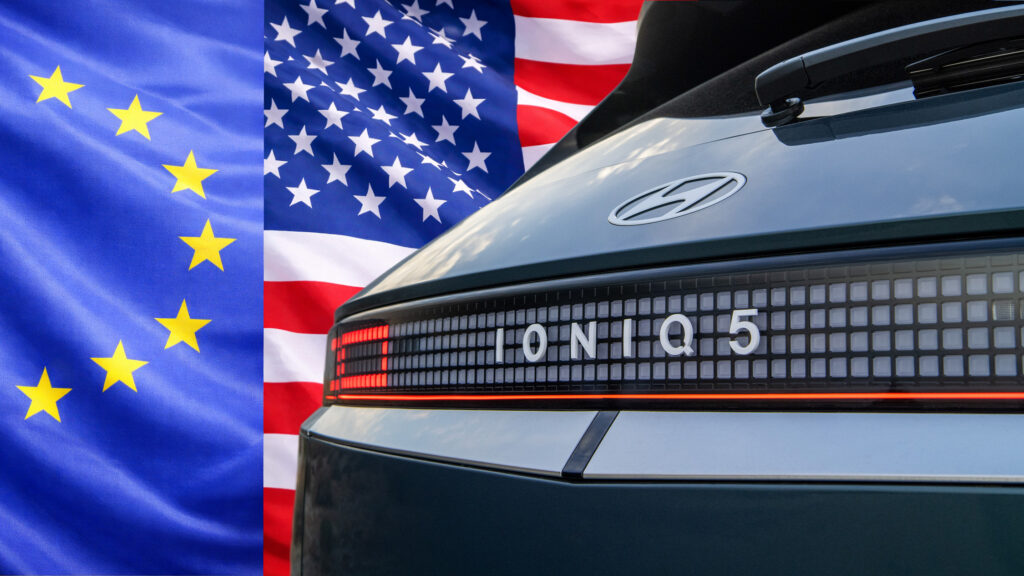
The European Electric Vehicle Market on the Rise
The electric vehicle market in Europe is experiencing a real boom, and this is largely happening thanks to a person who is not a proponent of clean energy. President Trump’s attack on Iran caused a sharp rise in gasoline and diesel prices, forcing European drivers to turn their attention to electric cars.
New data shows that registrations of battery electric vehicles in March 2026 increased by 51 percent in 15 key EU and European Free Trade Association markets, as drivers in the region faced a roughly one-fifth increase in fuel costs.
Ford’s electric vehicle sales fell by 70%, while Toyota’s nearly doubled.
As a result, over 224 thousand electric passenger cars were registered in March alone, accounting for 22 percent of all new car sales. This means that approximately one in every four cars sold was electric. In the first quarter, over half a million electric vehicles were sold in the EU, which is 33.5 percent more than in the same period last year.
The growth was broad. Germany increased its figures by 42 percent since the beginning of the year, aided by new government incentives, and France demonstrated stability with a 28 percent share of electric vehicles in March. Italy, long considered a hesitant supporter, showed a jump of 65 percent. Even Poland joined the growth club with over 40 percent.
Scandinavian Countries as Leaders
Northern Europe deserves special mention, where its own rules apply. In Denmark, fully electric cars accounted for 76.6 percent of registrations in March. In Finland, this figure approached 50 percent. Norway, as always, continues to live as if 2035 has already arrived: 98.4 percent of new registrations are for fully electric cars.


Contrast with the Situation in the USA
Now let’s move across the Atlantic, where the mood is completely different, despite also rising fuel prices. Although CarEdge reported that online search queries for electric vehicles increased by 20 percent in the first week after the initial attack on Iran in early March, US electric vehicle sales in the first quarter fell by 27 percent compared to the same period last year.
The Problem with Tax Credits
From January to the end of March, only 216,399 electric vehicles were sold in America. This decline is largely linked to the cancellation last September of the federal $7,500 tax credit, which seems to have pushed many buyers back to gasoline cars.
Some brands still managed to succeed. Toyota’s sales grew by 79 percent, Lexus by 207 percent, and Rivian by 21 percent. But others suffered serious losses: several mass-market and premium brands such as Audi, BMW, Mercedes, Porsche, Ford, Volkswagen, Jeep, and Genesis showed a sharp drop in sales – up to 93 percent.

Future Prospects
Such a difference in dynamics between the two continents clearly indicates how critical the role of government policy and economic incentives is for the development of the electric vehicle market. In Europe, a support package that includes both financial incentives and objective economic factors like fuel prices continues to work effectively. In the US, however, the sharp reduction in federal support immediately impacted the statistics, making the market more vulnerable and dependent on the steps of individual states and the strategies of automakers. The future of electric mobility seems likely to be shaped not only by technological breakthroughs but also by political will and economic feasibility for the end consumer in each specific region.