 by
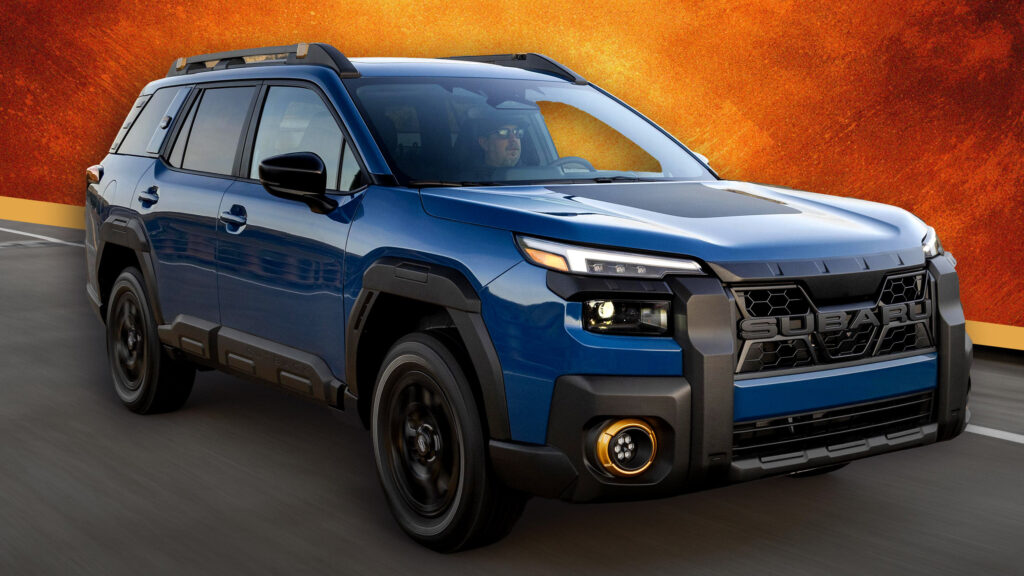
by The popularity of the Outback model plummeted after the release of its new generation. In the first quarter of this year, only 27,074 Outback vehicles were sold in the USA. For comparison, over the same period last year, more than 39,000 such station wagons were sold.
Sales Drop of the New Generation
For many years, the Outback was one of Subaru’s most popular cars on the American market, showing stable results even when the previous generation became morally outdated. Now, a completely new Outback has appeared, which has become more like an SUV, moving away from its classic station wagon image. Subaru likely expected high sales to continue. However, this did not happen.
Last month, Subaru delivered only 10,004 units of the new Outback to customers across the country. This means a colossal drop of 42.9% compared to March 2025, when the previous model was still on sale in its final phase. For the first three months of this year, 27,074 new Outbacks found owners, while in the first quarter of 2025, this figure was 39,934 units, representing a decrease of 32.2%.
If Outback sales remain at the same level for the rest of the year, Subaru could end 2026 with a result of only about 109,000 units sold, based on the current first-quarter pace. For context: in 2023, 161,814 Outbacks were sold, and in 2024 — 168,771.
Reasons for Decreased Demand
The demand was likely influenced by the controversial redesign of the Outback, as it changed from a rugged station wagon to a car with a more conventional SUV shape. Furthermore, the new model costs $5,000 more than the old one. And although it is significantly more modern, many people in current economic conditions cannot afford such a premium.
The Company’s Overall Situation
It should be acknowledged that the Outback is not the only Subaru model experiencing difficulties this year. The company’s total sales in the first quarter fell by 14.9% to 141,944 units, and in March they decreased by 23.5% to 54,674 units.
Ascent sales fell by 27.5% last month to 3,324 units, BRZ deliveries decreased by 13.8% to 288, and Crosstrek lost 13.5%, reaching 15,721 units. Even the popular Forester was not immune to the decline, with its sales dropping by 9.6% to 20,412 units. The Impreza took a more serious hit: deliveries fell by 50.9% to just 1,498 units. Legacy sales plummeted by 83.5% to 418 units, which, however, is expected, as the model has been discontinued and is being sold from remaining inventory. WRX volumes also decreased by 17.3% to 1,273 units.
However, first-quarter data shows a more mixed picture: Forester sales actually grew by 8.6%, and the BRZ shows almost zero growth — only 0.1%.
A Ray of Light: The Solterra EV
The only Subaru model that showed sales growth in March, unexpectedly, was the fully electric Solterra. The company sold 1,736 units of this model for the month, which is 50.4% more than the 1,154 a year ago. Despite this, the Solterra’s total result for the first quarter remains 2.9% lower, a reminder that one strong month cannot fully compensate for a slow start.
Subaru US Sales Dynamics for 2026
The table below shows detailed sales dynamics by model for March and the first quarter of 2026 compared to the same periods in 2025.
Model / Mar-26 / Mar-25 / Diff. / Q1 26 / Q1 25 / Diff.
Ascent / 3,324 / 4,584 / -27.5% / 9,175 / 11,079 / -17.2%
BRZ / 288 / 334 / -13.8% / 803 / 802 / 0.1%
Crosstrek / 15,721 / 18,169 / -13.5% / 38,497 / 43,612 / -11.7%
Forester / 20,412 / 22,570 / -9.6% / 54,152 / 49,865 / 8.6%
Impreza / 1,498 / 3,049 / -50.9% / 3,912 / 7,907 / -50.5%
Legacy / 418 / 2,540 / -83.5% / 1,788 / 5,800 / -69.2%
Outback / 10,004 / 17,539 / -42.9% / 27,074 / 39,934 / -32.2%
Solterra / 1,736 / 1,154 / 50.4% / 3,041 / 3,131 / -2.9%
WRX / 1,273 / 1,539 / -17.3% / 3,502 / 4,827 / -27.5%
TOTAL / 54,674 / 71,478 / -23.5% / 141,944 / 166,957 / -14.9%
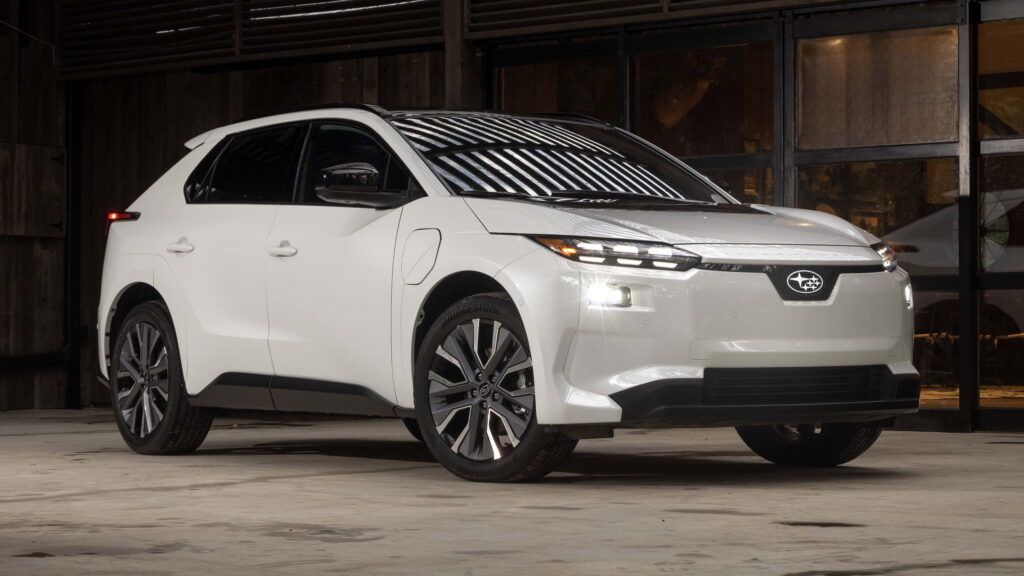
This sales situation with the Outback may force the company to reconsider its marketing strategies or even elements of the model’s positioning. The transition from a unique ‘station wagon-SUV’ to a more conventional crossover seems to have blurred its uniqueness in the eyes of the brand’s traditional buyers, who valued precisely its originality. The price increase amid economic uncertainty only intensified the negative effect. At the same time, the local success of the Solterra EV indicates that interest in electric vehicles among Subaru customers exists, which could become one of the key vectors for compensating for losses in other areas. The overall sales decline across the lineup, except for the Forester, points to systemic challenges the brand is facing in the competitive American market.