 by
by Federally Mandated Impaired-Driver Surveillance Tech Faces Delays
In early 2026, it became known that the U.S. National Highway Traffic Safety Administration (NHTSA) acknowledged that the passive technology for detecting impaired driving, mandated for installation in vehicles by law, is not yet ready for implementation. The problem lies in the excessively high rate of false activations, which could block the movement of thousands of cars with completely sober drivers at the wheel.
Background and Legal Requirements
The origins of this story date back to 2021, when the U.S. government tasked NHTSA with developing a federal safety standard. This standard was supposed to obligate automakers to install technology in vehicles capable of passively (without active actions from the driver) detecting intoxication and preventing the vehicle from moving in case of a positive signal. Initially, three years were allocated for developing the rule, but the process has been delayed.
Tested Technologies and Their Shortcomings
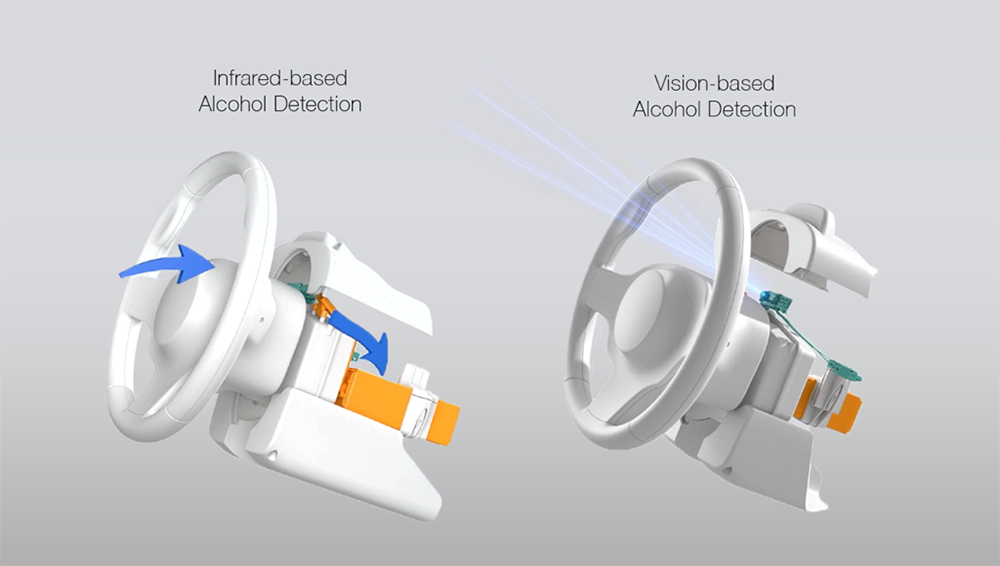
In a report published this month, regulators detailed the tested approaches. Among them:
None of these technologies currently meets all legal requirements: to operate passively, accurately, and without the need for active actions from the driver.
The Problem of Accuracy and False Activations
NHTSA representatives stated that the agency aims to establish clear requirements that minimize false activations and restrictions for sober drivers. Currently, technologies for detecting impairment at the legal limit have an unacceptably high error rate.
Even a small amount of alcohol can affect the ability to drive a car. ⤵️
In 2023, over 12,000 people died in crashes involving impaired drivers, and over 2,000 people died in alcohol-related crashes where the driver had a blood alcohol concentration between 0.01 and 0.07.
The agency provides a striking example: even detection accuracy at 99.9% could lead to millions or tens of millions of cases per year where the technology mistakenly blocks a sober driver’s car or, conversely, misses an impaired driver. It is this statistic that became the key argument for postponing the implementation of the rule.
Credit: IIHS
Thus, regulators openly acknowledge that the necessary technology does not yet exist in a form ready for mass implementation. This does not mean that work on it has stopped. Rather, the rule will likely be adopted in the future when the accuracy level of systems increases enough to avoid mass incidents involving the blocking of sober citizens. The delay highlights the complexity of balancing road safety, which is an unconditional priority, with guarantees of personal freedom and driver convenience. The issue of technological surveillance in vehicles remains one of the most controversial topics at the intersection of legislation, safety, and privacy.