


Scandal around Hertz AI car scanning: Kennedy grandson demands investigation
Last year, Hertz introduced a tool called UVEye. This system scans cars when they leave the rental lot and again upon return. Artificial intelligence compares the images and charges the customer for damages it believes occurred during the rental. Many customers have complained about this system, while others have expressed concerns about the appeals process.
Now, one congressional candidate, a relative of John F. Kennedy, is calling on the Federal Trade Commission (FTC) to take action. He may be knocking on the wrong door.
Allegations of “microscopic damages”
This candidate is Jack Schlossberg, grandson of former President John F. Kennedy. In a recent campaign video, he claims Hertz charges customers for AI-detected “microscopic damages invisible to the naked eye.”
“The FTC needs to determine whether this is an unfair practice and whether consumers have a real opportunity to dispute these charges,” Schlossberg stated.
FTC response and Hertz position
His calls appear to go unanswered. “We do not ‘receive’ demands from political candidates, and I am absolutely unfamiliar with what this individual has ever said and have no desire to find out,” Joseph Simonsohn, FTC Director of Public Affairs, told The Dallas Express. “Regarding the substance of the matter, we do not disclose the status or existence of any investigations.”
Undoubtedly, legitimate questions exist regarding automated damage detection, especially concerning disputes. Schlossberg’s argument relies heavily on hypothetical assumptions rather than concrete evidence. There is no data suggesting Hertz systematically charges for damages people cannot see. There is no analysis of false positives. There is no technical breakdown of how the UVeye system actually works in real-world conditions, although a House Oversight Committee already requested answers from Hertz on these issues last year.
View this post on InstagramA post shared by Jack Schlossberg (@jackuno)
Real customer issues and company statistics
Don’t get us wrong. We have clearly documented several cases where renters complained, providing real photos and evidence which they argue proves UVEye’s problems. Others say it is difficult to reach a live operator. These are real issues and worth addressing. But they are also far from proving a widespread AI-driven abuse system.
Hertz itself, for its part, claims the system does the opposite: supposedly reducing disputes by documenting cars more thoroughly than possible during a rushed inspection. The company claims over 97% of scans result in no charges, suggesting most rentals pass through the system without issue.
Are the calls to the FTC justified?
A call to the FTC is a strong media move, especially with AI already under scrutiny. Whether there are sufficient grounds for federal intervention is a different question entirely.
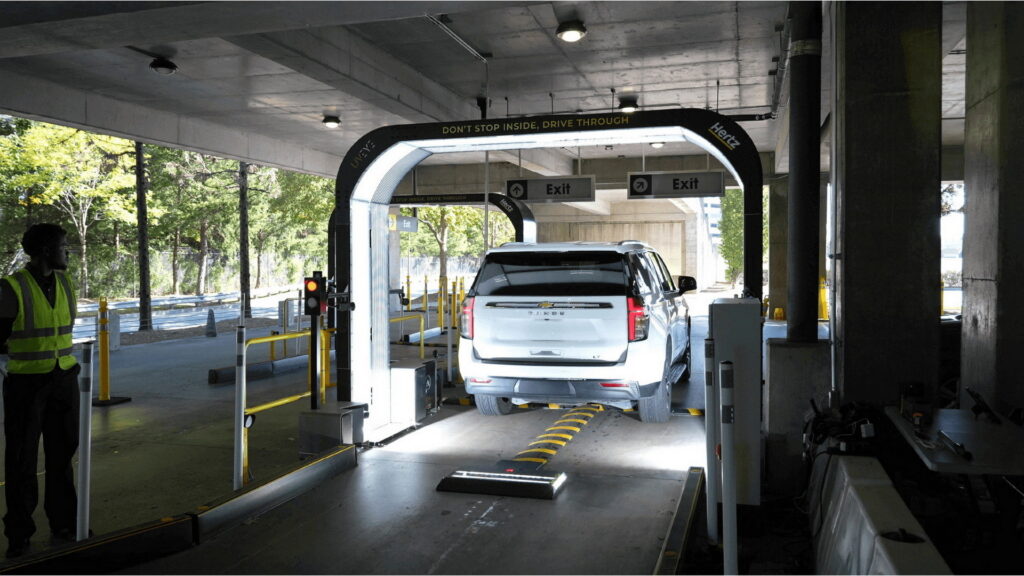

Credit: Hertz/UVEye
Currently, the situation looks like a classic standoff: on one side, emotional accusations and isolated, albeit illustrative, cases of customer dissatisfaction; on the other, a closed regulatory position and optimistic statistics from the company itself. The lack of an independent technical audit of the UVeye system and official data on the number of disputes leaves ample room for speculation. Until the FTC launches an official investigation or a large-scale independent study emerges, it is difficult to determine whether the problem is systemic or isolated incidents blown up by the media. Political pressure from a well-known candidate may accelerate the process, but without concrete evidence of widespread violations, an FTC reaction is unlikely to be swift.