


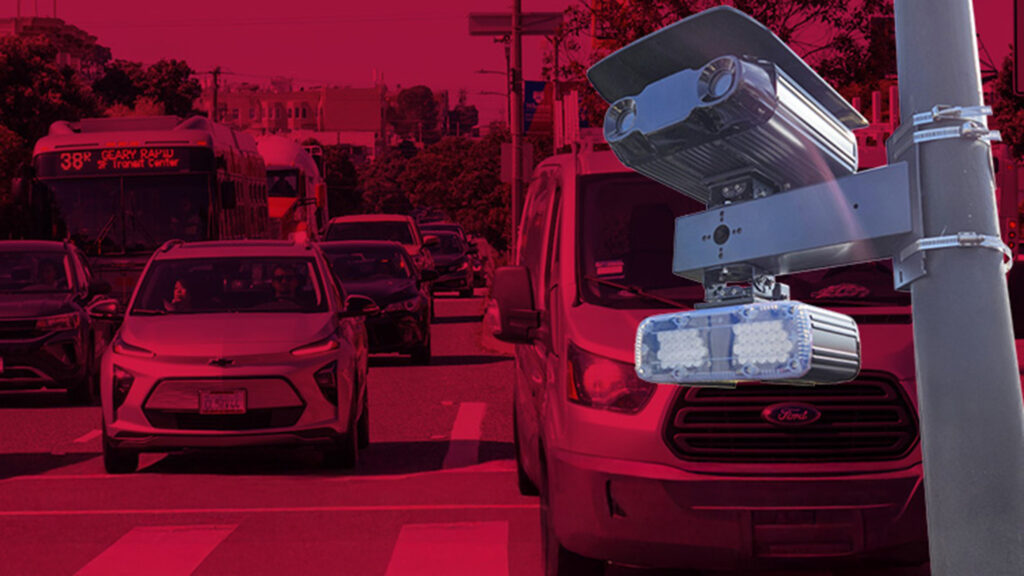
Red-Light Camera Tickets in California Cause Confusion
The flash of a camera at an intersection always evokes unpleasant feelings in a driver. In California, this happens countless times a day, but now drivers are increasingly asking the question: are they really obligated to pay fines issued by automatic cameras? Some experts believe the answer may be negative.
Of course, the safe option is to pay any legitimate fine. However, this is precisely where there may be room for maneuver, as automatic fines may not withstand legal scrutiny.
What Makes a Fine Valid?
When police stop a driver, they must adhere to the law in all details of the stop and ticketing procedure. Certain standards also apply to automatic cameras, and sometimes the fines they issue do not meet these standards.


Unlike a traditional stop by a police officer, camera fines rely entirely on electronic systems and verification by third parties. No officer witnesses the violation in real time, there is no eyewitness testimony from a police officer, and the review of the recording is often done by a non-uniformed employee. These are just some of the issues that can turn a valid fine into a mere piece of paper.
“They have issues with calibrating sensors, cameras, and then the recording is reviewed by a non-uniformed declarant who works for the camera operator company and the city that actually issues the violation,” noted Jorian Goes, founder of Ticket Snipers.
Limited Enforcement Capabilities
In addition to these problems, it turns out that California also has limited powers to enforce such fines.
“The only thing they can do is refer the case to a collection agency, and such an agency has no power over you. It cannot report information to a credit bureau, so it does not affect your credit history,” explained Jay Bieber from the National Motorists Association.
He also noted that many fines are issued for violations that last fractions of a second and are impossible to see with the naked eye, so the driver often is not even aware of breaking the rules.
Could Legislation Change Soon?
The situation may change due to a new law. Cities can now classify camera fines as civil, not criminal, violations. This seemingly minor change allows authorities to collect fines without court involvement. Until cities begin to implement this change, questions about whether such fines are worth paying will remain relevant.
The question of the legitimacy of automatic fines touches not only on legal nuances but also on the fundamental approach to law and order. Society is increasingly encountering technologies that replace human decision-making with algorithms, and this requires clear guarantees of accuracy and fairness. The experience of California shows that even in a developed legal system, gaps can arise when technological progress outpaces legislative regulation. This creates a situation where drivers face a moral and legal dilemma, and cities face the need to balance road safety with the protection of citizens’ rights.