 by
by Integration of AI into Daily Life
In just a few years, artificial intelligence has transformed from a little-known technology into an integral part of everyday life, regardless of our attitude towards it.
Growing Popularity of AI in Insurance
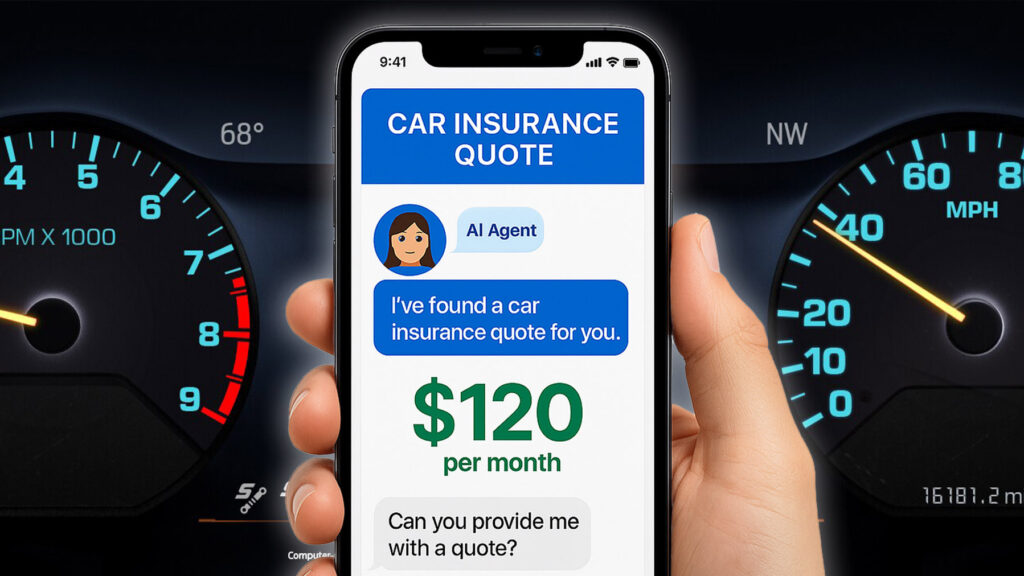
According to a new study, an increasing number of Americans are turning to artificial intelligence to find the best auto insurance offers.
In a survey of 3,002 drivers across the United States, Insurify found that 42 percent of respondents have used AI-based assistants to search for auto insurance.
The same study showed that 86 percent of Americans trust artificial intelligence in the process of purchasing insurance coverage, indicating an unexpectedly high level of comfort with algorithmic advice.

Comparing Offers and Generational Differences
The technology is particularly popular for comparing offers from different insurers – 76 percent of those surveyed use AI specifically for this task.
Unsurprisingly, younger car owners are more likely to trust artificial intelligence in finding the best insurance. Approximately 60 percent of Generation Z drivers have already turned to AI when purchasing auto insurance, compared to only 20 percent of baby boomers.
This generational gap reflects broader differences in how comfortable people feel trusting software with financial decision-making.
Regional Features of AI Usage
The percentage of car owners who use AI for insurance also varies by state – from 55 percent in California to 34 percent in Illinois.
AI Effectiveness in Finalizing Policies
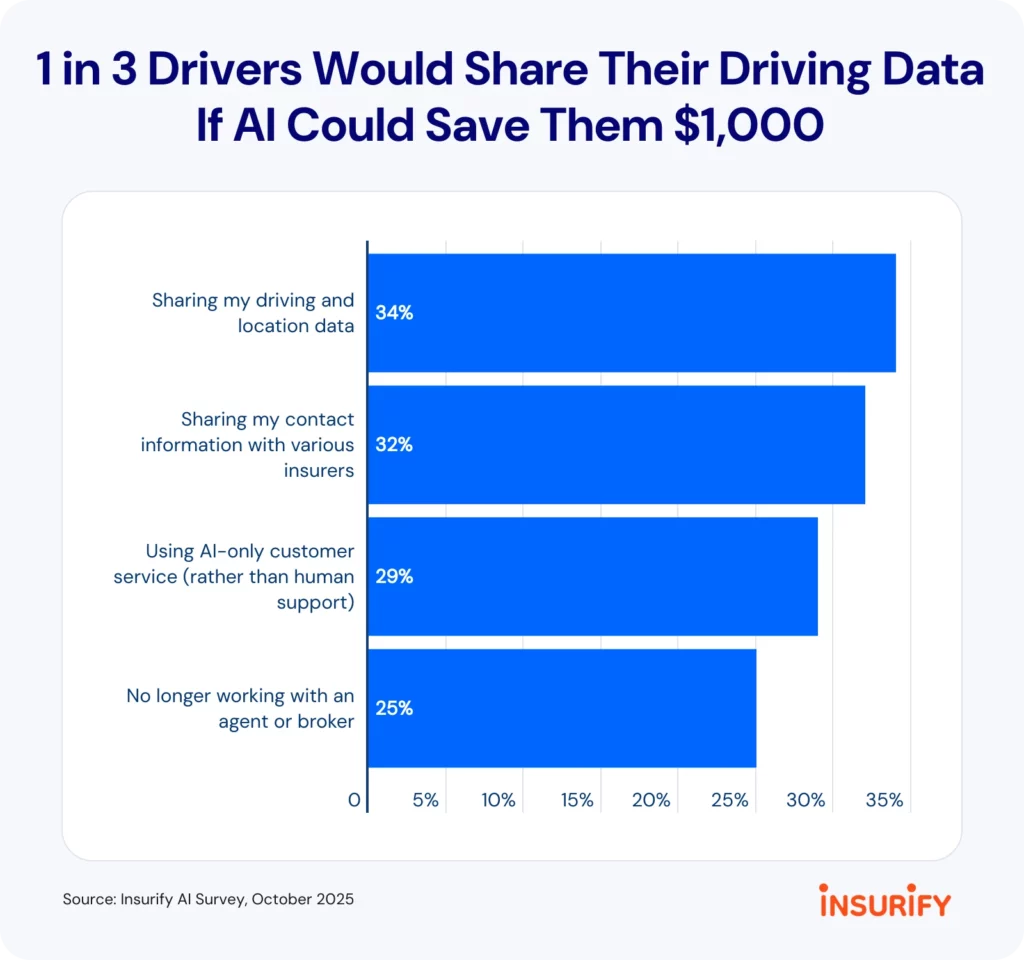
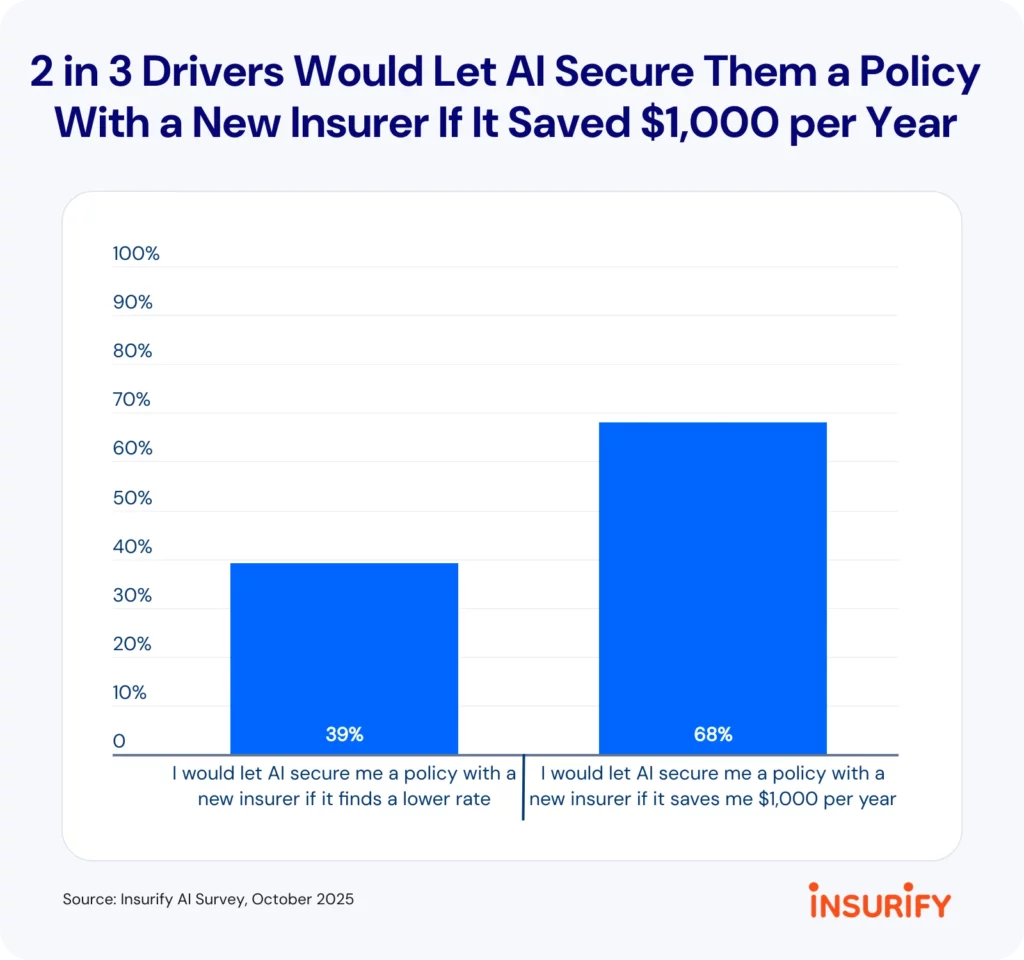
Artificial intelligence is useful not only for finding offers but also for processing a policy. According to Insurify data, 39 percent of drivers would allow AI to complete the insurance paperwork if it meant a better rate. When savings increase to $1,000, this figure rises to 68 percent, indicating rapidly growing trust when the calculations are beneficial for the driver.
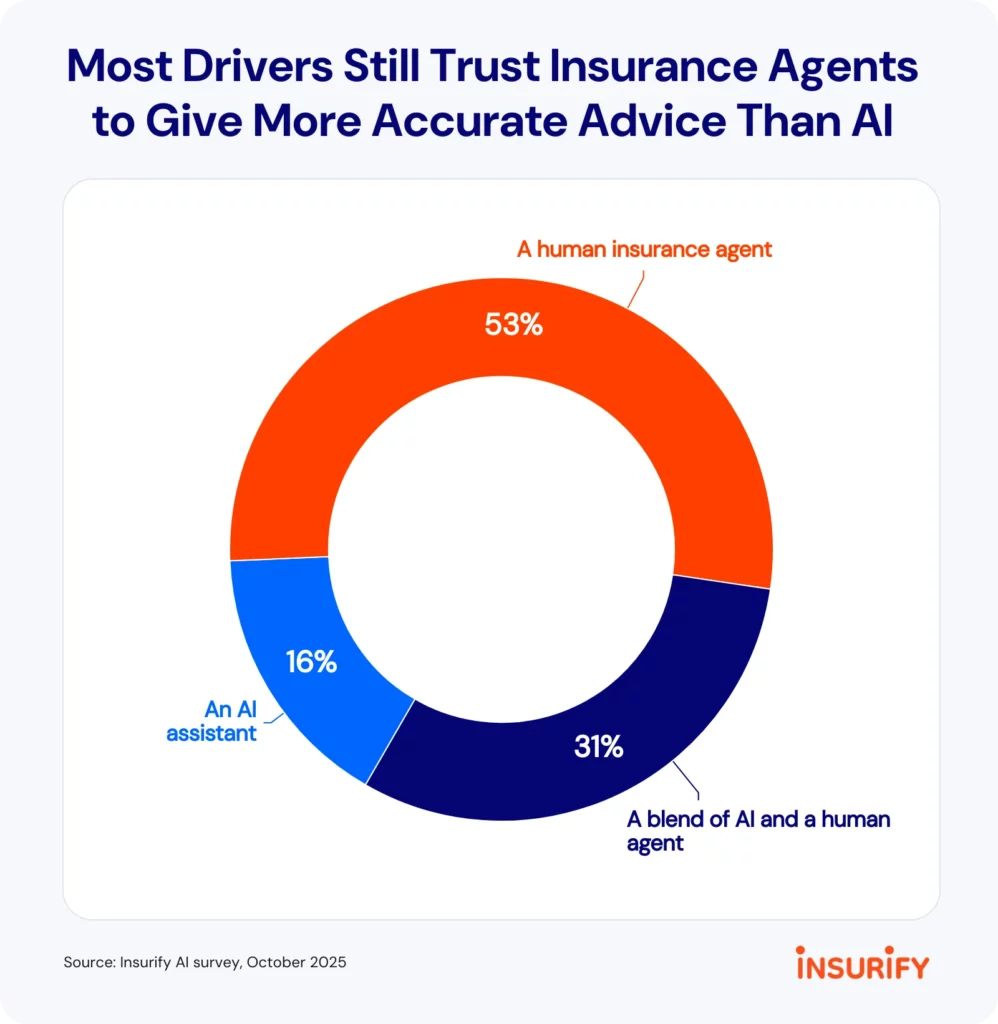
The study also found that 52 percent of Americans believe an AI-based assistant can compare insurance offers better than an agent, and 42 percent of Generation Z representatives believe it can perform customer service better than a human agent.
Limits of Trust in Technology
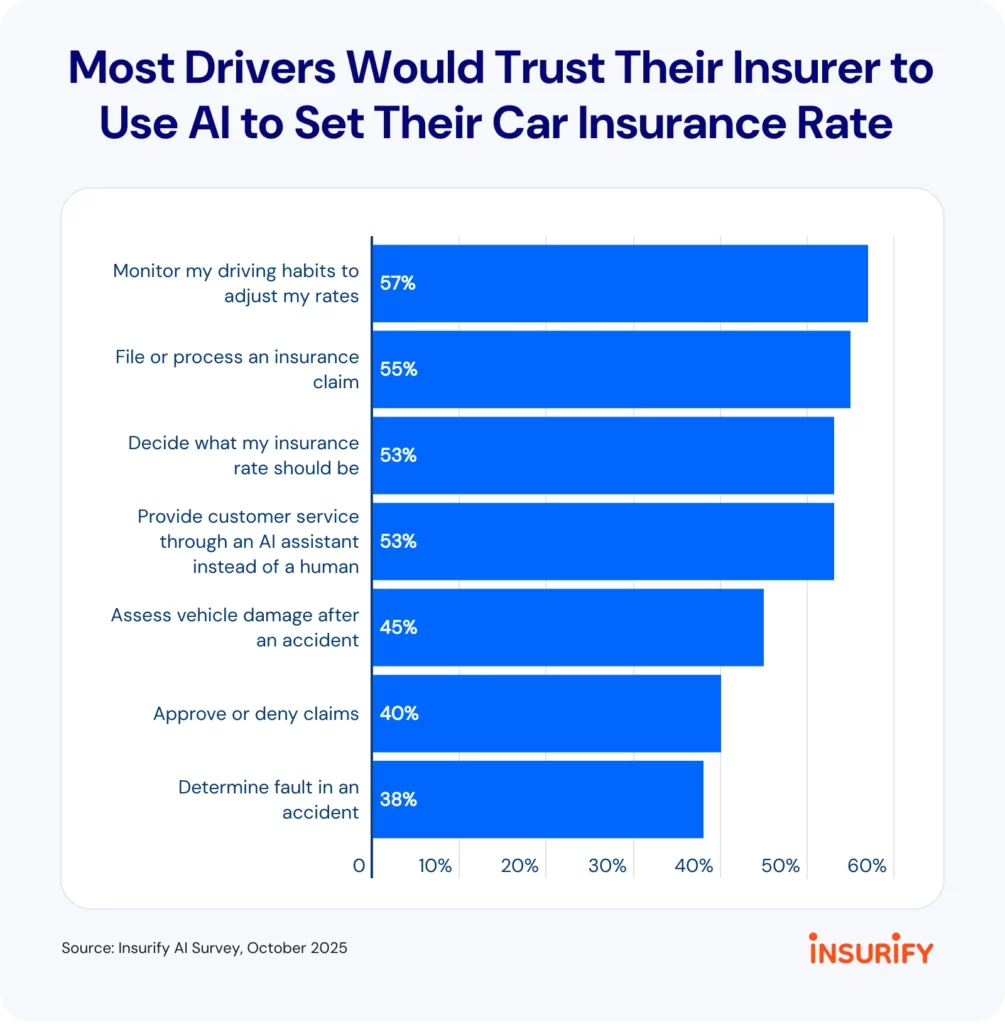
However, trust in artificial intelligence decreases when it comes to approving and rejecting claims, as well as determining fault in an accident. The survey showed that 40 percent would trust AI with approving or rejecting claims, while 38 percent would trust it with choosing the at-fault party.
It seems that while enthusiasm for the convenience provided by AI is growing, many Americans still want a human hand to steer in the most critical situations.

This data points to the formation of a new landscape in the insurance sector, where technologies are gradually taking the place of traditional methods. At the same time, a clear boundary remains between operations where algorithms are sufficient and situations that require human judgment. Such dynamics may influence the development of insurance products and services that will combine the advantages of automation with the necessity of human control in critical moments.