 by
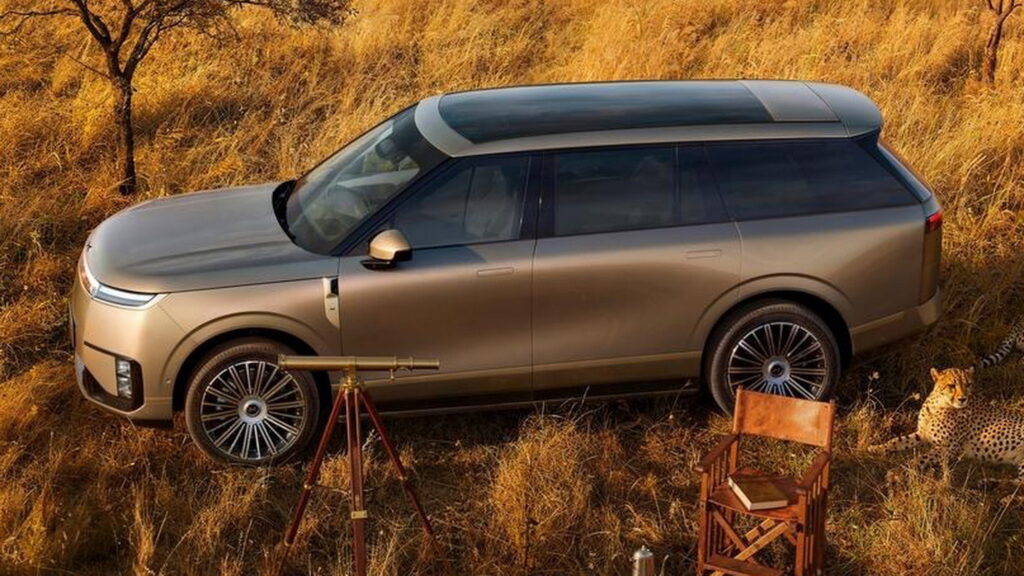
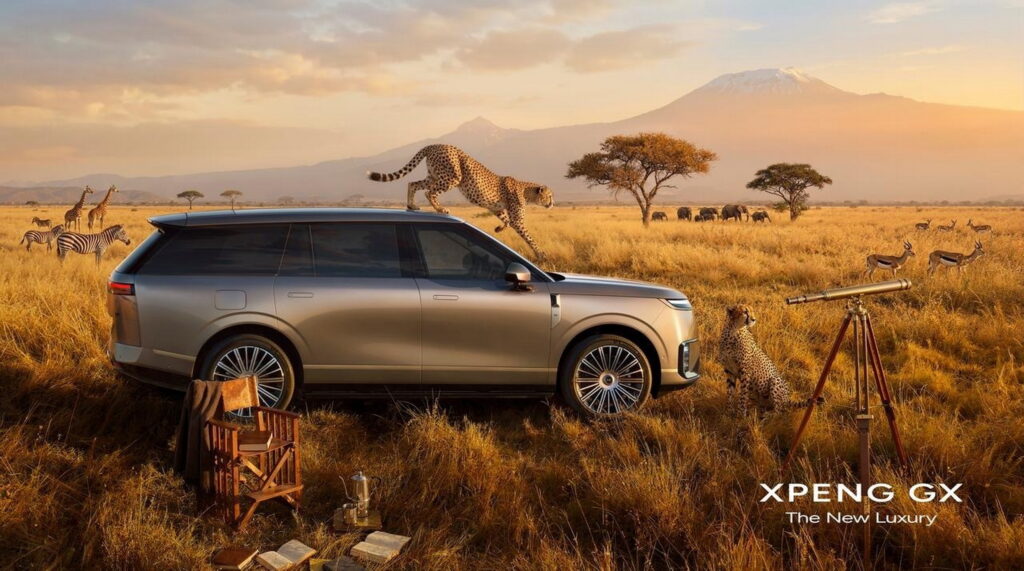
by Chinese automaker XPeng has released official images of its new flagship SUV, the GX, which has sparked lively discussions due to its design resemblance to the British Range Rover. The vehicle, set to debut at the Beijing Auto Show in April, offers a six-seat layout and advanced technologies.
Subtle Inspiration or Obvious Copy?
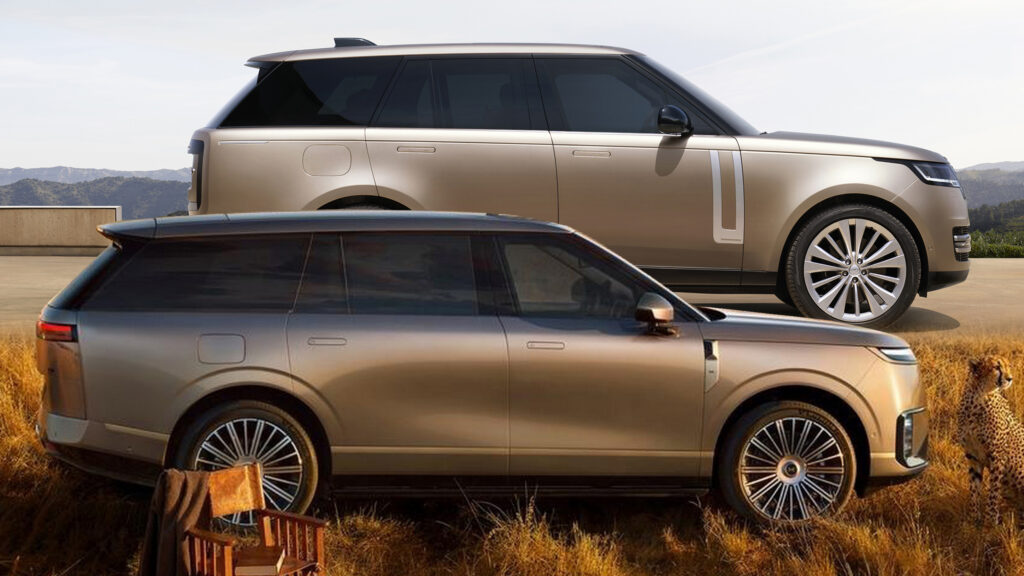
Despite significant progress by Chinese brands in production quality and technology, some habits remain unchanged. One of them is a strong orientation towards the design of established, authoritative brands. The silhouette of the large XPeng GX SUV, with its straight window line, darkened pillars, and “floating” roof, is hard to miss.
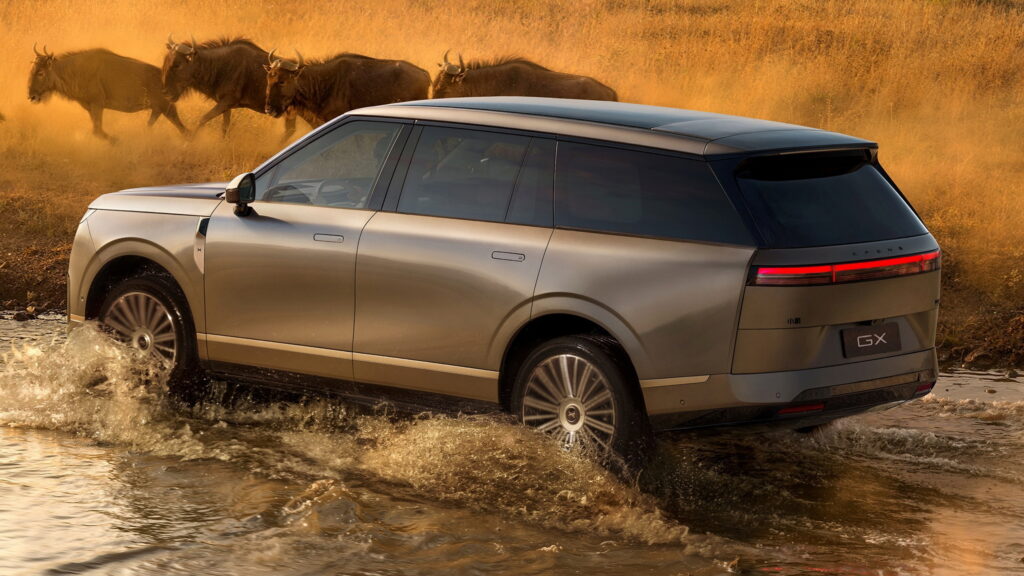
The overall proportions of the car look almost identical to the British luxury SUV. Even the shape of the LED headlights seems only lightly modified, creating the impression of a facelifted Range Rover version. However, XPeng has somewhat softened some characteristic features of the original, for example, significantly reducing the side air vents.
Own Identity and Technical Features
At the rear, the manufacturer attempts to create visual separation with a full-width LED light bar, which differs from the Range Rover’s vertical layout. The door lines also have a different character, reminiscent of some Mazda solutions.
The car is built on the new SEPA 3.0 architecture, which includes a steer-by-wire system and rear-wheel steering. This is intended to provide better handling and stability for a vehicle of this size. The powertrain is a range-extender electric vehicle (EREV) under the codename “Kunpeng,” operating on an 800-volt architecture and supporting fast charging.
Interior and Competition
XPeng CEO He Xiaopeng stated that the GX project aimed to solve the so-called “impossible triangle of three-row SUVs,” referring to the compromise between passenger comfort, luggage space, and driving dynamics.
In the cabin, which has three rows of seats, each row will be equipped with a reclining function. The manufacturer claims that even with the cabin fully occupied by six passengers, the trunk will remain “truly practical and exceptionally large.”
In the Chinese market, the GX is expected to compete with models such as the Li Auto L9, Aito M9, Zeekr 9X, and Nio ES8. Despite its flagship status, the price of the new XPeng, according to local media, may start from around 400,000 yuan, which is less than a third of the cost of a base Range Rover in the Chinese market.
The emergence of the XPeng GX clearly illustrates the current trend in the Chinese auto market, where technological equipment and aggressive pricing policy often go hand in hand with design that evokes associations with iconic Western models. This allows brands to quickly gain attention and offer customers a “familiar” premium look for significantly more accessible money. The success of such a strategy for XPeng will depend not only on technical specifications and quality but also on whether the brand can form a more distinct own design language in the future to finally separate itself from the label of being “inspired” by competitors.