 by
by Humanoid Robots at Renault Plants
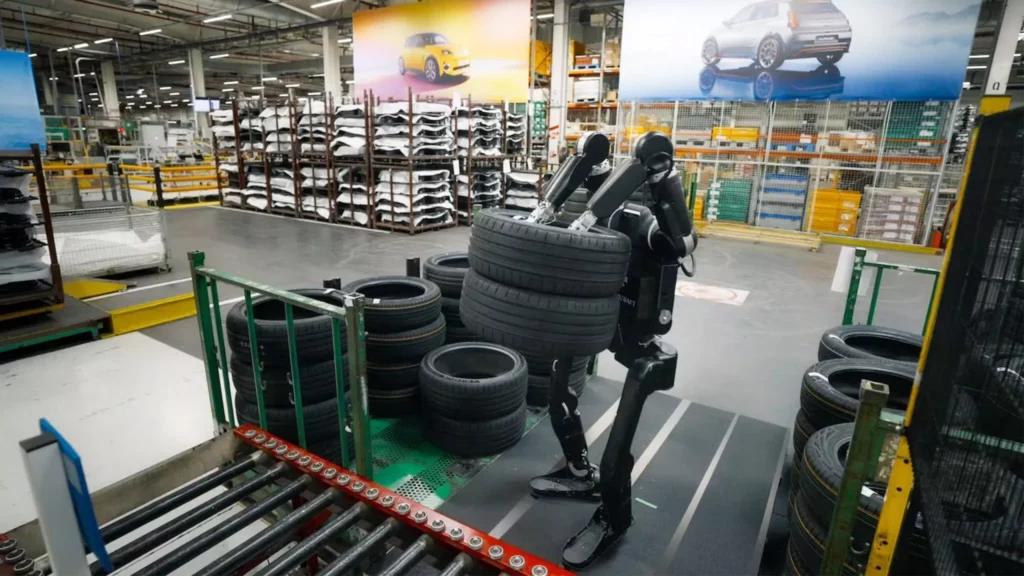
The French automaker Renault plans to introduce 350 humanoid robots into its workshops starting in 2027. These machines, developed in collaboration with local startup Wandercraft, are named Calvin-40. Their primary goal will be to perform heavy and monotonous tasks, such as lifting and transporting loads, which will accelerate production and reduce costs.
Unlike more advanced counterparts, such as the Tesla Optimus, Calvin-40 has no head and does not attempt to mimic human appearance or dexterity. Its design with round grippers instead of fingers limits its range of tasks, but this is precisely what Renault needs. The company’s management emphasizes that they are interested not in form, but in functionality and the low cost of automation.
Frankly, I’m not interested in having humanoid robots. I’m interested in having efficient and inexpensive automated devices, even if they look like humans, — stated Renault’s head of manufacturing and quality, Thierry Charvet.
Specific Tasks and Production Goals
The Calvin-40 robot will be programmed for operations such as installing wheels or transporting body panels around the workshop. Its key advantage is the ability to handle weights of up to 30 kg in tight spaces where traditional wheeled equipment cannot maneuver. This will automate workstations that were previously accessible only to humans.
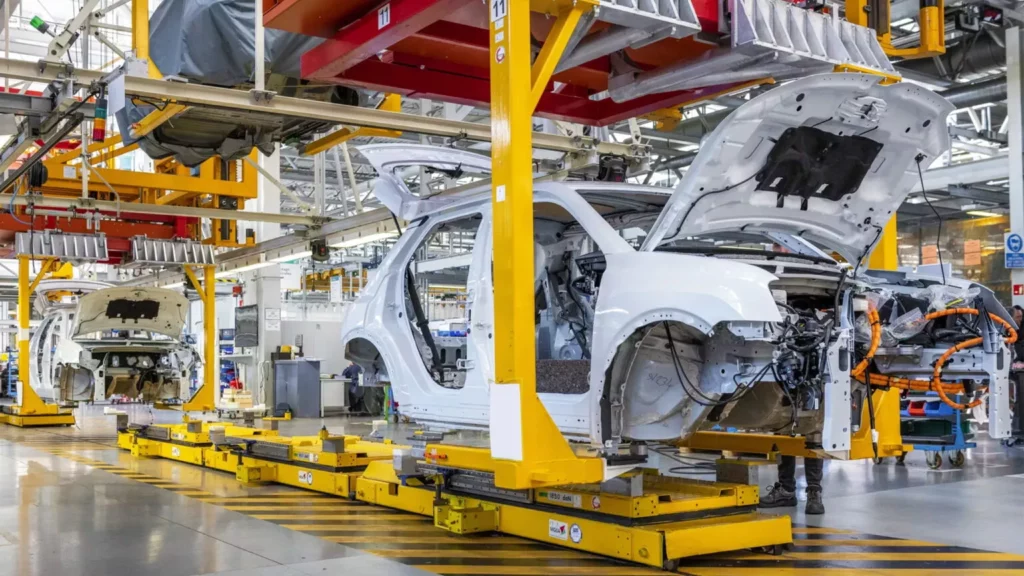
The main objective in creating Calvin-40 was to free workers from painful and repetitive operations that negatively impact health, especially the back. However, assembly lines will still remain under human control, as the robot lacks the necessary fine motor skills for precise assembly work.
Impact on Production Efficiency
Renault has already achieved significant success in optimization, reducing the production time for the 5 and Twingo electric vehicles to 10 hours or less. The introduction of humanoid robots, along with other initiatives, is part of an ambitious strategy to reduce the overall time to manufacture one car by 30 percent.
This step by Renault reflects a global trend in the automotive industry, where more and more manufacturers are experimenting with robotics to increase competitiveness. However, the French approach stands out for its practicality and clear focus on specific, limited tasks, rather than creating a universal “worker-robot.” Such technology implementation could become a model for other companies seeking effective but not overly complex or expensive automation solutions. The success of this initiative could also impact the labor market, gradually shifting the human role in the workshop from physical labor to control, adjustment, and machine maintenance.