


Briefly
The U.S. National Highway Traffic Safety Administration announced a “series of measures” designed to accelerate the development of autonomous vehicles. They are intended to combine safety with faster innovation adoption.
What Zoox was allowed
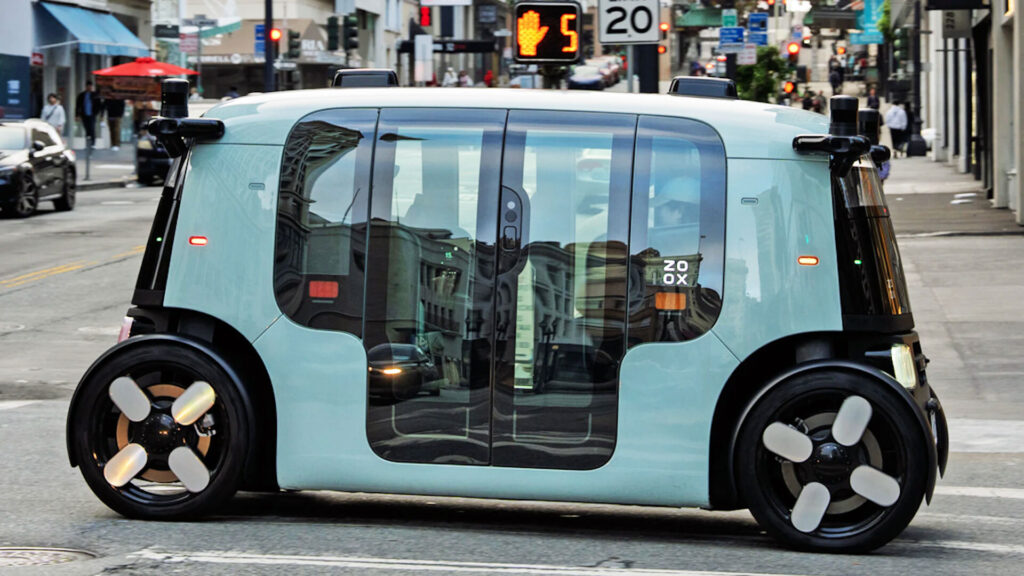
The main news is that Secretary of Transportation Sean Duffy instructed the agency to grant Zoox, which is owned by Amazon, a “temporary exemption.” This will allow the robotaxi operator to commercially deploy up to 2,500 vehicles annually for two years. In effect, the company will be able to accept paying passengers — for the first time for a vehicle that was designed from the start as autonomous and has no conventional controls such as a steering wheel or pedals.
Earlier, the company already presented its robotaxi close to the production version, and its appearance on roads is planned for this year.
Control and reporting
The government said the company “will be under enhanced and adaptive oversight that may change as Zoox’s technology evolves.” This means regulators will monitor robotaxi operations and check safety.
The release did not detail all the conditions, but Reuters reports that Zoox will have additional reporting requirements. The government will be able to revoke the exemption if it finds a serious safety problem. All remote operators must also be located in the United States, and the company is required to publish a map showing where its autonomous vehicles operate.
Standards and public discussion
In addition to the permit for Zoox, NHTSA plans to accelerate the creation of the first performance standards for autonomous vehicles. This involves cooperation with SAE Industry Technologies Consortia. The goal is to develop a unified national standard instead of disparate rules at the state and federal level.
The government also plans to adjust the exemption procedure and create a portal for public comments on updated recommendations for the development and deployment of autonomous transportation.
Robomart is also in the game
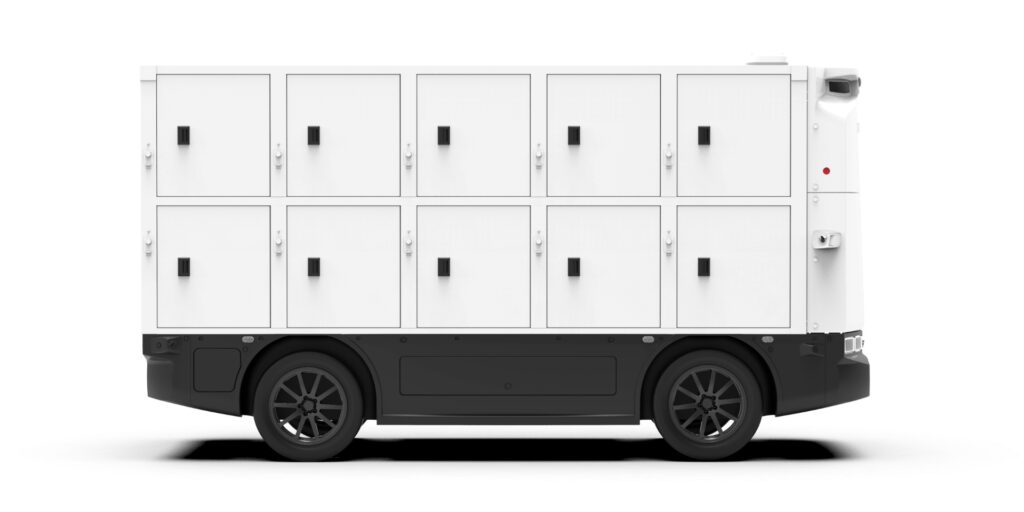
In addition to the mentioned changes, NHTSA is considering a request from Robomart. It provides for a temporary exemption from requirements for low-speed autonomous vehicles without a driver on board. Robomart is not yet well known, but its RM5 model is an autonomous delivery vehicle with ten compartments capable of carrying up to 227 kg of cargo. It moves at speeds up to 40 km/h and has no cab at all.
NHTSA leadership opinion
NHTSA Administrator Jonathan Morrison said:
“By removing unnecessary barriers to innovation, developing industry guidance, and ensuring strong oversight while we create performance requirements, NHTSA is taking a balanced approach to regulating autonomous vehicles.”
“These achievements will ensure that the United States continues to lead the world in autonomous vehicle technology in a safe and responsible manner.”

What this means in practice
This decision effectively paves the way for driverless cars without steering wheels on American roads. For Zoox, it is a chance to move from testing to a full-fledged business, and for the regulator, an opportunity to develop nationwide rules. Additional oversight and the requirement to publish operating maps indicate a rather cautious approach: innovation should develop, but without compromising safety.
The special attention to Robomart shows that the regulator is ready to consider other formats of autonomous transportation, including delivery robots. If these permits take effect, the market for driverless services in the United States could expand significantly in the near future.