


The United States and Israel launched a surprise attack against Iran on February 28 and the country quickly responded by shutting down the Strait of Hormuz. Aside from a brief détente, the critical water way has effectively been closed for months.
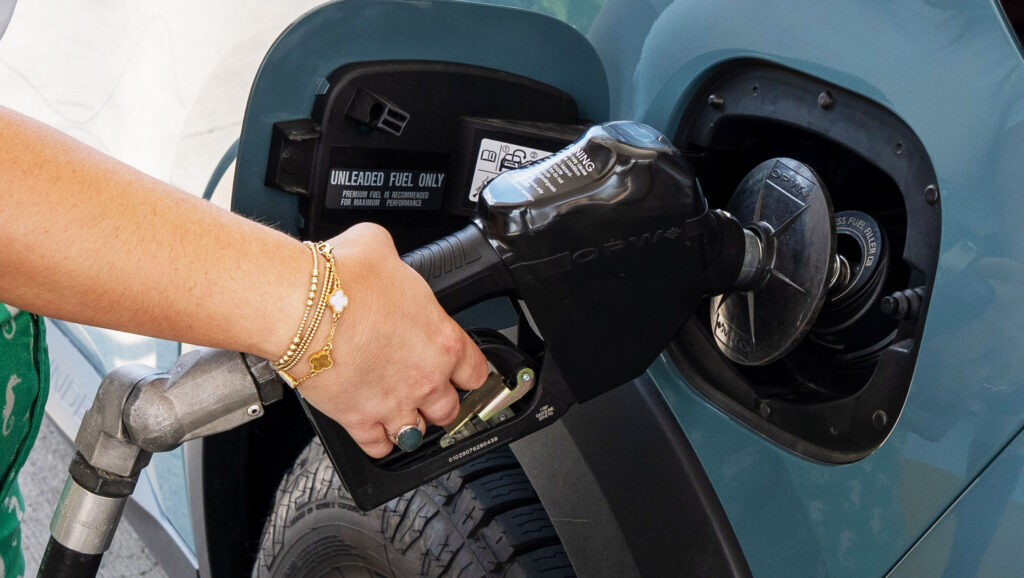
You’ve undoubtedly felt the effects as the national average price for a gallon of gasoline is $4.01. That’s 87 cents more than a year ago and drivers in California are paying around $5.59 per gallon.
More: Gas Returns To $4 Per Gallon As Iran War Heats Up
To help ease the shock, 32 members of the International Energy Agency announced plans to release 400 million barrels of oil from their emergency reserves in March. Around 290 million barrels were released by July, but the war in Iran continues.
This has resulted in America’s Strategic Petroleum Reserve dropping to 298.7 million barrels. CNBC reports that is down 6.1 million barrels in the past week and is now at the lowest level since January of 1983.
The publication noted the United States had around 415 million barrels in reserve before the war and will only have approximately 243 million barrels left by the time the previously announced release is completed.
DOE
While that doesn’t sound too bad, the Strategic Petroleum Reserve reportedly needs around 70 million barrels to operate safely. However, it doesn’t seem to be a problem as a former Obama administration official said he wasn’t “worried about the stability of the reserve or our ability to do another drawdown, if we needed to.”
Only time will tell what happens, but the Strategic Petroleum Reserve has a capacity of 714 million barrels. As a result, it’s currently only 42% full.
Unfortunately, the war likely won’t be over anytime soon. Days ago, Iran’s Secretary of the Supreme National Security Council announced a series of conditions the United States must meet in order for the Strait of Hormuz to reopen.
This includes never threatening the country and ending the war as well as aggression against Iran’s allies in the region. The country is also demanding the United States lifts its naval blockade and withdraws its forces from the area, pay reparations, remove sanctions, and release frozen assets.
It’s hard to see the Trump administration agreeing to that list of demands, so it seems like the stalemate will continue well into the future, perhaps necessitating new releases from the Strategic Petroleum Reserve.
A U.S. Air Force F-16 fighter jet is refueled during a patrol over regional waters in the Middle East while the U.S. continues enforcement of the blockade against Iran. As of Aug. 5, CENTCOM forces have redirected 48 commercial vessels, disabled 2, and boarded 2. pic.twitter.com/2Q15fC5iZm
— U.S. Central Command (@CENTCOM) August 5, 2026