 by
by At the Brussels Motor Show, Peugeot presented the updated 408 crossover. The car received a number of changes concerning both its exterior and technical features.
Updated Exterior Design
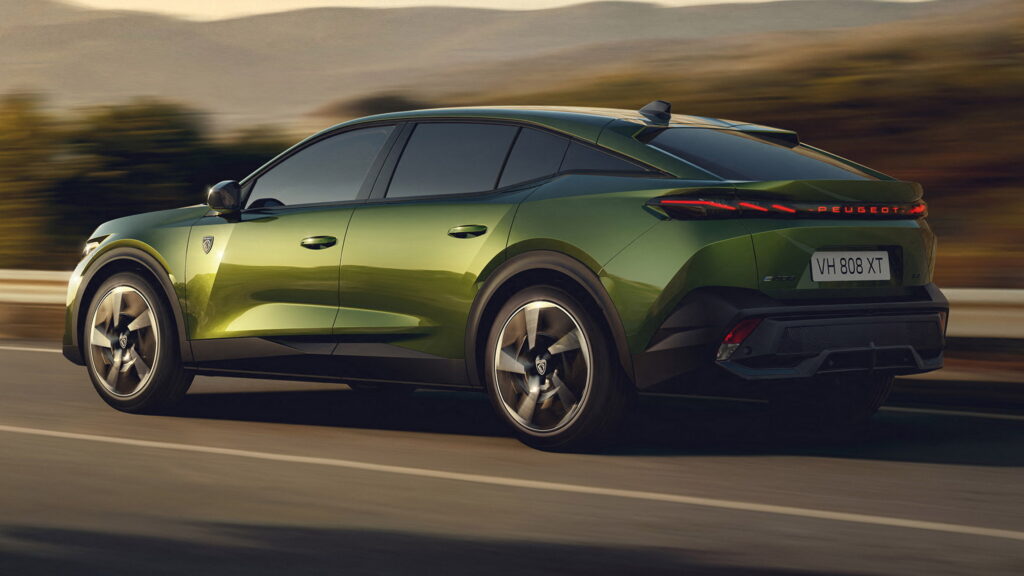
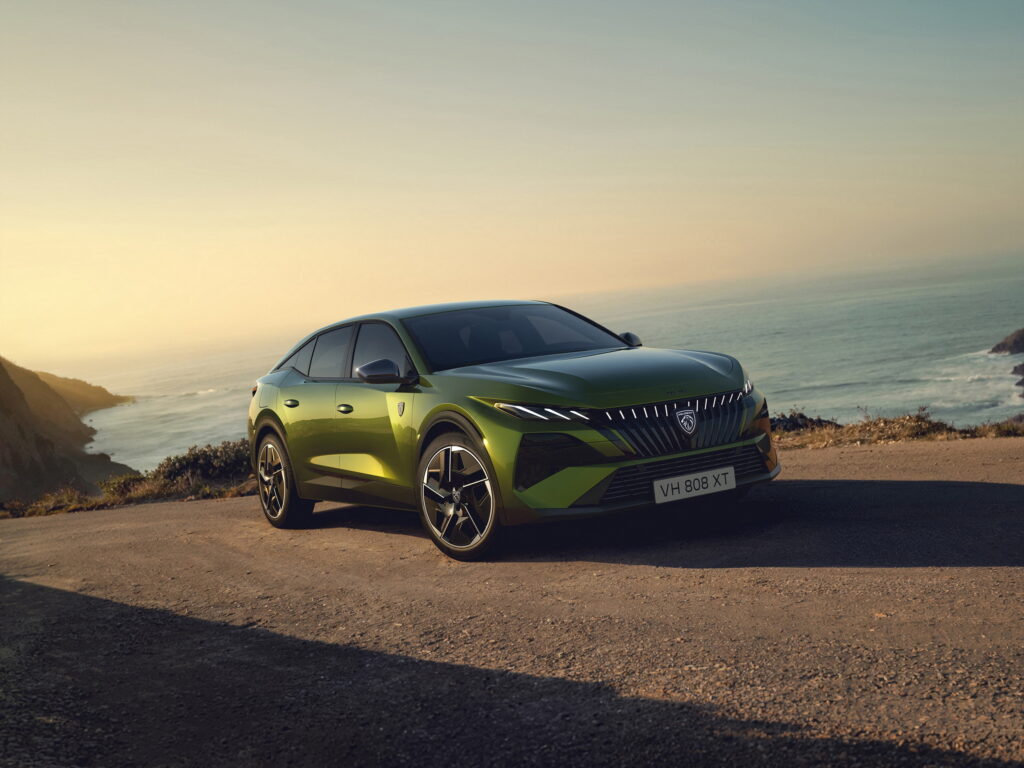
The changes in the exterior are immediately noticeable. The front part of the car has been completely redesigned. The model has lost its characteristic “fangs” and received separate light units. The upper section, which serves as daytime running lights and animated turn indicators, now has three “claws.” The headlights themselves are positioned lower and are almost invisible against the background of glossy black inserts, allowing them to visually “blend” with the rest of the details.
The radiator grille has become more expressive, and on top trim levels, the brand’s logo is now illuminated. Behind this same logo, a radar sensor is hidden, ensuring cleaner design lines. A new bumper and an updated central grille have also appeared, where the honeycomb pattern has been replaced by horizontal lines.
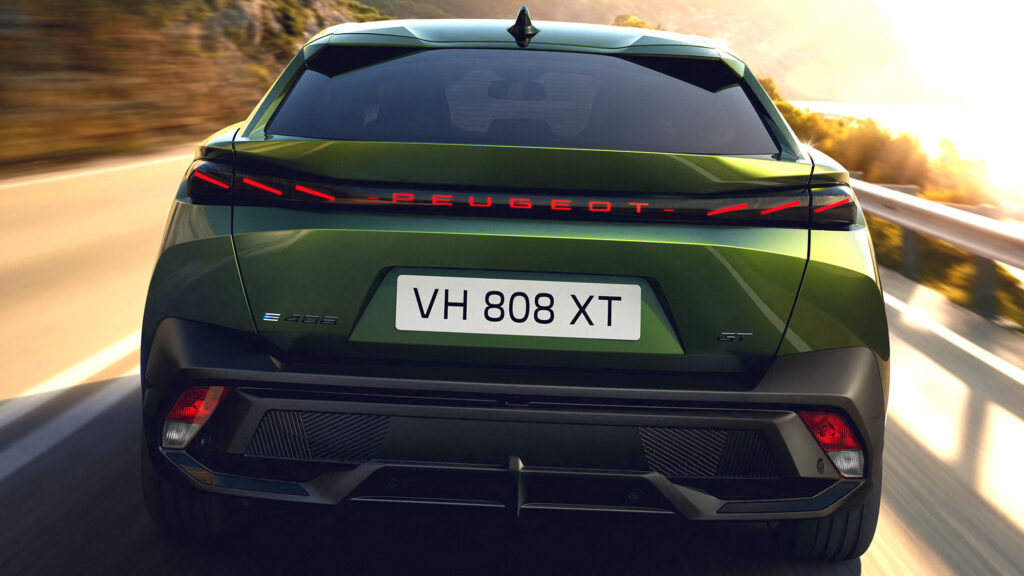
The rear has changed less, but now on the tailgate, instead of the traditional logo, there is an illuminated “Peugeot” script. This is the first such case for the brand. The rear lights and color palette have also been updated, now including an exclusive Flare Green color that changes its hue from bright yellow in the sun to deep green in the shade. The car also received new wheels ranging in size from 17 to 20 inches.
Interior Updates
The interior has undergone less noticeable changes. The updates mainly concern upholstery materials and decorative inserts. The main technical novelty is the new 10-inch digital instrument cluster with improved graphics. It works in tandem with the already familiar 10-inch multimedia system.
Technical Improvements for the Electric Version
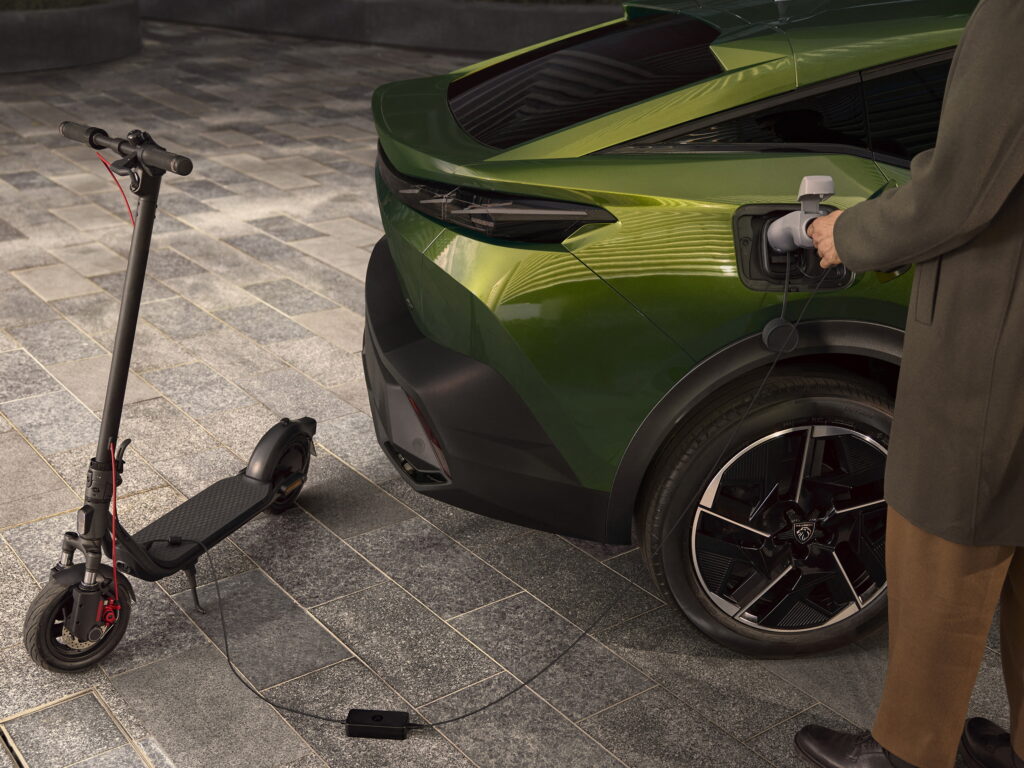
The electric E-408 version retains the previous powertrain: a 58.2 kWh battery and a 210 hp electric motor, providing a range of about 456 km according to the WLTP cycle. However, several important new functions have appeared.
Among them is a battery preconditioning system. In cold weather, the driver can manually activate its heating. In the top GT trim, this function is automated: when planning a route to a charging station, the navigation system itself activates battery preparation at the right time. Also added are a Plug & Charge function for automatic identification and payment for charging, Vehicle To Load technology for powering external devices with up to 3.5 kW, and an option to limit battery charge to 80% when charging with alternating current at home.
Hybrid Options
For those not ready to fully switch to electric power, hybrid options remain available. The plug-in hybrid combines a 178 hp gasoline engine, a 123 hp electric motor, and a 14.6 kWh battery. The total system output is 237 hp, and the electric-only range reaches up to 85 km.
A conventional hybrid is also offered, with a 143 hp gasoline engine, an electrified 6-speed dual-clutch transmission, and an average fuel consumption of 5.0 l/100 km according to the international WLTP cycle.
The updates to the Peugeot 408 demonstrate a general trend towards improving not only aesthetics but also everyday practicality, especially for electric models. Functions like intelligent battery preconditioning for charging directly impact the comfort of use, reducing time spent at charging stations. This indicates that manufacturers are focusing not only on increasing range but also on optimizing the entire process of using an electric vehicle. Maintaining various types of powertrains – from fully electric to different hybrids – allows the brand to remain on the market for a wide range of consumers with different preferences and infrastructure capabilities.