 by
by A New Look at a Legend
Gorden Wagener, who recently left his position as Mercedes’ chief designer, continues to share interesting projects. In his latest social media post, he revealed a previously unknown concept car that is a modern interpretation of one of the most iconic racing sedans of the 70s.
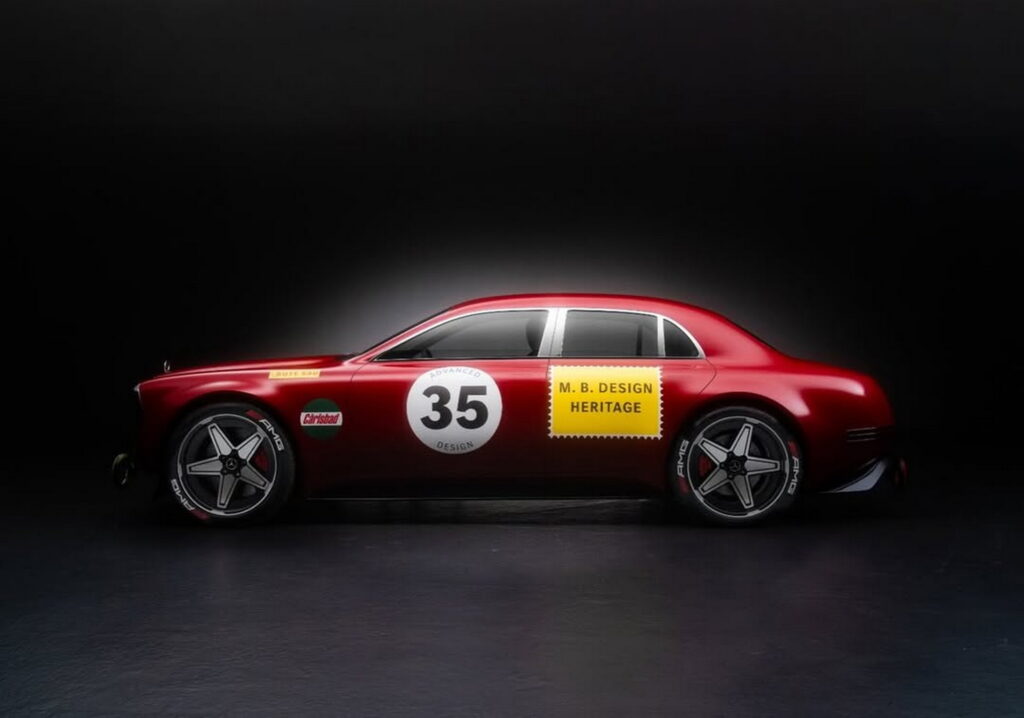
The renderings pay homage to the 1971 Mercedes 300 SEL 6.8 AMG, better known by its nickname “Red Pig.” This car essentially started the AMG story 28 years before Mercedes bought a controlling stake in the company in 1999.
Origin of the Concept
The automaker did not officially present this concept. It appears in the book “Iconic Design” by Gorden Wagener, Thomas Ammann, and Marc-Stefan Andres, which was published in November 2025. Wagener gave minimal explanation, describing the car merely as an “unseen showcar,” as if that in itself should answer all questions.
Apparently, this is one of those secret design projects that lay in the company’s archives for years, never making it to the illuminated stages of auto shows.
Style and Design
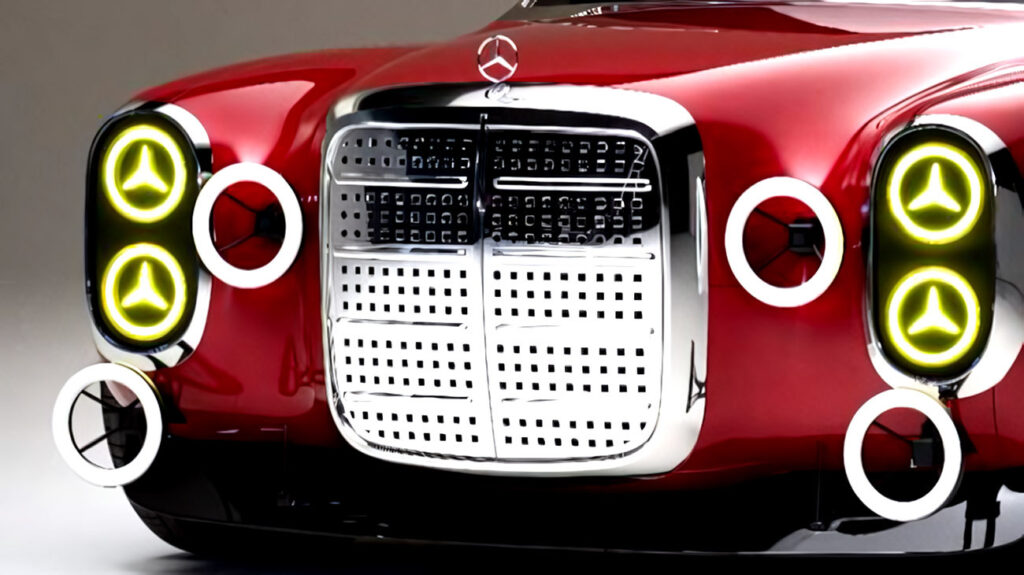
The showcar’s exterior combines classic Mercedes proportions with modern shapes and lighting technology. At the front is a massive chrome grille that echoes the design of the new GLC EQ and likely sets the tone for future models. It is flanked by vertically positioned headlights and additional LED rings in the lower part of the bumper.
Sculptural body panels and an aerodynamically refined glass roof, inspired by the latest Mercedes and AMG concepts, give the car a retro-futuristic look. At the same time, a vintage splitter, racing livery, and five-spoke alloy wheels shod in tires with the AMG logo emphasize its sporty stance. Another prominent detail is the low-set LED taillights that run the full width of the rear, along with LED rings on the diffuser.
From some angles, the car also resembles a sportier interpretation of the unique Mercedes-Benz S600 Royale — a mysterious retro-modernist creation.
Purpose of the Project
While some fans might imagine these lines in future S-Class models, it is quite obvious that this concept was never planned for series production. Consequently, there are no technical specifications to study or powertrain details to discuss — just a design study, free from the usual engineering constraints.
Legacy of the Original
The original “Rote Sau” won its class and finished second overall at the 1971 24 Hours of Spa race, competing against significantly lighter race cars. It was built on the basis of the luxurious W109 sedan, which preceded the S-Class, and featured widened fenders, additional lights, a lowered suspension, and an upgraded engine paired with a five-speed manual transmission.
Its 6.8-liter V8 engine produced 428 hp, allowing the 1,635 kg sedan to reach a top speed of 265 km/h. The Red Pig’s performance cemented AMG’s reputation in its formative years, even if few could have predicted at the time how closely the brand would later intertwine with Mercedes.
The original race car is believed to have been scrapped after the end of its career and subsequent service as a testbed for the aerospace company Matra. However, in 2006, Mercedes created an exact replica using a donor 300 SEL 6.3-liter chassis, guided by original drawings and photographs from that era.
View this post on Instagram. A post by Gorden Wagener (@gorden.wagener)
View this post on Instagram. A post by Gorden Wagener (@gorden.wagener)
The emergence of this concept underscores the ongoing influence of historical models on modern automotive art, even when they are created not for the roads, but for the pages of books or archives. It is a reminder of how design studios serve as a bridge between a brand’s glorious past and bold future, where every line can carry a story. Such projects often become a source of inspiration for future production models, even if the concept itself remains a unique specimen showcasing the freedom of creativity beyond commercial requirements.