
 by
by Major Subaru Hybrid Recall Due to Fuel Leak Risk
Subaru has announced a recall of nearly 70,000 hybrid vehicles due to a potential defect that could lead to fuel leakage and fire. Owners are advised to park their vehicles outdoors and not to fill the fuel tank completely.
The key points of the situation are:
Scale of the Problem and Its Cause
According to the US National Highway Traffic Safety Administration, the recall affects 69,153 vehicles. Among them are 17,446 examples of the 2026 hybrid Crosstrek and 51,707 of the 2025 hybrid Forester.
The problem is centered on the fuel tank cap assembly, specifically an insufficiently tight seal between the cap body and the gasket.
If the tank is nearly full and the car is parked in conditions of elevated ambient temperature, the fuel can expand. This increases pressure in the tank and can push fuel through the filler neck. If the seal is not tight enough, gasoline leakage can occur.
Current Status and Recommendations
Currently, Subaru reports 33 technical complaints in the US, but no fires or injuries have been recorded yet. However, the company reminds that a fuel leak near an ignition source increases the risk of fire.

Until dealers can rectify the defect, Subaru advises owners to limit the fuel level to 50 percent and park cars outdoors, away from buildings. This temporarily limits the vehicle’s driving range.
Problem Resolution Plan
The solution will be a new fuel tank cap with an improved gasket and an additional O-ring for better sealing. Subaru plans to begin notifying owners in late March so they can contact a dealer for the update.
For those planning to order a new 2026 hybrid Crosstrek, there should be no delays, as production models will already be equipped with the new part within the next few weeks.
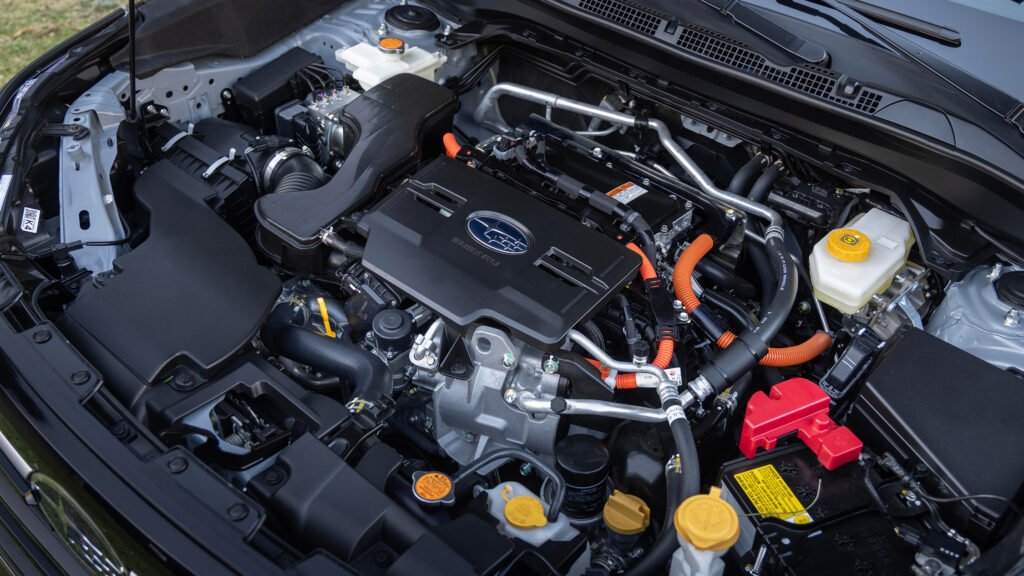
This recall is part of a broader trend in the automotive industry, where manufacturers are increasingly facing problems related to new technologies and complex hybrid systems. Subaru’s swift response and clear recommendations for owners demonstrate a standard approach to managing potentially hazardous situations, aimed at minimizing risks until the defect is permanently eliminated. Such preventive measures are becoming increasingly important in the context of growing popularity of electric and hybrid vehicles, where the safety of energy systems remains a priority.