 by
by Special Client Version
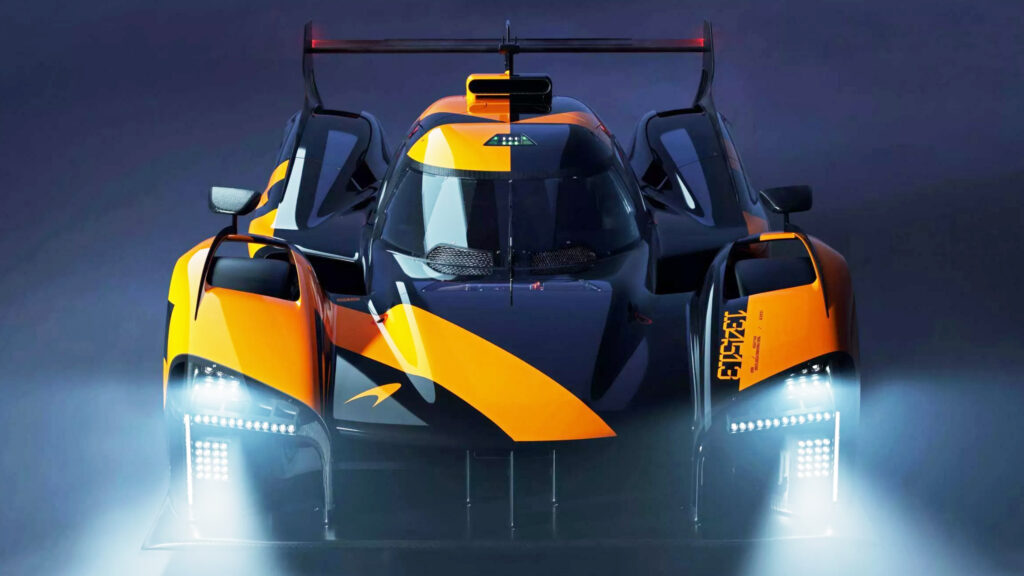
The client version of the long-awaited McLaren LMDh-class hypercar will do without the hybrid powertrain of the race car, relying solely on an internal combustion engine. Similar to the Aston Martin Valkyrie LH, it promises to offer non-professional drivers the opportunity to experience true race performance.
Project “Endurance”
McLaren confirmed its intention to release a limited number of client versions of its race hypercar back in mid-2025, developing it under “Project: Endurance.” It will offer a level of performance that even surpasses the McLaren Senna and McLaren Solus GT, the two most track-focused special editions from the British brand.
It was initially assumed that the client car would have the same powertrain as the race car. However, during a recent presentation of the hypercar in the Asia-Pacific region in Australia, McLaren’s Head of HyperTrack Cars, Neil Underwood, confirmed that this is not the case.
Technical Features and Power
While the race car uses a bi-turbo V6 combined with an electric motor and develops a combined output of 671 hp to comply with “Balance of Performance” rules, the client model will use exclusively a 2.9-liter bi-turbo V6. According to Which Car? magazine, this engine will produce 720 hp. This is less than the 829 hp produced by the 5.2-liter V10 in the Solus GT, but should be more than sufficient for an epic track experience.
Additional Adaptations for Owners
Other changes will be made for the car available to paying clients. For example, it will receive adjustable traction control, as well as a more client-friendly power delivery curve and braking performance.
Interestingly, McLaren remains secretive about how many units will be produced, but the company may make as many as it can sell. Testing of the endurance race car, as well as its non-hybrid variant, is set to begin this year, with client deliveries scheduled to start closer to the end of 2027.
Unique Owner Program
Unlike other McLaren track specials, this car is being developed in parallel with the Le Mans machine and involves teams from both McLaren Automotive and McLaren Racing. Owners will gain access to a comprehensive two-year global track program, as well as to the company’s engineers and drivers.
McLaren’s decision to forgo the hybrid system for the client version may seem like a step backwards, but it has practical sense. It simplifies the design, potentially reduces maintenance costs, and makes the car more accessible to wealthy enthusiasts who are not professional drivers. The two-year global program and access to the company’s engineers transform the purchase from a simple car acquisition into membership in an exclusive club, where the driving experience and community are likely valued no less than the technical specifications. The success of this project could pave the way for other manufacturers wishing to democratize access to genuine racing technology among a wealthy client base.