 by
by Range Rover Sport Update: What to Expect from the Facelift
Land Rover is preparing an updated version of the Range Rover Sport SUV. This year, the third-generation model celebrates its fourth year, which signifies the need for an update to maintain competitiveness in the market.
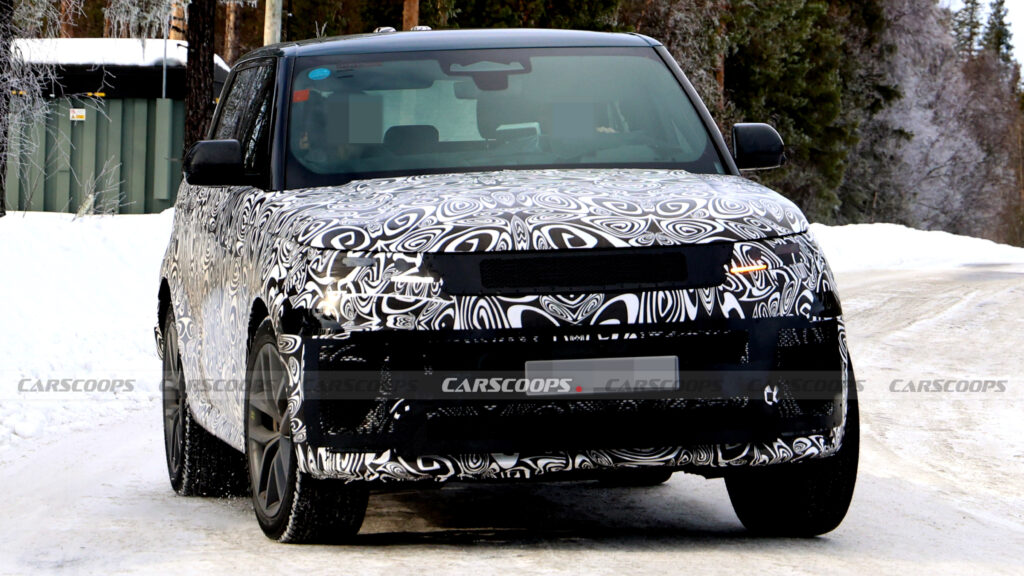
A well-camouflaged prototype was recently spotted during testing in Sweden. The changes are expected to be evolutionary. Despite the camouflage, updated front headlights and a slightly altered radiator grille can be discerned.
The front bumper has also undergone changes: the outer air intakes have become larger, and the central opening has been redesigned and equipped with a significantly larger sensor unit. Relocated parking sensors are also noticeable.
Changes at the Rear and in the Interior
The rear of the car is well concealed but is likely to receive new rear lights and possibly illuminated “Range Rover” lettering. The rear bumper has also been updated, with flat reflector panels installed. The visible exhaust pipes are decorative.
Photographers noted that the interior was “completely camouflaged,” which may be hiding certain changes.
The full extent of the interior updates is not yet known, but an updated multimedia system and redesigned control elements can be expected.
Powertrains and Electric Version
The engine lineup will most likely remain the same but with certain improvements to increase efficiency and reduce emissions. The current range includes a 3.0-liter six-cylinder engine with 355 and 395 hp, as well as a turbocharged 4.4-liter V8 with 523 and 626 hp.
A hybrid version is also available, combining a six-cylinder engine with an electric motor and a large battery pack, providing an electric-only range of about 82 kilometers. Photographers also captured a fully electric variant, which is expected to largely inherit features from the future electric Range Rover. The launch of the electric version is scheduled for 2027.
The Range Rover Sport update is happening at a pivotal moment as the market shifts towards electric vehicles. Adding a fully electric version to the lineup is a logical step for Land Rover to meet growing demand and stricter environmental regulations. The success of this model could largely depend on the technical specifications and competitive price of its electric variant, especially against the backdrop of active expansion of premium electric crossovers from other manufacturers. Retaining traditional powerful engines alongside new powertrains will allow the brand to satisfy both conservative enthusiasts and attract a new audience.