 by
by Digital Restomod Alfa Romeo GT: A Return to Roots or a Risky Experiment?
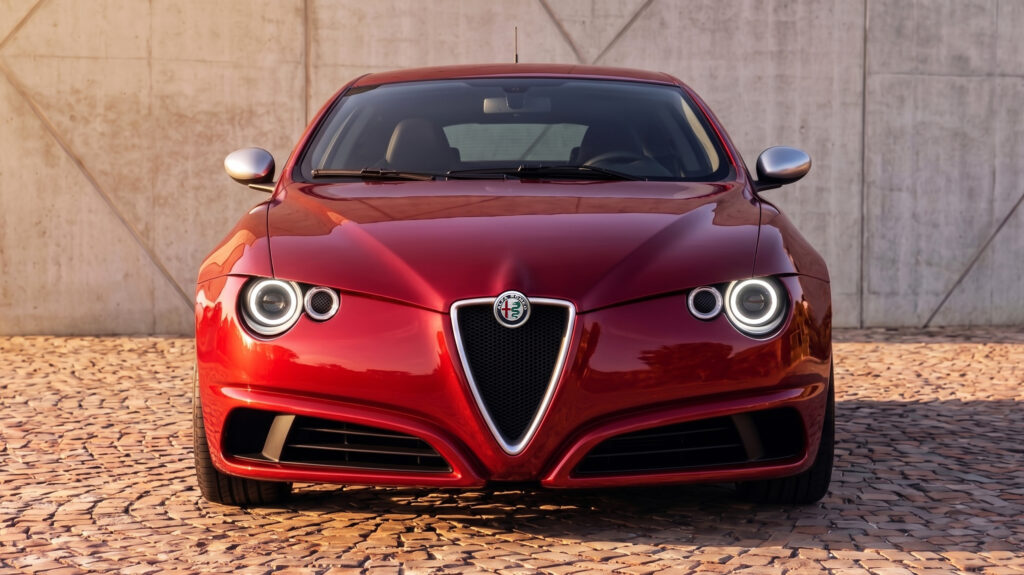
The Alfa Romeo GT, produced from 2003 to 2010 as a coupe based on the 147 hatchback and the 156 sedan, was the last model created by the Bertone design house and the last to receive the legendary Busso V6 engine. Used car prices have dropped significantly, inspiring the author to create a digital restomod — a more exotic, coachbuilt version with a special presence.
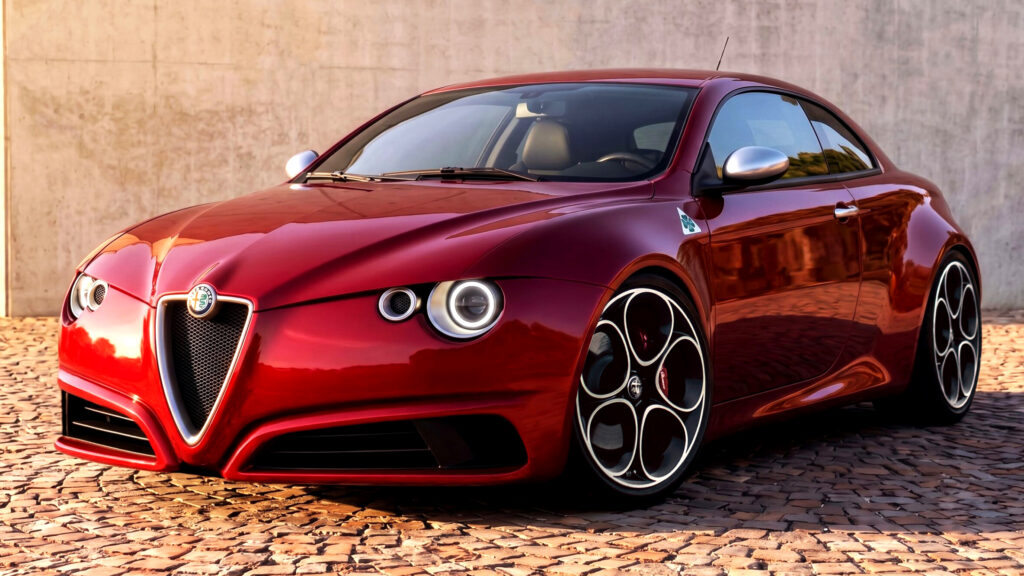
The goal of the project was to infuse classic Alfa Romeo DNA into the elegant lines of the donor body and create a car worthy of appearing on the lawn of the Concorso d’Eleganza Villa d’Este. The initial public reaction showed that this vision could be divisive.
Exterior Changes: A Tribute to the Classics
The key element of the transformation is the redesigned front end with round headlights and air intakes inspired by classic Alfa Romeo Giulia Sprint GT and 1750 GT Veloce from the 60s and 70s. The updates include a new bumper, a larger “scudetto” grille, LED lighting, and a hood with aggressive lines reminiscent of the Brera and 159.
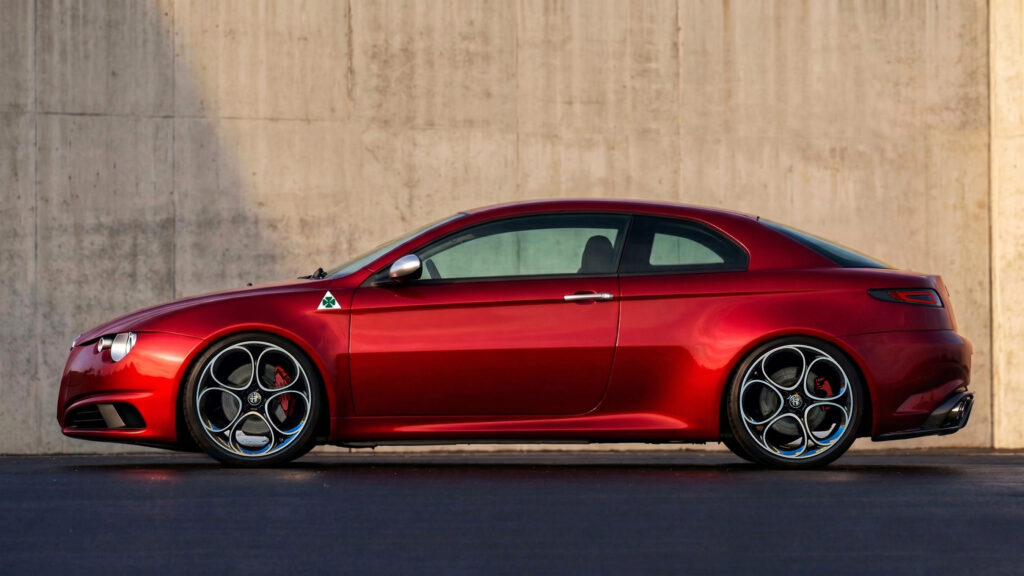
The car’s profile remains as close to the original as possible. The glass area, roof structure, pillars, mirrors, and doors remain unchanged. Changes affect the lower part: the car sits lower and wider thanks to flared front and rear fenders, larger wheels, and brakes from the Giulia Intensa and Quadrifoglio versions. The reduced ground clearance gives the body a more aggressive stance not found on the factory model.
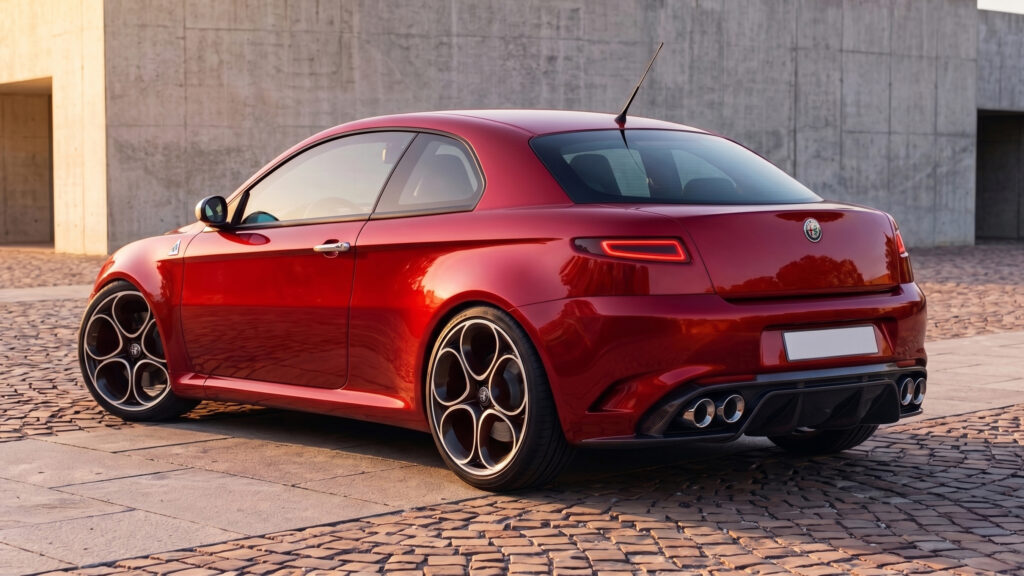
The rear end features a new bumper in the style of the Giulia GTAm with a carbon fiber diffuser and four exhaust tips, as well as modern LED graphics that reinterpret the original Bertone taillights. There is no spoiler, as, in the author’s opinion, the GT never needed one — the distinctive rear window and clean lines of the trunk lid do the job on their own.
Interior and Technical Updates
Work on the interior has not yet been carried out, but plans include reupholstering the cabin using high-quality materials: wood, aluminum, and leather. The concept involves preserving the analog character, although installing a discreet multimedia system is possible.
Under the hood, the restomod retains the iconic naturally aspirated 3.2-liter Busso V6 engine. In standard form, it produces 237 hp, but with tuning, it can easily reach 300 hp. Potential upgrades include increasing displacement to 3.7 liters, using forged pistons, more aggressive camshafts, and throttle bodies from Ferrari. Installing a supercharger was ruled out.
The six-speed manual gearbox and front-wheel drive are borrowed from the 147 GTA and 156 GTA models. To improve dynamics, the installation of a limited-slip differential, coilovers, a wider track, and more powerful brakes is proposed. The exhaust system will also need modification.
Reaction from Purists: Real Feedback
To test the design, the author showed it to industry colleagues and dedicated Alfa Romeo enthusiasts during the brand’s birthday celebration on June 21st at the Museo Alfa Romeo. The reaction confirmed the riskiness of redrawing an Alfa that originally bore the Bertone signature.
Most critics could not come to terms with the round headlights on this silhouette. Some suggested using narrower light units in the spirit of the 2010 Pininfarina 2uettottanta roadster, which might have calmed the front end.
Nevertheless, out of 30 Alfa Romeo owners surveyed, 25 approved of the project, highly appreciating the historical references to the brand’s past. The remaining 5 purists preferred the lines of the original GT, rejecting the change of “face.”
Does It Make Sense?
Implementing such a project from digital concept to production involves significant costs. The total cost of transforming the exterior, interior, and chassis could easily exceed 50,000 euros (about $55,000), not including the price of the donor car itself.
This creates a paradox: since the 147-based Alfa Romeo GT is currently very cheap, even in the top-spec Busso V6 version, it’s hard to justify expenses that are several times the market value of the car. Nevertheless, the project could make sense as an exclusive, limited-edition model for collectors.
Among the 80,832 owners of the Alfa Romeo GT, there are bound to be those willing to undertake such a unique project. The author is already in negotiations with companies that could bring these renders to life as a real car.
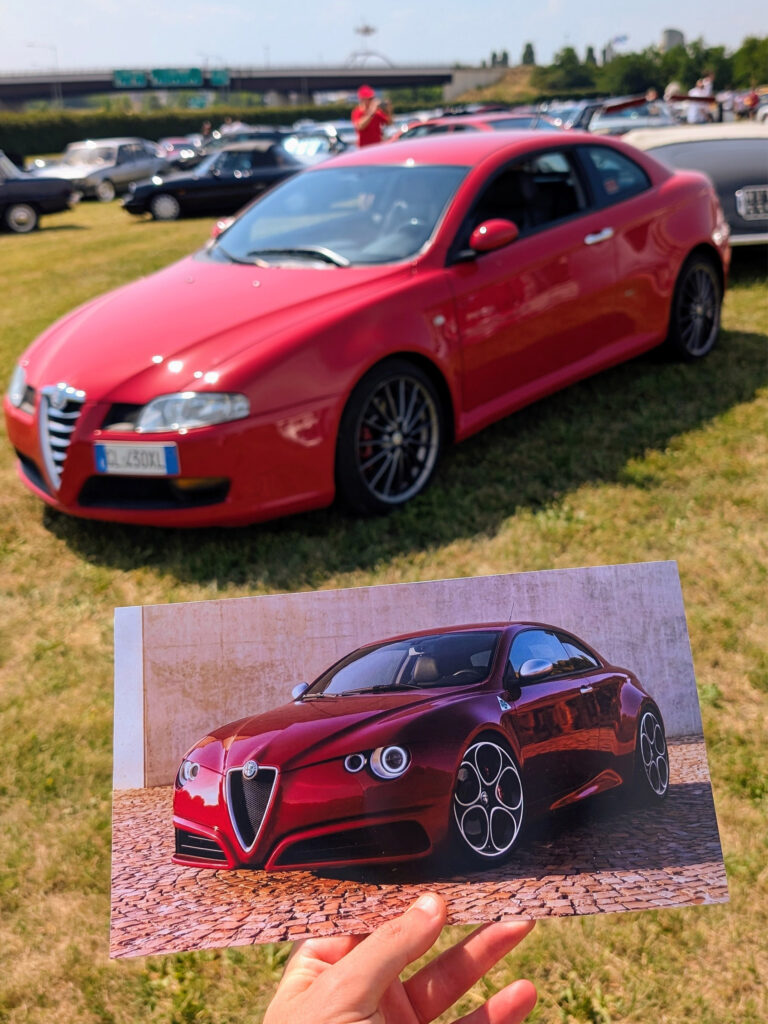
This project demonstrates how thin the line is between respectful reinterpretation of a classic and interfering with an already complete design. The round headlights undoubtedly evoke emotion, but are they the right solution for this specific body style? The answer, as the survey shows, depends on personal preference. From a technical standpoint, the proposed chassis and engine upgrades are entirely logical and could significantly improve handling and dynamics, turning an ordinary coupe into a true sports car. However, the economic feasibility of such a project remains questionable, turning it into a game for enthusiasts rather than a mass phenomenon.