 by
by This unique car is a modern interpretation of the legendary 1972 Ferrari Daytona Shooting Brake. It was created as a tribute to the original, but using modern technologies and materials.
A Modern Embodiment of a Classic
Many luxury cars are built to chase records on the track or conquer off-road terrain. However, this specimen exists as a homage to a legendary Ferrari. The Daytona Shooting Brake Homage by Niels van Roij Design may even surpass the original. Considering it took over 15,000 hours to create, this is entirely expected.
The project is based on the unique 1972 Daytona Shooting Brake commissioned by Luigi Chinetti Jr., built on the Ferrari 365/4 Daytona of that era. That original car, with its body by Panther Westwinds, was in turn inspired by Giotto Bizzarrini’s Ferrari 250 GT SWB “Breadvan”.
A Complete Design Reinterpretation
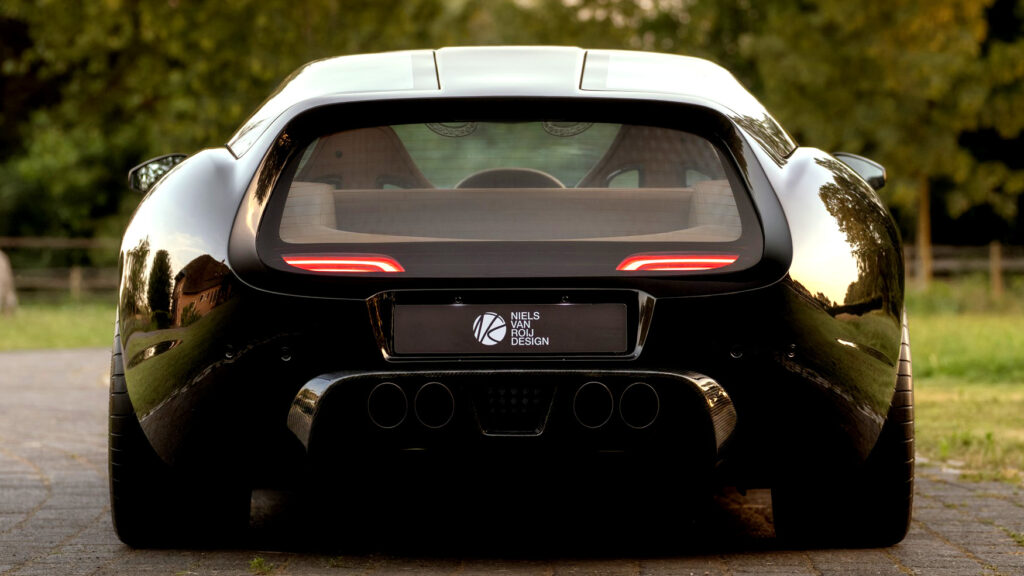
This latest work reimagines the iconic Ferrari 599 GTB Fiorano coupe with an extended roofline, elongated rear bodywork, and signature butterfly (or gullwing) rear windows that open directly into the cargo area, instead of a conventional tailgate. Every exterior panel except the doors is unique, and the entire body is handcrafted from aluminum.
Niels van Roij Design
The donor car remains a front-engine Italian V12 grand tourer, but practically everything you see has been redesigned. Look at the front. Custom full-width headlights reinterpret the original Daytona’s yellow light signature, using 3D-printed carbon composite components. The “Daytona” badge on the nose literally reads “Shooting Brake Homage”, which is perhaps the only minor misstep. One could argue it is too literal.
The Original 1972 Ferrari 365 GTB/4 Shooting Brake (photo by Bonhams)
Nevertheless, there is no doubt about the dedication to the original design concept. The rear butterfly windows feature exposed aluminum hardware, which the design house calls jewelry. Instead of a conventional tailgate, electronically controlled glass butterfly hatches open separately.
The exhaust tips are shaped like a double-barreled shotgun, and they undoubtedly help the V12 sound even more melodic. The coachbuilder has not confirmed any mechanical changes, and the car appears to retain the Ferrari F1 single-clutch transmission rather than switching to a manual gearbox. In standard form, the 6.0-liter V12 of the Ferrari 599 GTB Fiorano produced 611 hp (620 PS), enabling a 0-100 km/h sprint in 3.7 seconds, which still seems quick.
Cognac Leather Interior and Center-Mounted Instruments
Niels van Roij Design
The interior is equally bespoke and differs from the donor 599 in several aspects. The instrument cluster is standard, but it is now positioned in the center of the dashboard, exactly like in the original 1972 car. Everything is trimmed in cognac-colored leather with carbon fiber bucket seats and diamond quilting. The Ferrari emblem is deliberately absent from the steering wheel for obvious legal reasons. The leather trim is fully supported by hand-stamped aluminum structures.
This attention to detail extends to the cargo area, where CNC-machined aluminum rails match the gear selector panel and make the functional space feel more special.
It is impossible to know if Ferrari itself would build something like this today. Fortunately for collectors with exceptionally deep pockets, there are designers who can very skillfully execute such work.
Photos: Niels van Roij Design
This project demonstrates how modern craftsmanship and technology can not only recreate but even surpass classic design while preserving the spirit of the original. The cost of such work is likely astronomical, but for true enthusiasts of Ferrari and unique automobiles, this could be the pinnacle of a collection. The interest in such homages suggests that the market for exclusive, custom-built cars continues to thrive, offering an alternative to production models from even the most prestigious brands.