 by
by Solar roof for electric vehicles ready for series production
The chase for extra miles
Every engineer working on electric vehicles today is pursuing the same goal — greater range without increasing the battery. Answers are coming from the most unexpected corners of the industry. The latest one comes from a Chinese glass supplier in the form of a solar glass roof that, according to the manufacturer, is already finished, tested, and ready for mass production.
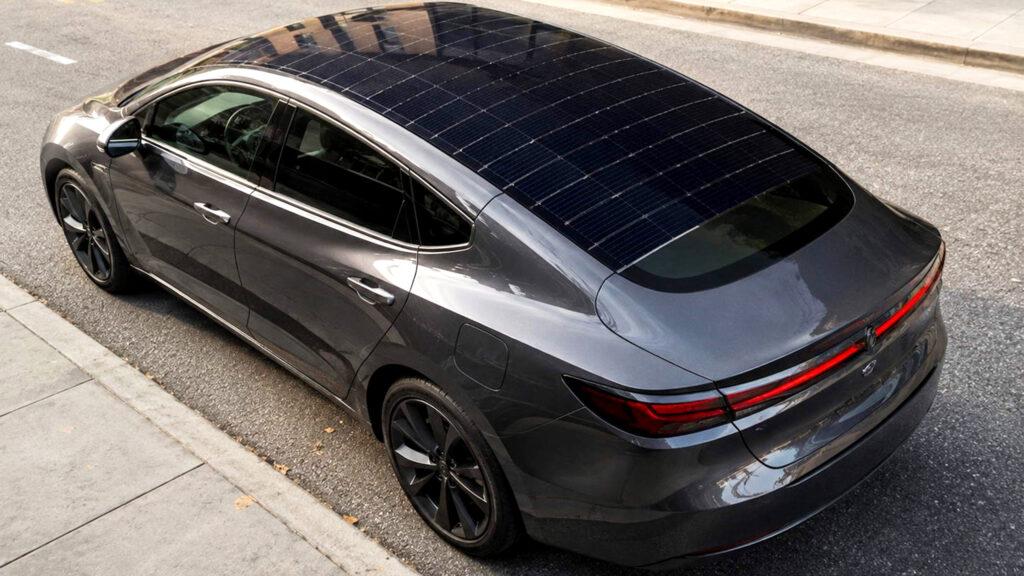
The company in question is Fuyao Group — one of the largest automotive glass manufacturers in the world, serving Ford, General Motors, Subaru, Tesla, and VW Group. This list of customers matters more than the technological demonstration itself, because Fuyao is not a startup trying to break through with a novelty. The company has embedded laminated solar cells directly into automotive glass, and the published image shows a vehicle where the cells cover the entire roof and extend over a significant portion of the rear window.
Production capacity and scaling
Fuyao’s current production facilities in Yanxia and Hefei have a combined annual output of 3 million automotive glass sets, and this figure is growing this year. There is no data yet on how many solar roofs the company plans to produce, but everything depends on whether automakers decide that such technology is worth the investment.
A $1,190 option
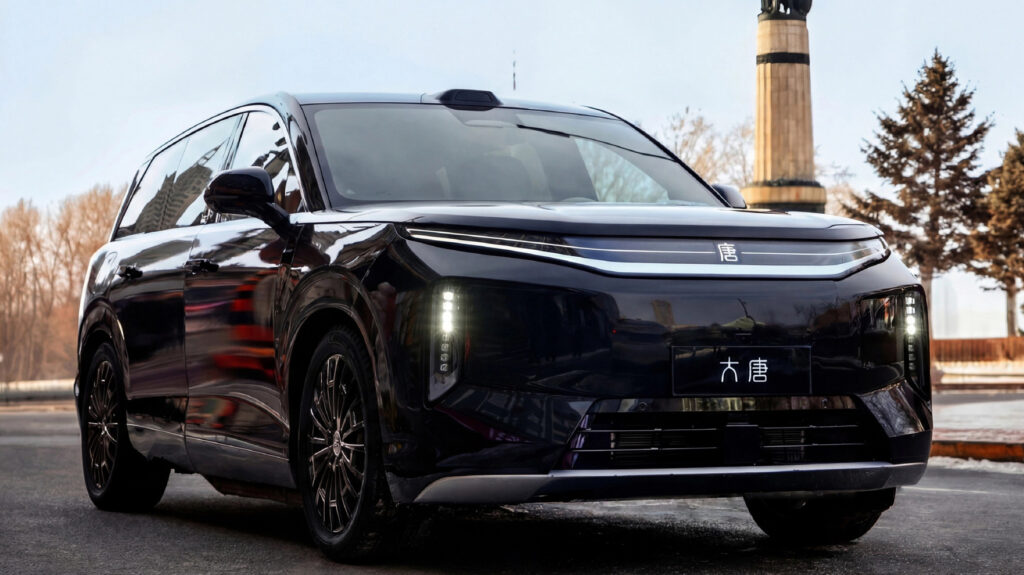
According to PV Magazine, reports from China earlier this year indicated that Fuyao is working with BYD, and the solar glass roof would be offered as an option for the Han and Tang models at a price of about 8,000 yuan (approximately $1,190). However, neither brand has confirmed this information.
Given how quickly current BYD models charge thanks to the 1500 kW Flash Charging network, the need for solar panels to gain a few extra miles per day is minimal.
Nissan has also created its own solar roof
Fuyao is far from the only company interested in solar glass roofs. Earlier this year, two Nissan engineers built a special Ariya that uses solar panels on the roof, tailgate, and hood.
Under clear skies, the panels can accumulate enough energy for an additional range of up to 14.3 miles (23 km) per day. Annually, that translates to an average of about 6.3 miles (10.2 km) per day in London, 11.7 miles (18.9 km) in New Delhi, 13.2 miles (21.2 km) in Dubai, and 10.9 miles (17.6 km) in Barcelona. However, the gain decreases while driving. During a two-hour, 50-mile (80 km) trip, the panels collected only 0.5 kWh, enough for an additional 1.8 miles (3 km).
While that doesn’t sound like much, Nissan’s analysis showed that drivers covering about 3,728 miles (6,000 km) per year could reduce their visits to charging stations from 23 to 8 if they drove an EV with such solar cells.
Solar roof technology is gradually carving out its place in the sun in the electric vehicle market. For now, it looks like a supporting tool rather than a revolution: even Nissan’s most optimistic figures show only a few dozen kilometers of additional range per day. However, in the context of modern EV energy consumption, even such a modest addition could significantly reduce the load on charging infrastructure, especially in sunny climates. Moreover, integrating photovoltaic cells into standard glass opens the way to cheaper and more aesthetically pleasing adoption of this technology, as Fuyao already has the capacity to scale. The main limiting factor remains the cost and benefit for automakers, but if BYD or another major player agrees to such an option, it could become a standard for future generations of electric vehicles.