 by
by Hyundai body-on-frame pickup: first details
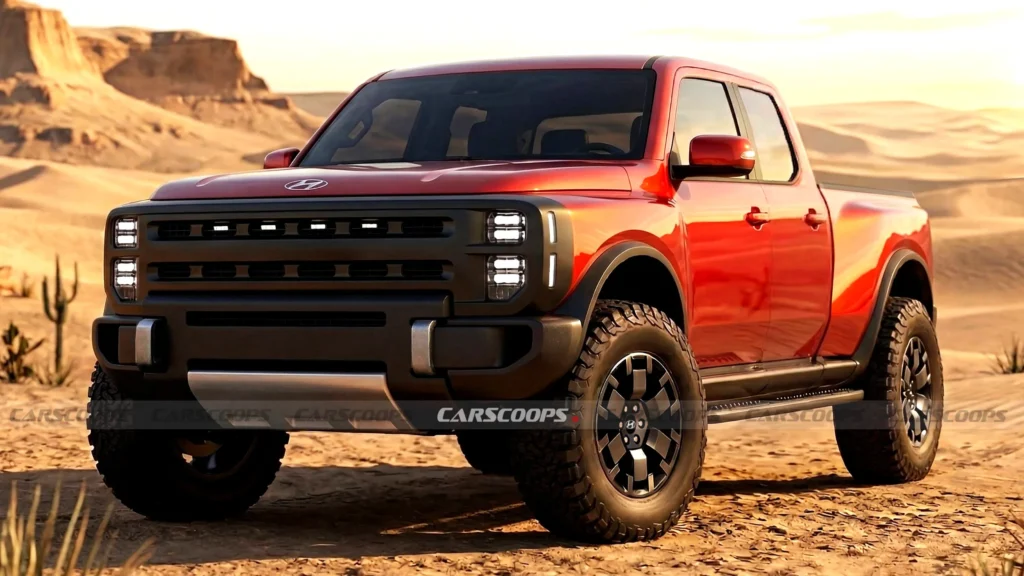
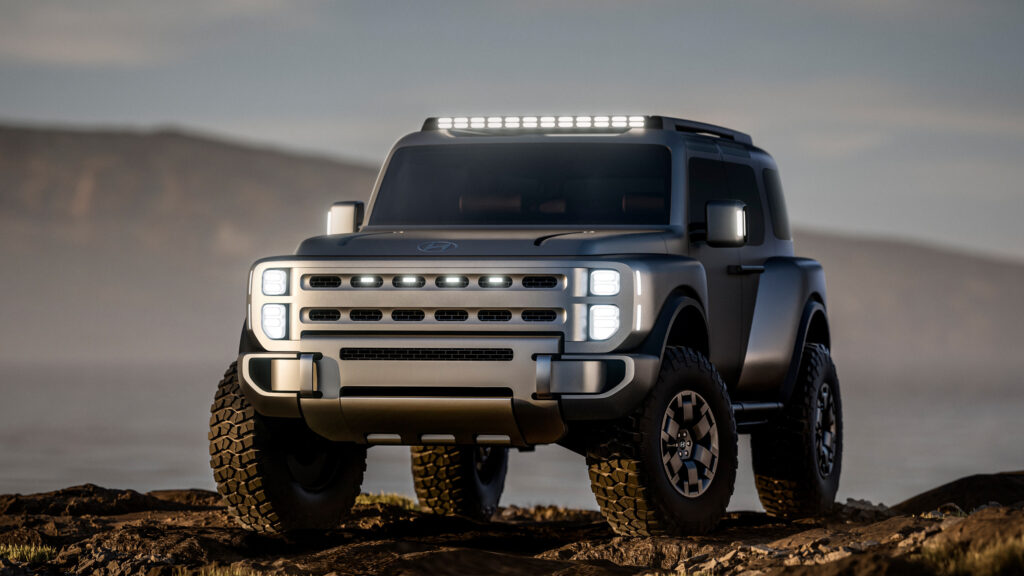
Hyundai’s body-on-frame midsize pickup has been rumored for many years, but a recent investor presentation finally added specifics. The Korean automaker outlined where it plans to spend money through the end of the decade, and the pickup became part of a major product offensive.
The company announced it will introduce more than 100 new or updated models by 2030, with at least 58 of them in North America. Special attention will be paid to so-called “white spots” — market segments where Hyundai is not yet present. One such spot will be filled by the body-on-frame pickup, which is expected to appear within the next three years.
Read: new Hyundai pickup will be everything the Santa Cruz didn’t want to be
Brand representatives have long acknowledged plans for the new midsize pickup in interviews, but have not revealed details. The new model will compete globally with the Toyota Hilux, Ford Ranger, Mitsubishi Triton, and Isuzu D-Max. It is speculated that it could share a platform with the Kia Tasman, although there is no official confirmation yet.
Will the pickup be hybrid?
In an interview with Car Sales, Chief Operating Officer of Hyundai Motor Company Australia, Gavin Donaldson, admitted that the company is late entering the midsize pickup segment and hinted at a hybrid powertrain.
“We are undoubtedly going to be late to the party, that’s a reality. So when we arrive, we want everyone to notice us the moment we walk through the door. And I think the key here will be the powertrain. Realistically, from our point of view, we are looking at hybrid or EREV.”
During the investor presentation, Hyundai confirmed that it is working on several models with extended range, including an EREV version of the Santa Fe, a similar vehicle from Genesis, and a C-segment SUV for China with a range extender. If the company wants to make the pickup an EREV model, it could easily borrow technology from one of these models.
What this means for the market
Hyundai’s entry into the body-on-frame pickup segment is not just another new model. It is an attempt to take market share from players such as Toyota, Ford, and Isuzu, which have long been confident here. The fact that the Koreans are considering hybrid or EREV could become their main advantage. While competitors mostly rely on diesel engines, Hyundai could offer a more economical and quieter alternative, especially if it involves an electric motor with a gasoline generator.
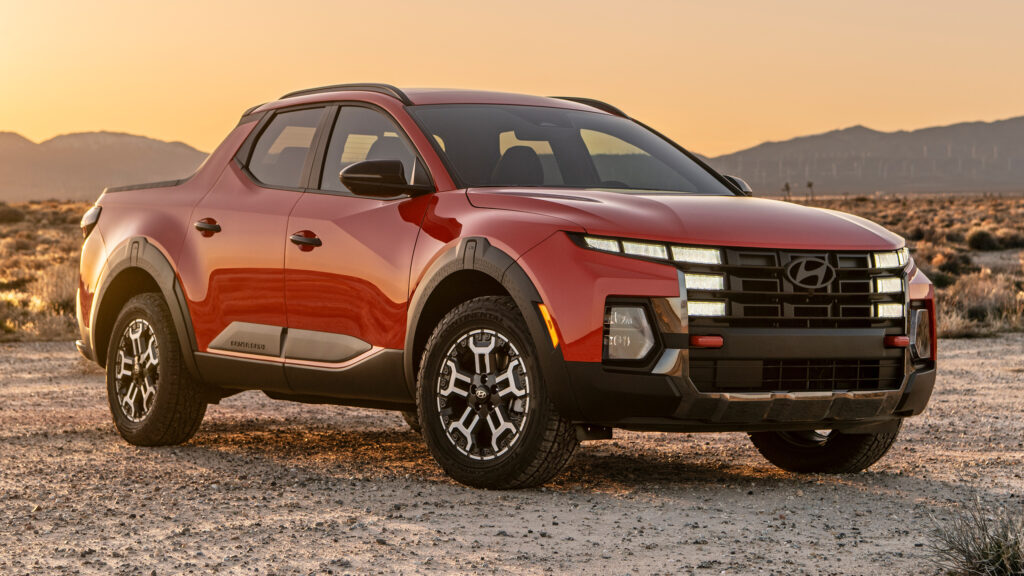
In addition, the arrival of a pickup on a ladder-frame chassis will remove the main criticism of the Hyundai Santa Cruz, which many considered too “car-like” and incapable of competing with real trucks. If Hyundai manages to combine the practicality of a body-on-frame vehicle with modern electric powertrains, the new model could find buyers not only among those who have long waited for such a vehicle, but also among those who had not previously considered pickups at all. A debut in the next three years is a reasonable timeframe for the new model to hit the market just as demand for hybrid trucks begins to grow even faster.