 by
by New BYD Pickup Model for the South American Market
The Chinese automaker BYD, which found success with its mid-size hybrid pickup Shark, continues to expand its presence in the commercial vehicle market. The company is already working on a second, smaller and more affordable pickup model, the first images of its prototype have already appeared online.
The main characteristics of the new model are:
Differences from the Shark Model and Positioning
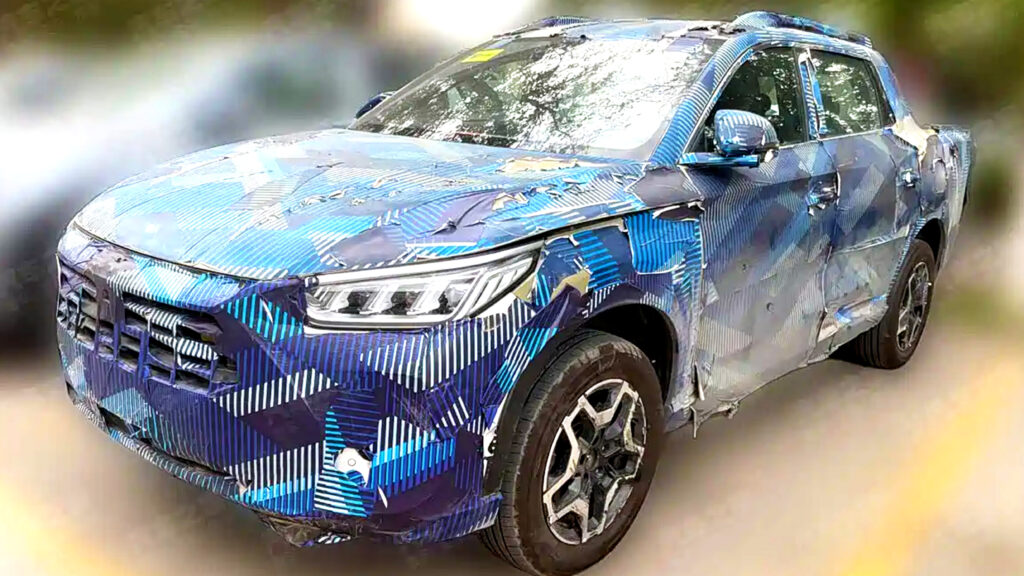
The recently photographed prototype, camouflaged in blue film, demonstrates a different design approach. Its styling resembles a crossover, and its proportions indicate more compact dimensions, convenient for urban environments. This model is being developed specifically for the markets of South America, where compact pickups such as the Ram Rampage, Fiat Toro, and Chevrolet Montana are popular.
Developed specifically for South America, this new pickup occupies a niche where smaller models thrive.

The front of the vehicle has received the signature “Dragon Face” radiator grille, which can be seen on some previous BYD models. From the side, it is clear that the pickup is significantly more compact than the Shark and has a smaller cargo compartment. The prototype is also equipped with roof rails and has a place for a tow hitch.
Interior and Expected Price
The interior of the new model, apparently, will be simpler and less premium than that of the Shark. The prototype uses an old BYD steering wheel, similar to the one installed in the Sealion 6 SUV, simple plastic air vents, and a mechanical gear selector in the center console. At the same time, the familiar large multimedia system is retained.
The official price has not yet been announced, but, considering the interior trim materials, the new pickup is expected to be significantly more affordable than the Shark model.
Technical Features and Powertrains
The new pickup will likely be built on a unibody platform. The Shark model is equipped with a hybrid powertrain based on a 1.5-liter engine and two electric motors with a combined output of 430 hp, however, for the new, smaller model, such technology may not be used.
It seems unlikely that this powertrain will be used in the smaller pickup, which may be sold as an internal combustion engine vehicle, possibly with the ability to run on ethanol, which is very popular in Brazil. A more affordable hybrid is also possible.
Thus, BYD could offer South America both traditional gasoline engines and versions capable of running on ethanol, or a more budget-friendly hybrid option.
The appearance of this model underscores the diversification of BYD’s strategy in the global market. The company not only competes in the electric vehicle segment but also actively adapts its products to specific regional needs. In South America, where compact and mid-size pickups are very popular due to their versatility, the entry of a new player could significantly intensify competition. The model’s success will depend on the right combination of price, technical characteristics that meet local conditions (for example, a fuel system for ethanol), and BYD’s ability to quickly establish logistics and service in the region.