 by
by Abandoning the Confusing System
After more than five years of use, Cadillac has decided to abandon the idea of placing numerical badges on the rear of its cars denoting torque. This practice, similar to the former German tradition of indicating engine displacement, has been discontinued.
Inaccurate Numbers and Rounding
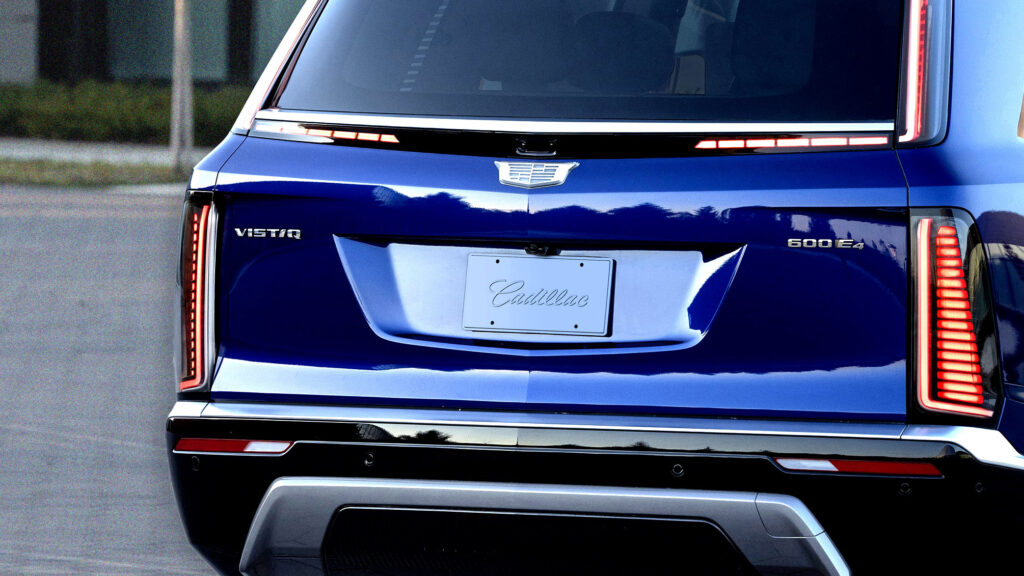
Under the current strategy, each Cadillac model received a badge that roughly reflected its torque. For example, the Cadillac Optiq had a “500E4” badge, which was meant to signify an electric all-wheel-drive system and 500 Nm of torque. However, the model’s actual figure is 480 Nm. The problem was not only the use of newton-meters, which are unfamiliar to the American market, but also that the numbers were always rounded to the nearest 50 Nm, creating confusion.
Starting with the 2027 model year, all Cadillac vehicles will remove the Nm badges, beginning with the VISTIQ. This change is being made to simplify the appearance of the rear of our vehicles.
Simplifying the Design
The first model without a digital badge will be the 2027 Vistiq. The company emphasized that the change is not related to the confusion surrounding the values but is specifically aimed at simplifying the appearance.
Until now, the Vistiq had a “900” badge, reflecting 881 Nm of torque from its electric powertrain. Instead, a new “E4” badge will appear, indicating the electric all-wheel-drive configuration. Models with turbocharged engines will receive a “T” designation.
Large-Scale Changes for the Entire Model Lineup
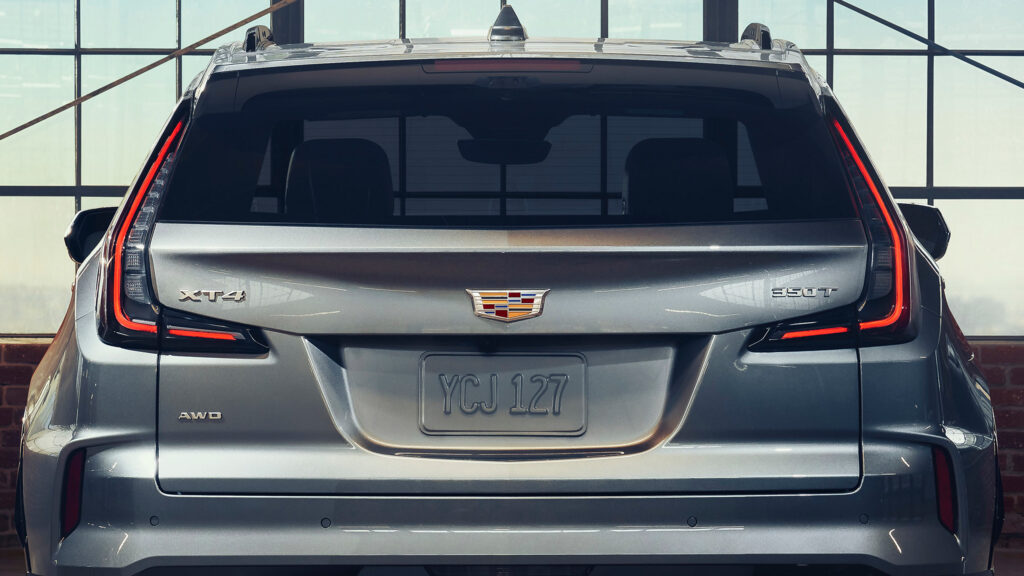
Digital badges will also disappear from other models. The CT5 will lose the 350T and 550T designations, the Escalade will lose the 600 badge, and the XT5 will lose the 350T and 400T badges. Similar changes await the Optiq, Escalade IQ, Lyriq, and the rest of the Cadillac lineup.
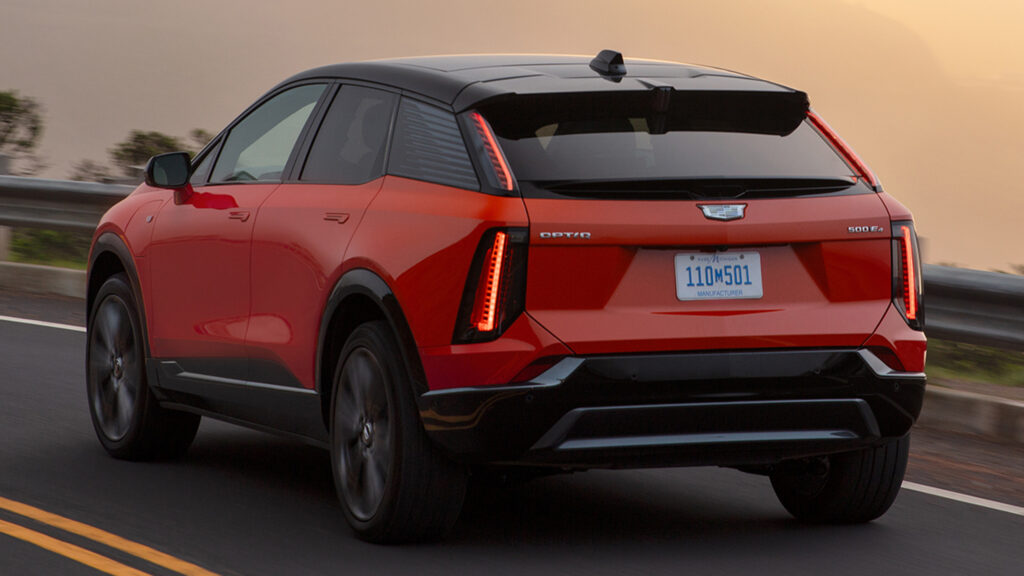
This step by Cadillac can be seen as a return to a more classic and clean design, as well as an acknowledgment that technical details, especially presented in the metric system, are not always clear to mainstream buyers in the US. The transition to letter designations (such as E4 for electric drive) fits better with modern branding trends in the automotive industry, where the emphasis is shifting to the type of powertrain rather than specific numerical parameters. This change may also facilitate the company’s global marketing strategy by eliminating discrepancies between different measurement systems.