 by
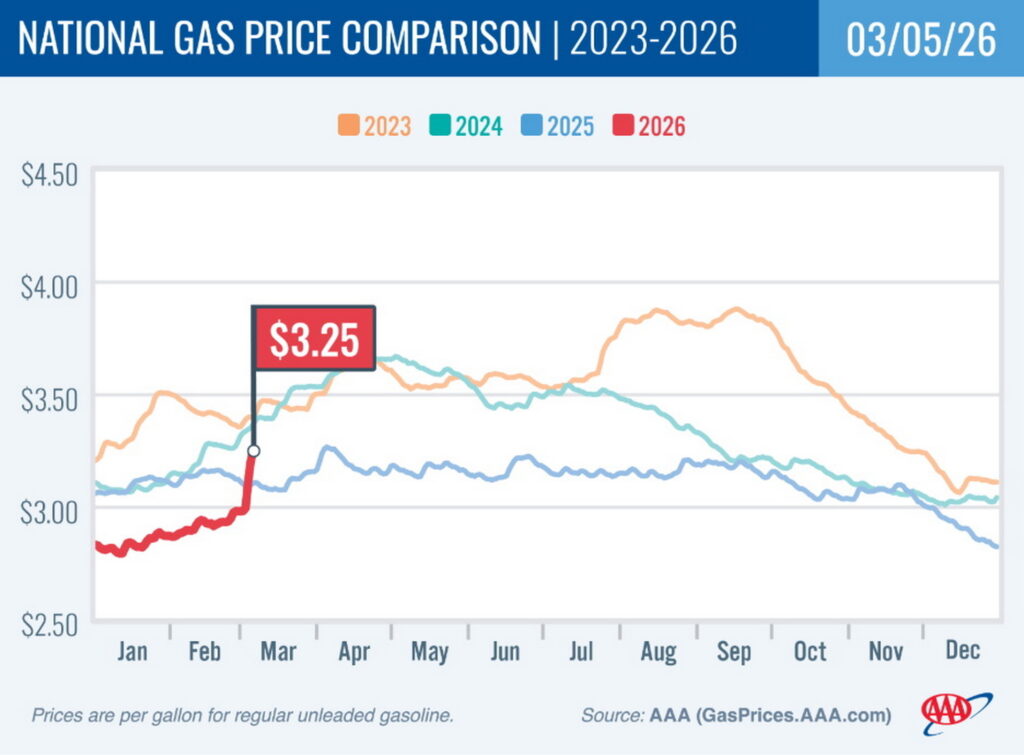
by Oil prices are rising against the backdrop of tensions with Iran, leading to an increase in gasoline prices. According to AAA, the average price in the US recently spiked sharply to approximately $3.25 per gallon. Some forecasts warn that high fuel prices could persist for months.
Gradual Increase in Fuel Prices
Gasoline prices are already beginning to rise as tensions in the Middle East push oil markets upward. So far, the increase has not been very sharp, but depending on how the conflict with Iran develops, they could continue to rise slowly for a long time.
According to AAA, the average price in the US recently rose to approximately $3.25 per gallon after a sharp weekly jump, as crude oil markets react to the consequences of the conflict between the US, Israel, and Iran. And there is a high probability that this is just the beginning.
Risks to Oil Supply
Analysts say the biggest risk is disruption to oil transportation through the Strait of Hormuz, one of the world’s most important energy chokepoints. If supply remains constrained, gasoline prices could continue to rise for weeks or even months.
Future Forecasts
Recent forecasts related to the ongoing conflict suggest that oil prices may remain high for some time. The US Energy Information Administration expects oil to remain expensive enough to raise US gasoline prices in 2026, even if the conflict subsides, with average prices around $3.5 per gallon.
In more extreme scenarios, if oil remains near or above $100 per barrel for an extended period, it could trigger inflation and make daily driving significantly more expensive. In fact, it is reported that some major names in the banking and financial industry fear the price could rise to $120 per barrel. Some analysts consider a level of $150 per barrel possible.
Historical Parallels and Future Scenarios
For reference: when oil prices reached $130 per barrel in 2022, gasoline prices hit approximately $5 per gallon. At prices of $150 or higher, we could see fuel prices of $6 or $7 per gallon. This is precisely the situation where electric vehicles suddenly start looking much more attractive, even to those who wouldn’t normally consider buying one.
So where is your limit? If fuel prices continue to rise with no signs of relief, when will you finally consider parking your ICE vehicle and switching to an electric car?
Rising fuel prices have always been a powerful incentive for consumers to reconsider their transportation habits. The cost of operation, especially for those covering long distances, becomes a key factor in decision-making. Electric vehicles, despite their higher initial price, offer significantly lower “fuel” and maintenance costs. However, a nationwide transition to them requires developed charging infrastructure, which remains a challenge for many regions. Thus, the current price increase may accelerate not only individual choice in favor of EVs but also investments in the necessary energy and charging network for them.