 by
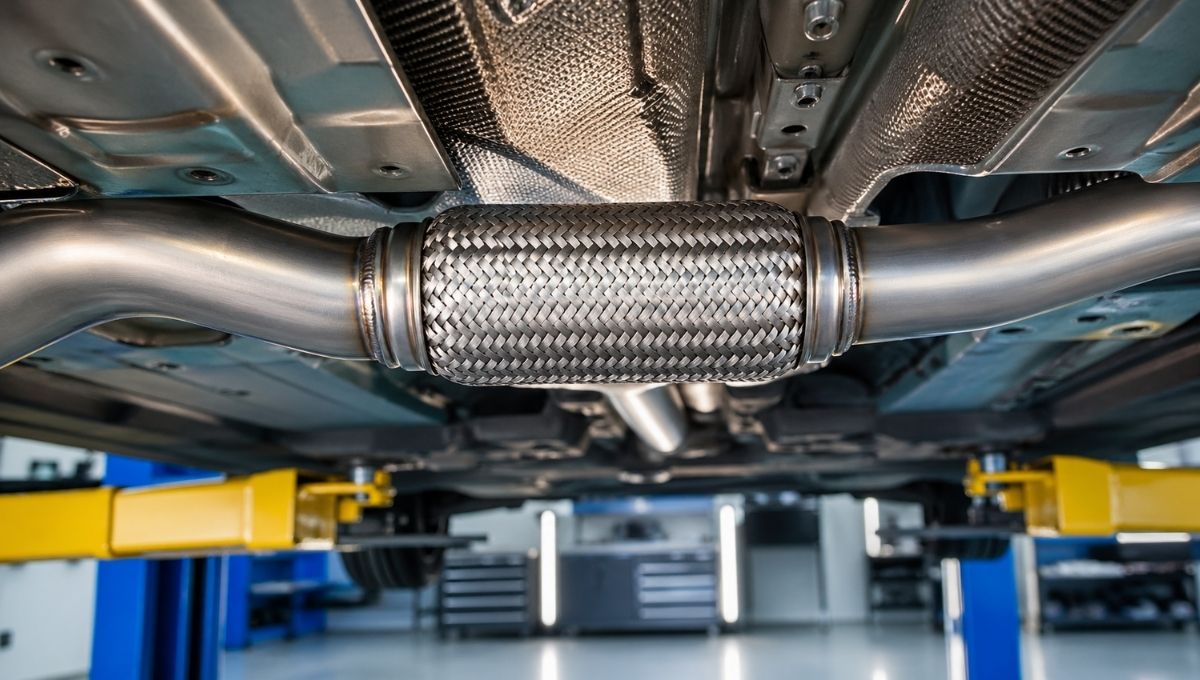
by The exhaust flex pipe is one of the most loaded elements of a car’s exhaust system. It operates under constant heating, vibrations, temperature changes, and mechanical deformations, so its lifespan depends not only on the quality of the part itself but also on the technical condition of the vehicle.
In practice, premature destruction of the flex pipe often indicates accompanying malfunctions and problems. Many drivers mistakenly perceive these auto parts as a simple flexible insert, although in fact it protects the exhaust system from constant deformations and metal fatigue.
Let’s look at what the exhaust flex pipe is for, why it fails, and how to minimize the risk of repeated breakdown.
What is the flex pipe for in the exhaust system
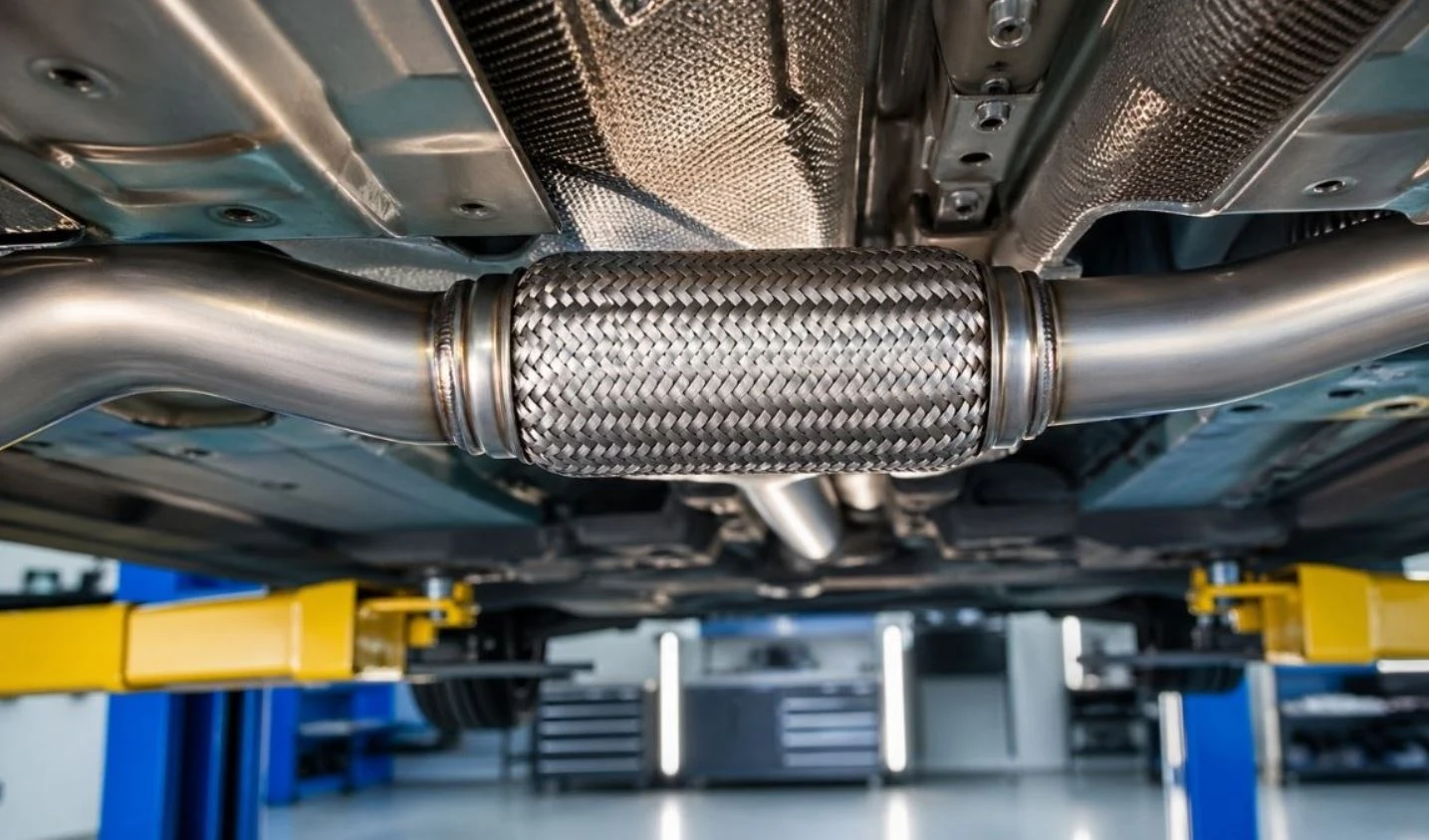
The car engine constantly changes its position relative to the body during operation — it vibrates, while the main part of the exhaust system is rigidly attached to it. That is why a flexible connection — the flex pipe — is used between the downpipe and the main line. Without it, mechanical loads would be transferred directly to other elements.
The main tasks of the flex pipe:
- partial isolation of engine vibrations from the rigid part of the exhaust system;
- reducing the load on pipes, flanges, and welded joints;
- protecting the exhaust system from constant deformations;
- compensating for thermal expansion of metal during heating;
- reducing mechanical loads while driving.
In practice! The flex pipe works as an elastic section between the movable and rigidly fixed parts of the system. This is precisely what allows reducing the concentration of loads at the most vulnerable points of the exhaust line.
Why the exhaust flex pipe breaks: 6 main reasons
The destruction of the flex pipe is almost always associated with constant mechanical or thermal load. Even a high-quality part has a limited lifespan, especially if the car is operated in harsh conditions or the exhaust system is not working properly.
The 6 most common reasons for the failure of these parts:
1. Corrosion and natural wear
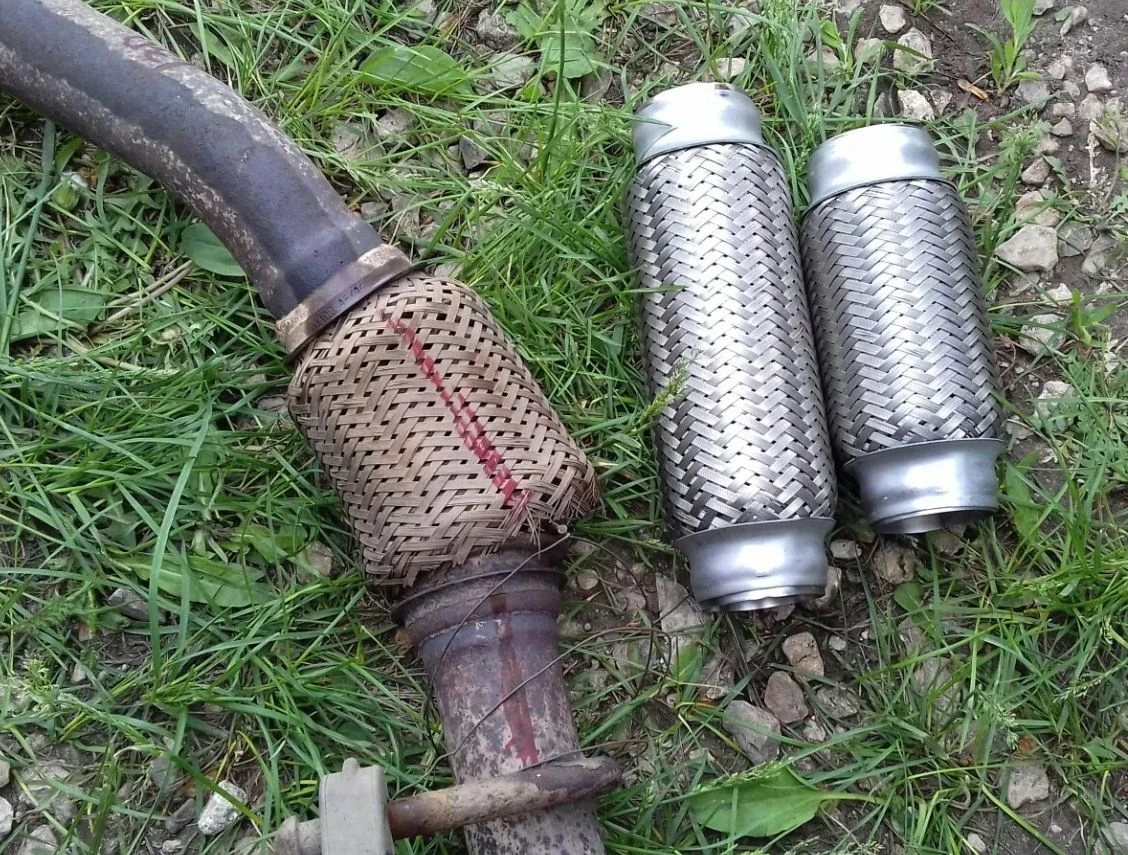
The flex pipe constantly comes into contact with moisture, condensate, dirt, and road reagents. Due to temperature changes, moisture accumulates between the metal layers, gradually destroying the inner braid and outer shell. Over time, the metal loses strength, microcracks and burn-throughs appear. Even without other malfunctions, the flex pipe has a natural lifespan and gradually wears out due to constant heating and cooling cycles.
2. Misalignment of the exhaust system
If the exhaust system is installed incorrectly or is under static tension at rest, the flex pipe constantly operates in a deformed position. In such a situation, load on the metal occurs even without the car moving, and during engine operation, the bends become even stronger. This significantly accelerates metal fatigue and destruction of the internal structure of the flex pipe.
3. Impacts against road obstacles
The flex pipe is located in the lower part of the car, so it is often damaged by contact with curbs, ice, or uneven road surfaces. After an impact, the flex pipe body may become deformed, the inner mesh may tear, or hidden metal damage may appear, which subsequently leads to loss of tightness.
4. Overheating of the exhaust system
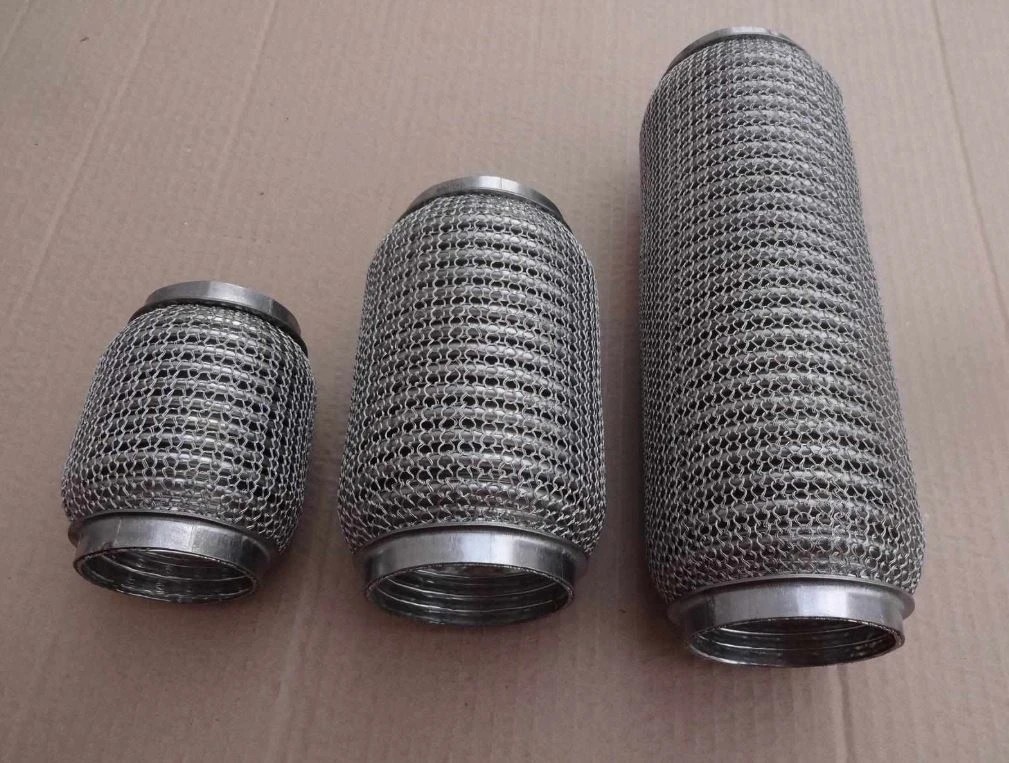
Elevated temperature significantly accelerates the destruction of the metal and inner braiding. The cause of overheating can be a faulty catalytic converter, problems with the fuel system, or ignition misfires. With prolonged overheating, the flex pipe loses its elasticity, and the metal becomes more brittle and cracks faster.
5. Worn engine mounts
With worn mounts, the engine starts to move more abruptly during startup, gear shifting, and load changes. This increases the amplitude and speed of deformation in the flex pipe area, which connects the movable part of the exhaust near the engine with the main line under the body. Constant cyclic bends and twisting accelerate metal fatigue and gradually destroy the inner braiding.
6. Low-quality or incorrectly selected flex pipe
Cheap universal flex pipes are often made of thin metal and have a weak internal structure. In addition, incorrectly selected length or diameter creates additional load on the connection. As a result, such a part withstands temperature and mechanical loads much worse and breaks faster.
Conclusion! In most cases, the flex pipe is destroyed not due to a single factor, but due to a combination of several reasons simultaneously. That is why, when replacing it, it is important not only to install a new part but also to eliminate the source of overload that shortened its lifespan.
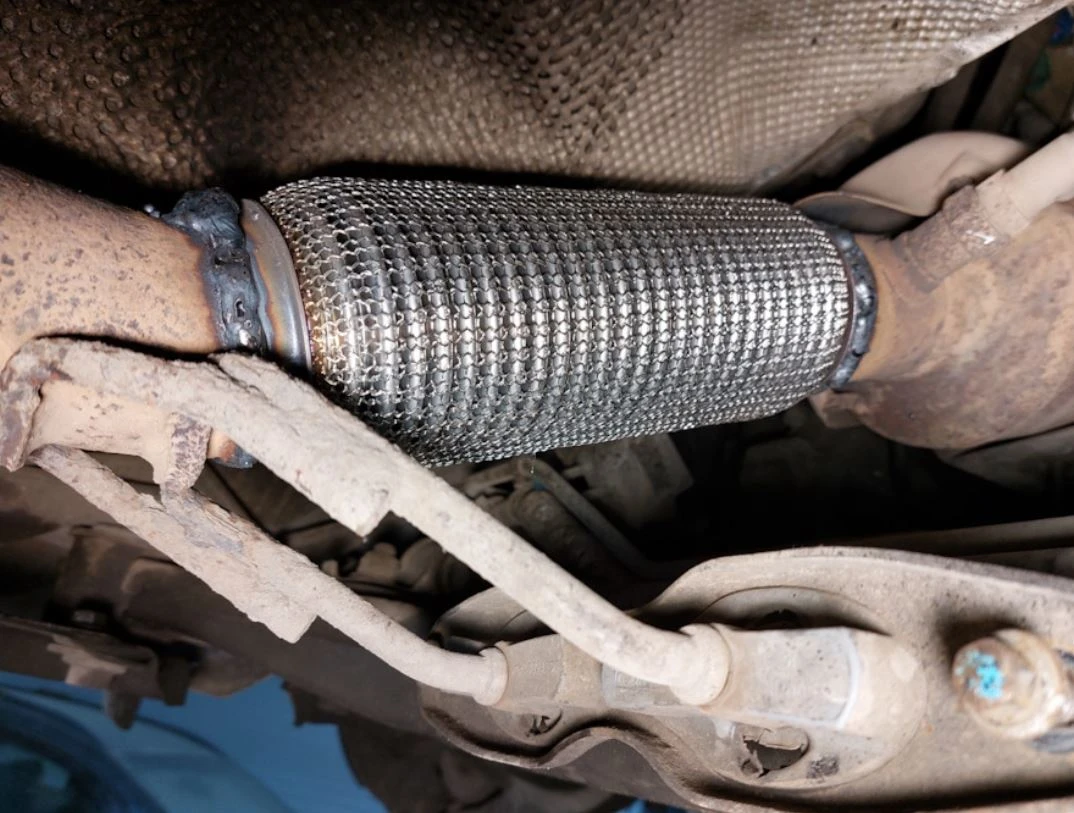
How to avoid problems with the flex pipe
The service life of the flex pipe directly depends on the condition of the entire exhaust system and the correctness of vehicle operation. If the cause of overload is not eliminated after replacement, even a high-quality part can quickly fail again.
To extend the service life of the flex pipe, it is recommended:
- regularly check the condition of the exhaust system for corrosion and promptly replace a worn flex pipe before serious damage appears;
- control the correct position and fastening of the exhaust system during repairs to avoid misalignment and constant tension;
- avoid impacts of the underbody against curbs, uneven surfaces, and foreign objects on the road;
- monitor the condition of the catalytic converter, fuel system, and ignition to prevent exhaust overheating;
- check the engine mounts, and if worn, replace them and carry out repairs;
- use high-quality flex pipes with a strong multi-layer structure and correct dimensions.
What to consider! After installing a new flex pipe, it is important to ensure that the exhaust system is not in a stressed state and has the correct geometry. A comprehensive approach to car diagnostics and repair can significantly increase the lifespan of the flex pipe and avoid repeated expenses in the future.
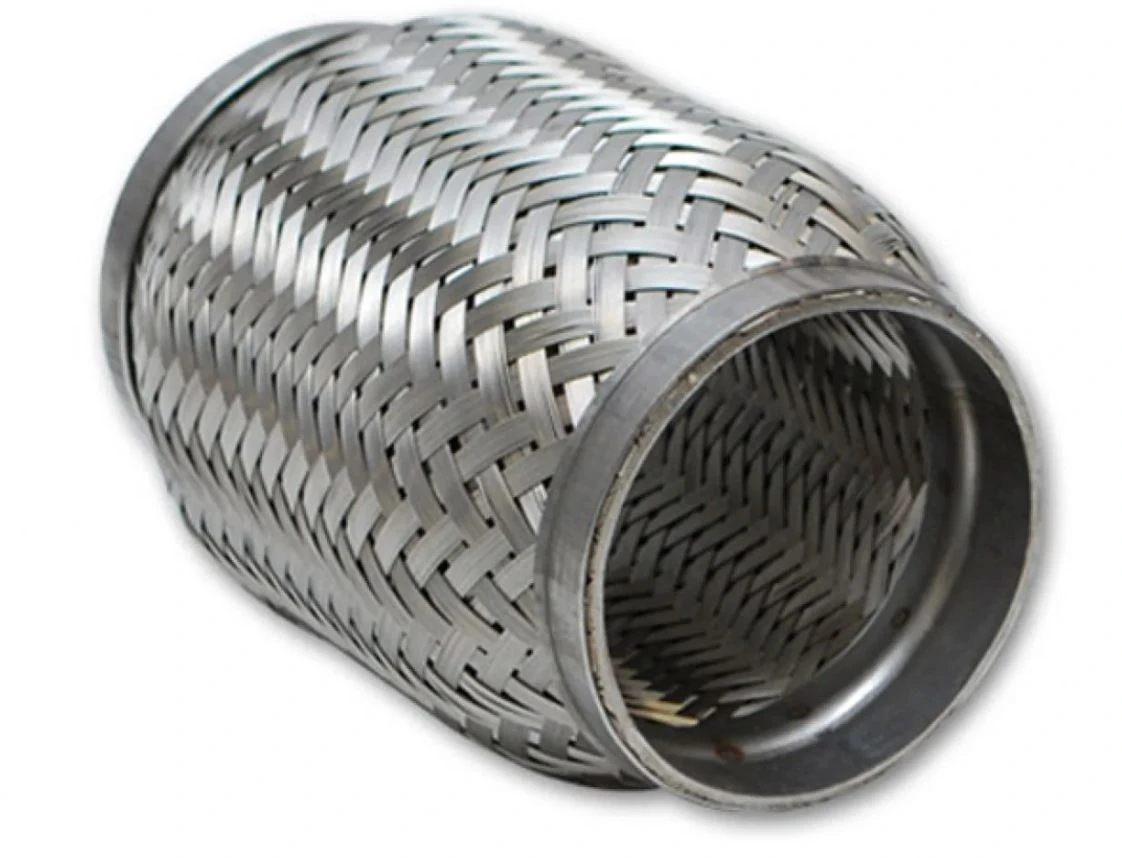
The exhaust flex pipe is an important element that protects the exhaust system from constant mechanical and thermal loads. Its damage rarely occurs without a reason and often indicates other car problems — from worn engine mounts to exhaust system misalignment. Ignoring the first signs of malfunction gradually leads to more serious exhaust damage and additional repair costs. That is why, when replacing the flex pipe, it is important to assess the condition of the entire system, not just a single part.