 by
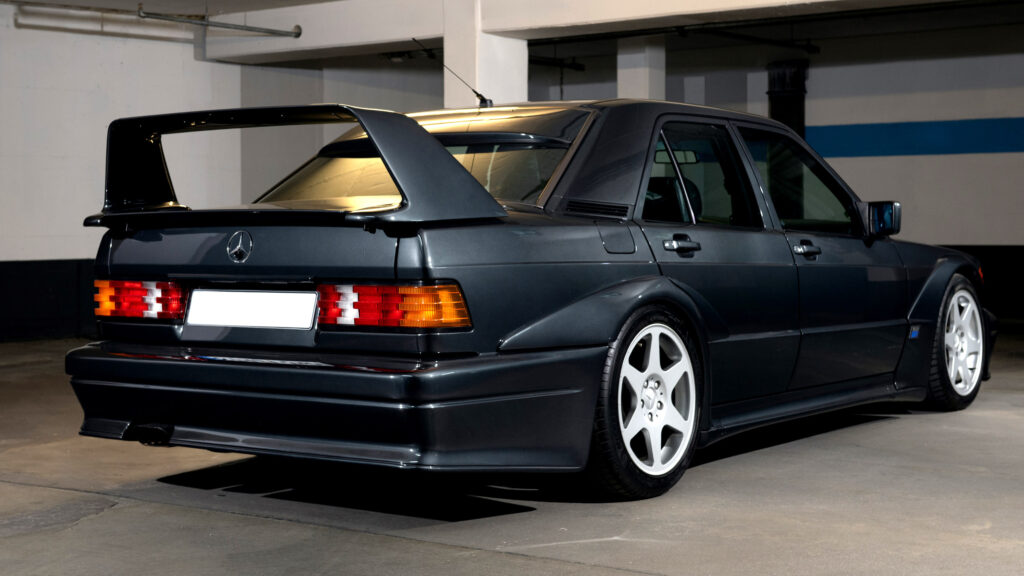
by An automotive legend, the Mercedes-Benz 190E 2.5-16 Evolution II, is preparing for the attentive gazes of collectors at an auction in Monaco. This model embodies an era when road-legal cars were created to comply with racing regulations.
A Rare Find at Auction
The specimen to be auctioned has factory number 283 and was initially delivered to Switzerland. Unlike many others that remained “garage queens,” its first owner was not afraid to drive this car. Between 1990 and 2006, over 79,000 kilometers were added to the odometer.
Large-Scale Restoration
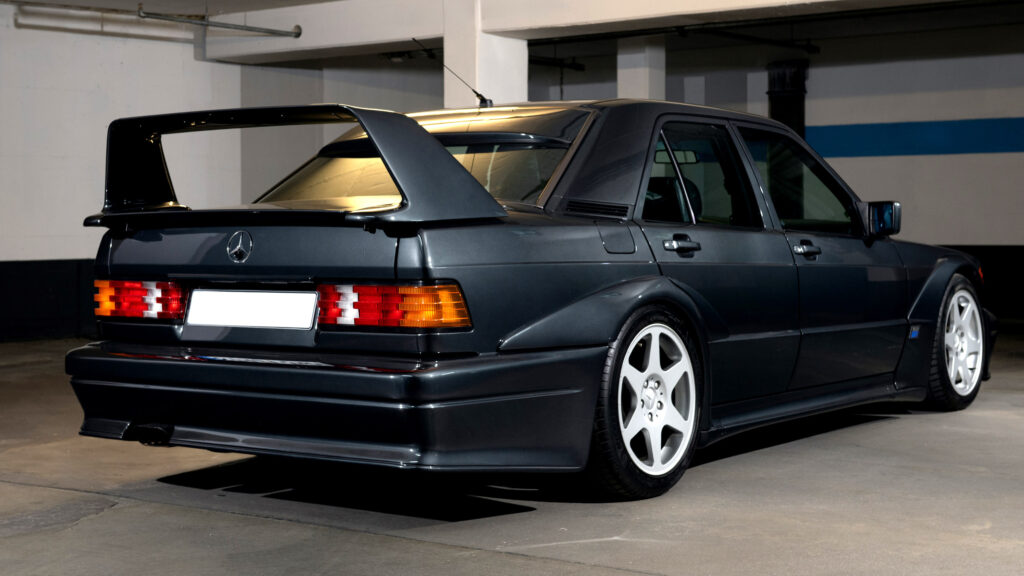
The Munich-based company CarTech Knowledge conducted a full-scale restoration of the car between 2021 and 2023. The body was repainted in metallic Blue Black. Specialists dismantled the engine, updated it with new injectors and a radiator, and performed a major overhaul of the oil cooler and differential. Since the restoration, the car has seen virtually no use, and its odometer now reads 80,598 kilometers. Despite such mileage for an Evolution II model, it is expected to sell at the RM Sotheby’s auction for an amount between $305,000 and $410,000.
Racing Genes and Road Fate
Mercedes created this pinnacle of the W201 model to meet homologation requirements for the DTM championship. The car is equipped with a 2.5-liter naturally aspirated four-cylinder engine, developed in collaboration with Cosworth, which produces 232 horsepower and 245 Nm of torque. This allowed it to compete with the BMW E30 M3 Evolution II. In addition to the powerful engine, the car received an adjustable suspension and aggressive body kit with an adjustable rear wing, widened wheel arches, and a pronounced splitter. This is a reminder that Mercedes once created four-cylinder engines worth fighting for.
This particular specimen, despite its mileage, is a witness to the era of true homologation specials. Its history, combined with professional restoration, makes it not just a museum exhibit, but a living part of automotive heritage. While modern trends force manufacturers to seek compromises, such cars remind us of a time when engineers had a clear task: to transfer racing technology to public roads, which made each such car unique. The sale of this model could become an indicator of the stability of the market for late 20th-century German collector cars, whose value only increases over time.