 by
by New Tesla Roadster Trademarks
Is the second-generation Tesla Roadster electric car finally approaching the market? Over eight years have passed since its initial unveiling as a concept. Two recent trademark registration applications indicate that work on the car is ongoing, and its arrival may not be far off.
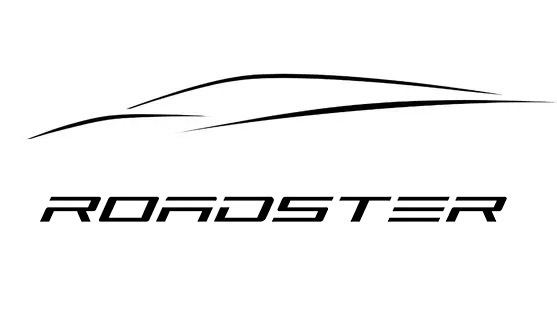
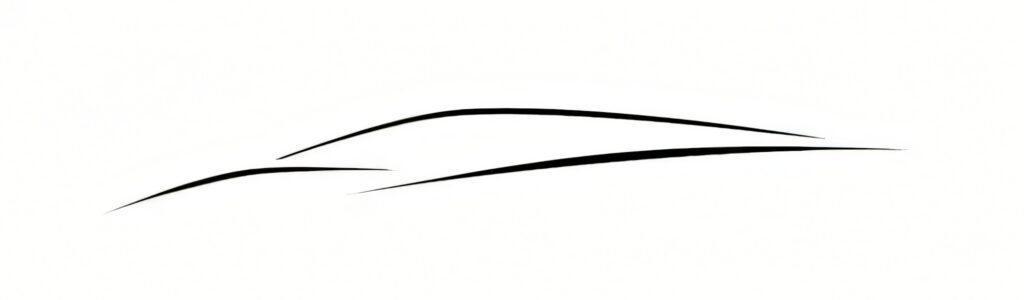
Earlier this week, Tesla filed two interesting trademark applications related to the Roadster with the United States Patent and Trademark Office. The first consists of three sharp lines that may hint at the streamlined shape of the two-door electric supercar. This symbol could be used for marketing or even become the basis for an emblem.
Tesla chief designer Franz von Holzhausen said Tesla would demo the new car before the end of 2025.
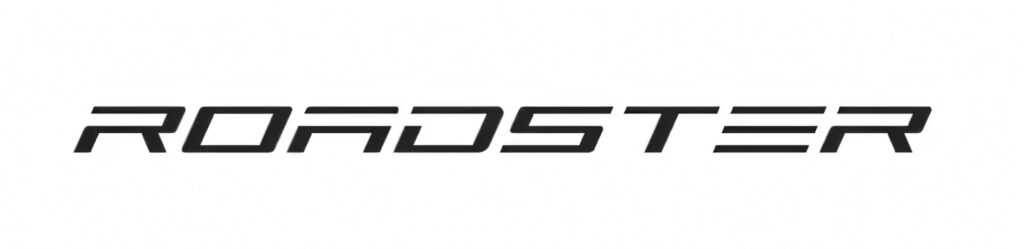
The second patent depicts the name ‘Roadster’ in large letters. A special font is used, slanted and with a sci-fi flair, perfectly suited for such a vehicle.
Specifications and Expectations
Since the new Roadster was first shown in November 2017, very little has been known about the production model. Initially, Tesla claimed the Roadster would have a massive 200 kWh battery pack, allowing it to cover over 620 miles (1000 km) on a single charge. The company also stated the car would accelerate from 0 to 60 mph (96 km/h) in just 1.9 seconds and have a top speed exceeding 250 mph (402 km/h).
The electric vehicle industry has advanced significantly since then, so the Roadster is expected to hit the market with different performance and range figures. A 200 kWh battery pack, which would be extremely heavy, now seems unlikely, especially considering modern batteries’ higher energy density and efficiency.
Despite promises to demonstrate the car by the end of 2025 and begin production within two years, no substantial evidence of these plans being implemented has been publicly presented. This forces any new claims about the Roadster to be viewed with a degree of skepticism, given the project’s multi-year delays.
The filing of new trademarks is one of the few concrete signals of the project’s viability in recent years. This step often precedes an active marketing campaign or even the start of production. However, for now, there are more questions than answers. Will the Roadster, conceived as a technological breakthrough, be able to compete with modern electric hypercars that have emerged during its development? Will it become a symbol of promises kept or another example of Tesla’s ambitious but delayed plans? Time will provide answers to these questions, and for now, enthusiasts can only watch the patent applications and wait for real prototypes.