 by
by Automotive History is Full of Unrealized Projects
Automotive history is rich with projects that died quietly in office cubicles. One such little-known project is the Cisitalia 808XF, which is being auctioned this month. It is the result of an Italo-American collaboration that could have brought European GT glamour to Ford dealerships in the USA decades before the De Tomaso Pantera appeared.
Key facts about the car:
The Beginning of an Ambitious Project
The story began in 1951 when Henry Ford II, who was rumored to own a Cisitalia 202, agreed to explore the possibility of collaboration with the Turin-based automaker. The idea was to combine elegant Italian design with affordable American mechanicals from Ford to create a stylish and accessible sports car for the US market, which was then enamored with MG and Jaguar.
It was meant to be European charm, American reliability, and V8 power.

Technical Implementation and Design
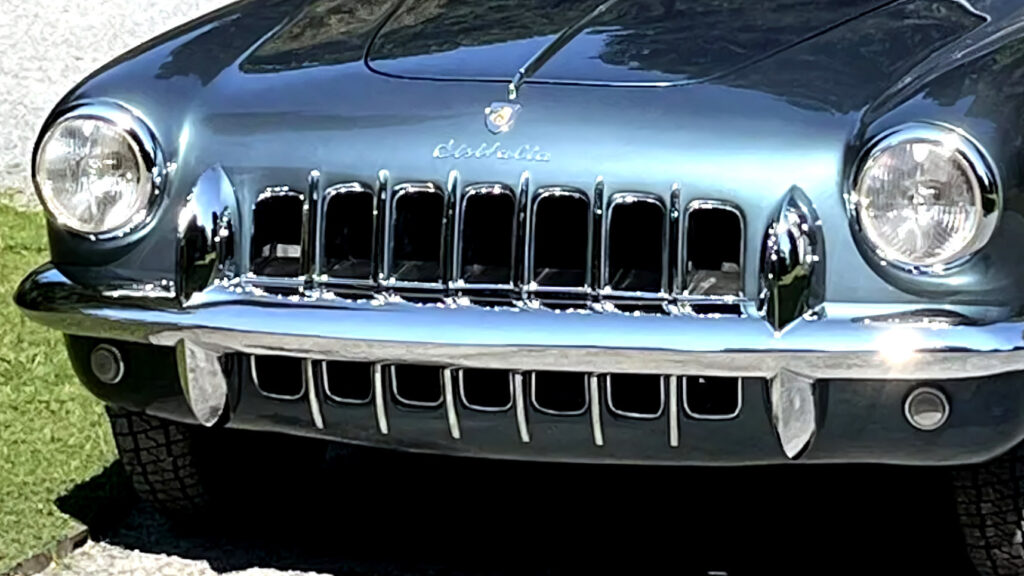
Development of the prototype was undertaken by Cisitalia. The 808XF model, named for its X-shaped frame and Ford-based powertrain, received its own chassis designed by Giovanni Savonuzzi, who also created the elegant fixed-roof coupe body built by coachbuilder Ghia. Under the hood was a 4.2-liter Mercury flathead V8 engine, equipped with two Holley carburetors and mated to a three-speed Ford manual transmission.
Financial Hurdles and Project Closure
On paper, it looked like a winner, and in metal, the car looked sensational. However, when the completed car arrived in the USA in 1952 for evaluation, the reality became clear. Ford’s engineers and accountants concluded that production costs were too high for the project to be viable. Even the subsequent development of two more prototypes with bodies by Vignale could not change management’s mind. The green light was never given.
The Fate of the Sole Prototype
Instead of becoming Ford’s first Italian sports car for America, the Cisitalia 808XF was offered for sale in Road & Track magazine for $7,500 and later shown at the International Motor Sports Show in New York in 1953. It subsequently entered long-term private ownership, spending decades out of the public eye before undergoing a thorough restoration that returned it to its original metallic blue color and period-correct details.
A Family Relic and Historical Significance
Today, this car is both a time capsule of design and an engineering curiosity, combining Ford suspension and brake components with exclusive Italian craftsmanship and luxurious details. Remarkably, it has been in the care of one family since 1960, with the current owner having possessed it for the last 48 years.
Although Ford ultimately abandoned the 808XF, the concept of a sports GT built on a reliable American mechanical base did not die. Ford had enormous success starting in 1955 with the Thunderbird, which was much cheaper to produce than the 808XF. In the early 1970s, the company supplied V8 engines for the Italian supercar De Tomaso Pantera, even selling these cars through its Lincoln-Mercury dealerships, until it lost patience with assembly quality issues and exited the project in 1975.
This prototype is a vivid testament to how industrial logic often prevails over creative ambitions. It also serves as a reminder of the importance of economic viability in the automotive business, where even the most beautiful design may not find its way to the assembly line. The story of the Cisitalia 808XF remains an intriguing “what if” for collectors and historians, showcasing an alternative path the American auto industry could have taken in its quest for a sporting image. Its appearance at auction is a rare opportunity to acquire not just a vintage car, but a unique piece of unrealized history from a major brand.