 by
by Hybrid math has never been as straightforward as marketing presents it. Yes, a hybrid is a simple solution for buyers seeking better fuel economy and lower fuel costs, but its price tag is almost always higher than that of a comparable gasoline car. According to a new study by Jato, you may need to drive up to 159,000 miles (255,000 km) before fuel savings catch up to the amount spent at the dealership.
Gas Prices Change the Equation
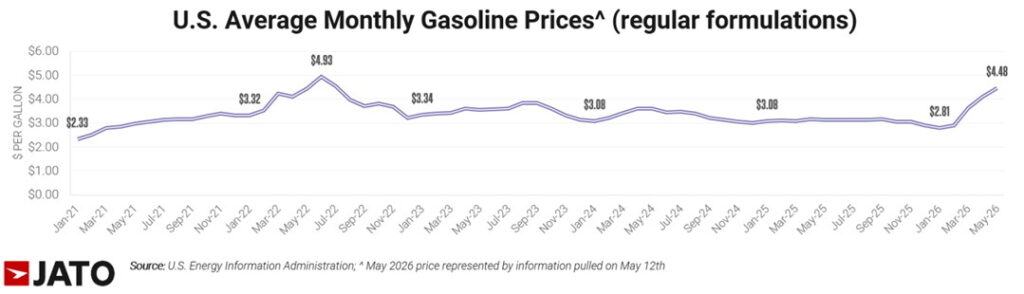
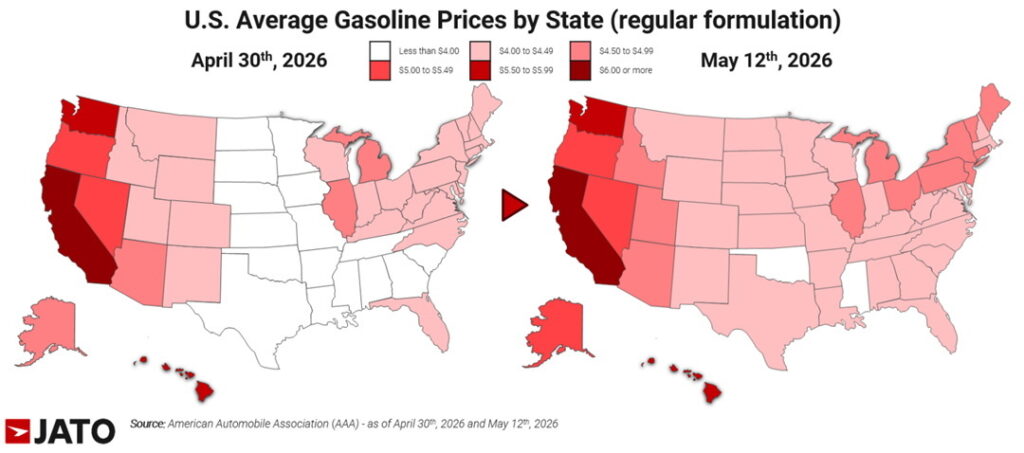
The average national gas price in May exceeded $4 per gallon for the first time since July 2022. This is a 59.3% jump since January, and only two states still have prices below four dollars.
The CR-V Test Case
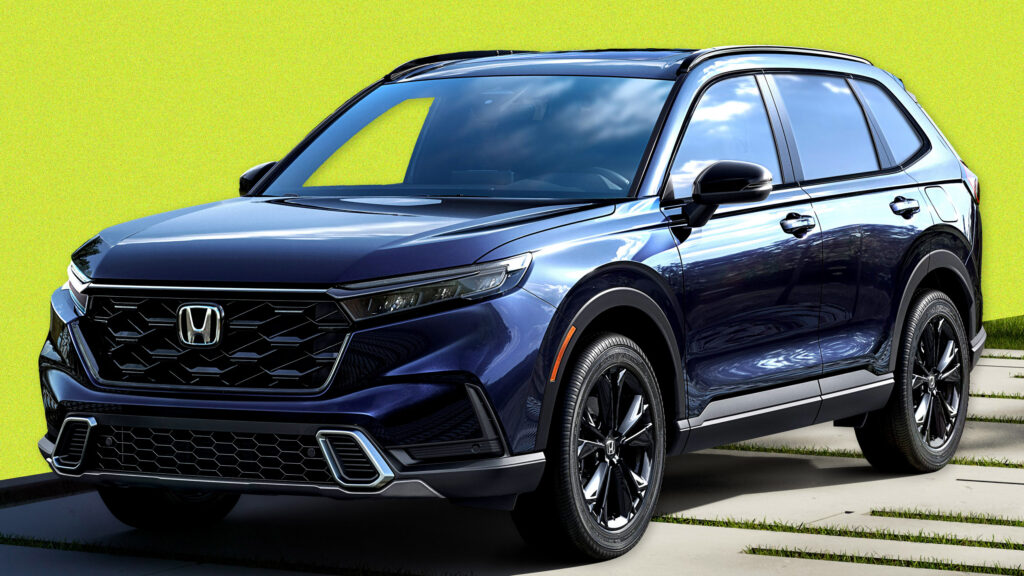
To find out how much you actually need to drive for a hybrid to become financially advantageous, JATO analyzed one of the most popular models in the North American market — the Honda CR-V, which is sold in both regular gasoline and hybrid versions. The study compared the CR-V AWD Sport-L Hybrid, starting at $40,225, with the closest gasoline counterpart, the AWD EX-L, starting at $36,900.
Both trims have nearly identical standard equipment, with the only significant extra feature of the hybrid being roof rails, which come standard rather than being offered as a paid option for the EX-L. With a price difference of $3,325, the owner will need to save exactly that much on fuel for the hybrid to pay off.
Gas Prices Rewrite the Equation
Gas prices play a key role in these calculations. With the average US price at $2.81 per gallon in January 2026, a buyer would have to drive the hybrid CR-V nearly 159,000 miles (about 255,000 km) to recoup the $3,325 difference, considering the combined fuel economy of 37 mpg versus 28 mpg for the gasoline model.
However, after the start of the war with Iran, fuel prices rose sharply, reaching an average of $4.48 on May 12 and rising to $4.51 by May 25. At this cost, reaching the break-even point requires driving approximately 100,000 miles (160,000 km).

Of course, fuel prices vary significantly by state, affecting the required mileage. For example, in California, gas prices can exceed $6 per gallon (currently $6.12 as of May 25), which means a lower mileage for payback. On the other hand, Oklahoma is the cheapest state at $3.99 per gallon (as of May 25).
Incentives Tip the Scales
Incentives and the choice between financing or leasing a hybrid also significantly impact the equation. For example, Honda offers different incentive programs in different regions of the country, so the difference between a regular CR-V and a hybrid can range from $2,900 to $3,301.
With an adjusted difference of $2,900 and a gas price of $4.50 per gallon, the math becomes more favorable for the hybrid: 86,000 miles, or 6.4 years, to pay off. If the price rises to $6.00 per gallon, as in California, the Sport-L would start paying for itself after just 65,000 miles, or 4.8 years.

If the difference increases to $3,301, the break-even distance increases to 98,000 miles at $4.50 per gallon or 74,000 miles at $6.00. The scenario with a price of $2.50 per gallon from the JATO table, which pushes payback beyond 156,000 miles, is now mostly a historical reference.
The JATO study also notes that lease calculations changed from month to month. In April, Honda’s incentive package nearly equalized the monthly payments for the hybrid and EX-L, with the Sport-L starting to pay for itself after the second or third fill-up.
In May, the discount structure again tilted in favor of the gasoline car, and it would be difficult for a CR-V lessee to recoup the price difference within the mileage limit unless pump prices stayed above the $6.00 mark from the time the lease was signed until the keys were returned.
A Bet on Future Fuel Prices
All this has an obvious caveat: this math only works as long as gas prices stay at current levels. If fuel costs drop to around $3.00 in the coming months or next year, the arguments for the hybrid will weaken just as quickly as they strengthened. The decision a buyer makes today by taking out a five-year loan is essentially a bet on where fuel prices will be over the next five years, and that is not a forecast anyone in this market makes with great confidence.
It is worth noting that, besides fuel price and incentives, real-world savings are also affected by driving style. Aggressive acceleration or frequent high-speed highway driving can negate the hybrid’s efficiency advantages. Additionally, potential buyers should consider the long-term reliability and maintenance costs of the hybrid system, which, although becoming increasingly reliable, may still require additional expenses in the future, especially after the warranty period expires. Thus, the decision to buy a hybrid is not just a mathematical calculation but also an assessment of one’s own driving habits and long-term vehicle ownership plans.