 by
by Cybertruck vs Edsel: Will Tesla become a new symbol of failure?
Ford Edsel has remained the gold standard of commercial failure in the automotive industry for almost seven decades. If Tesla’s Cybertruck continues along its current trajectory, it could take that title for itself. The irony is that, like Ford’s notorious failure, the Cybertruck is far more interesting as an engineering experiment than its sales figures suggest.
The numbers don’t add up
Ford expected to sell about 200,000 Edsels during its first model year after launch in 1957. Instead, the company managed to sell less than a third of that target before sales continued to fall, and the model was discontinued just two years later. Tesla’s figures look even more dramatic.
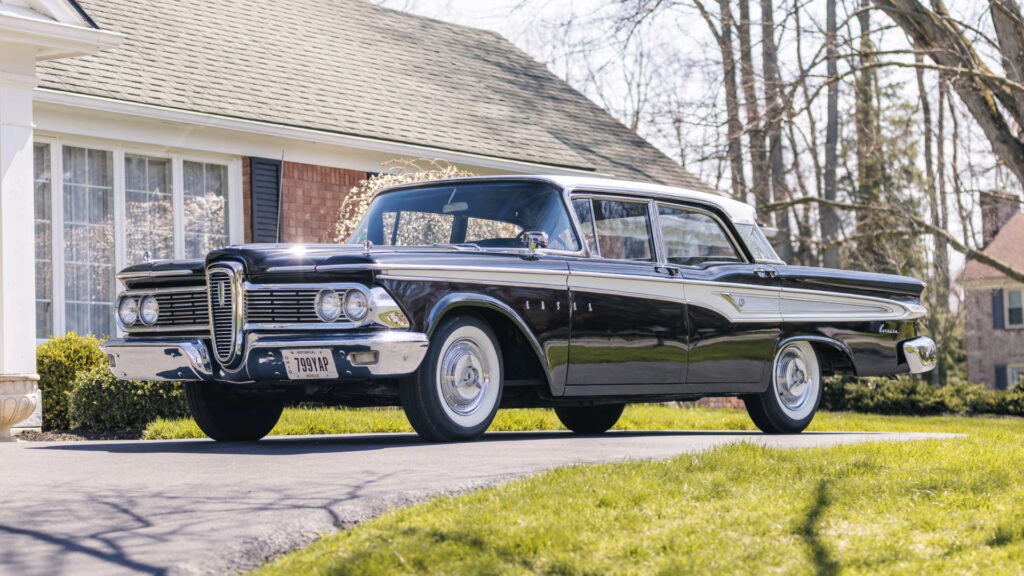
1959 Edsel Corsair Sedan (Photo: Mecum)
Elon Musk once suggested that Tesla could produce over 250,000 Cybertrucks annually if demand existed. According to new S&P Global Mobility registration data, cited by Bloomberg, only 7,133 Cybertrucks were registered in the U.S. through May. Even accounting for a partial year, the pickup remains on track for significantly less than one-sixth of Musk’s stated goal. The figures look even worse when digging deeper.
Edsel sales peaked in its first year. The Cybertruck also showed its current peak, around 39,000 units, in its first year. Last year, Tesla sold about 20,000, and this was with some help that Edsel never had. In the fourth quarter, almost 19 percent of all Cybertruck sales went to companies controlled by Musk. Now, halfway through 2026, it appears Tesla is on track for roughly 18,000 Cybertruck sales, unless Musk’s brands buy significantly more or demand inexplicably increases.
Innovations at the wrong price and the wrong time
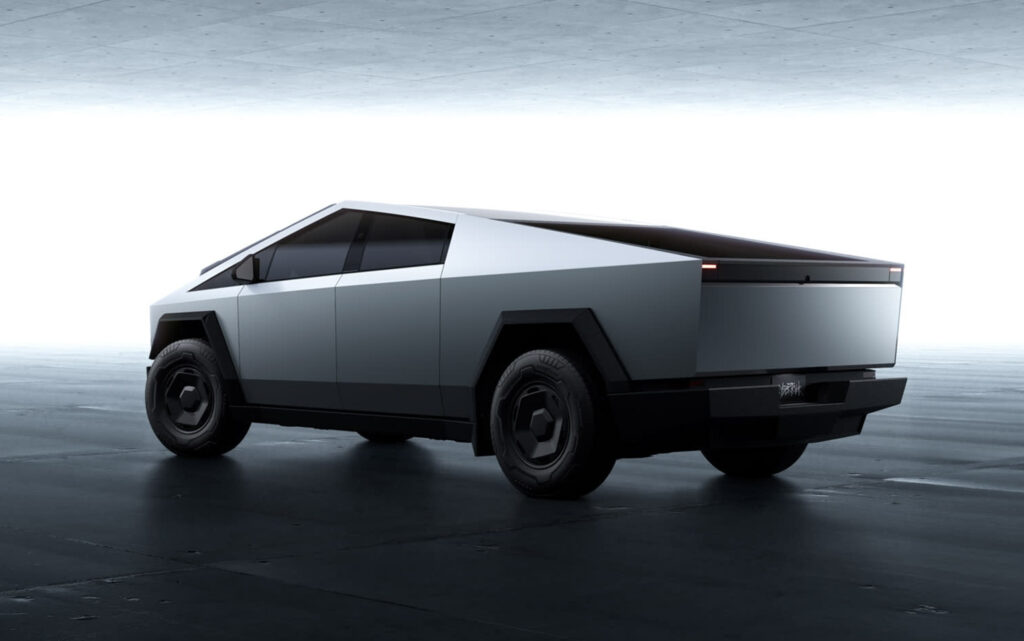
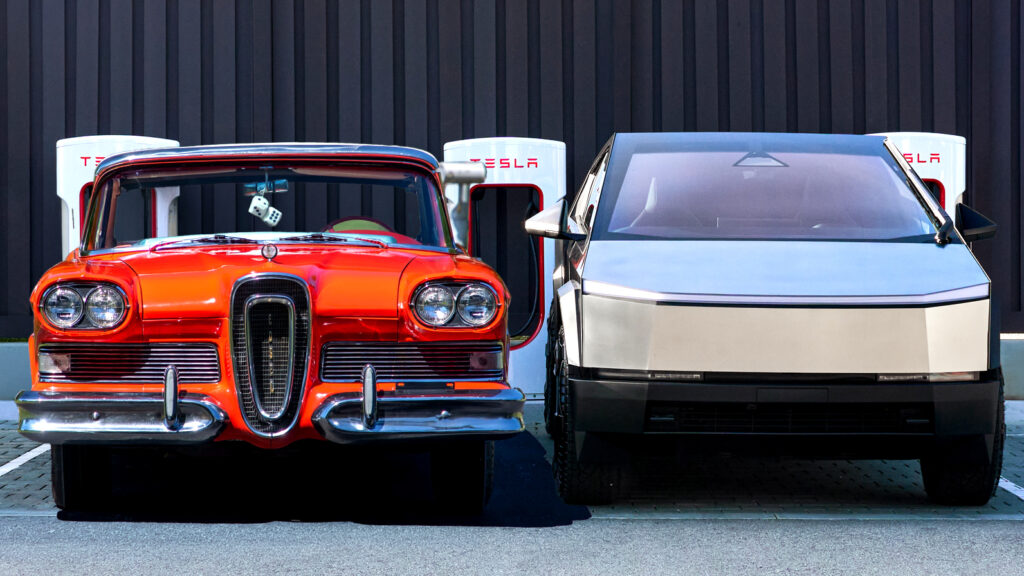
Both cars appeared with a design that immediately divided opinions. Both promised to redefine their segments. And both were launched with expectations that ultimately proved too optimistic. However, dismissing either of these cars as merely a failure means ignoring what each brought to the table.
Edsel is remembered not only for its controversial radiator grille. It also introduced genuinely progressive ideas, including the Teletouch push-button transmission built into the steering wheel. The system proved unreliable, but it represented the type of ambitious thinking that is becoming rarer in the automotive industry. The Cybertruck deserves similar recognition.
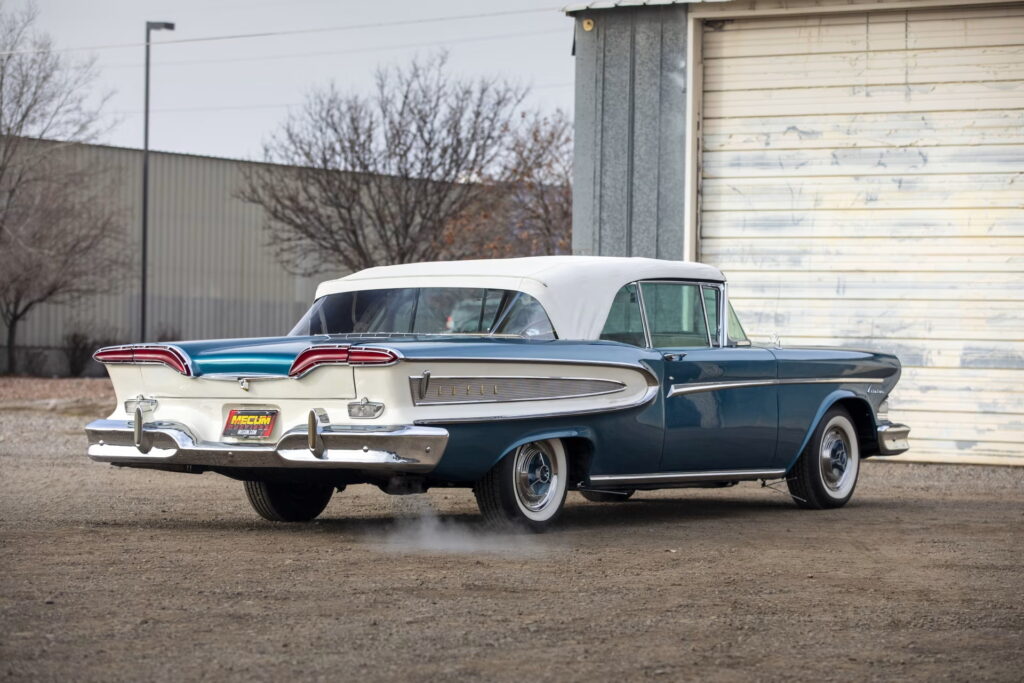
1958 Edsel Citation Convertible (Photo: Mecum)
Putting Musk aside, the Tesla pickup is one of the boldest production cars we have seen in recent decades. Its steer-by-wire system fundamentally changes the driving experience, making a full-size pickup remarkably maneuverable by eliminating the traditional mechanical connection between the steering wheel and the front axle.
Its 48-volt electrical architecture is another significant step forward, reducing wiring complexity and weight, laying the groundwork for future automotive electronics. These are not marketing gimmicks. These are genuine engineering achievements that many competitors will likely adopt in some form. Unfortunately, innovation alone has never been enough for commercial success.
Obstacles engineers cannot overcome
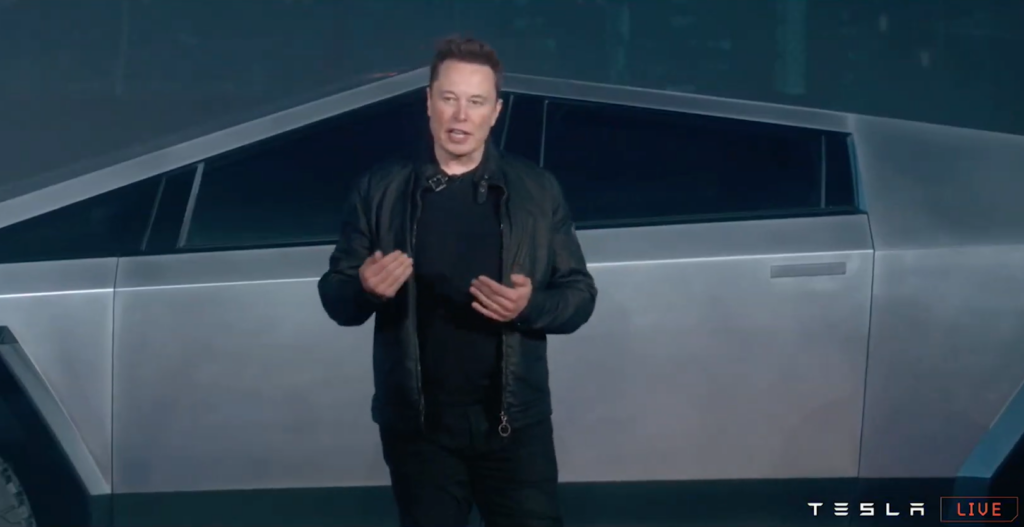
Like the Edsel before it, the Cybertruck asks buyers to embrace a style that is far from conventional. It has also become significantly more expensive than many expected after a lengthy development cycle: early production models cost well over six figures, despite Tesla initially discussing a much lower starting price during the unveiling. And there is another obstacle that the Edsel never had.
Deservedly or not, the Cybertruck has become inextricably linked with Elon Musk himself. For many buyers, it is no longer just an electric pickup but a public statement about the person behind the company. This association, almost certainly, has narrowed its appeal further, regardless of what owners or reviewers think of the vehicle itself.
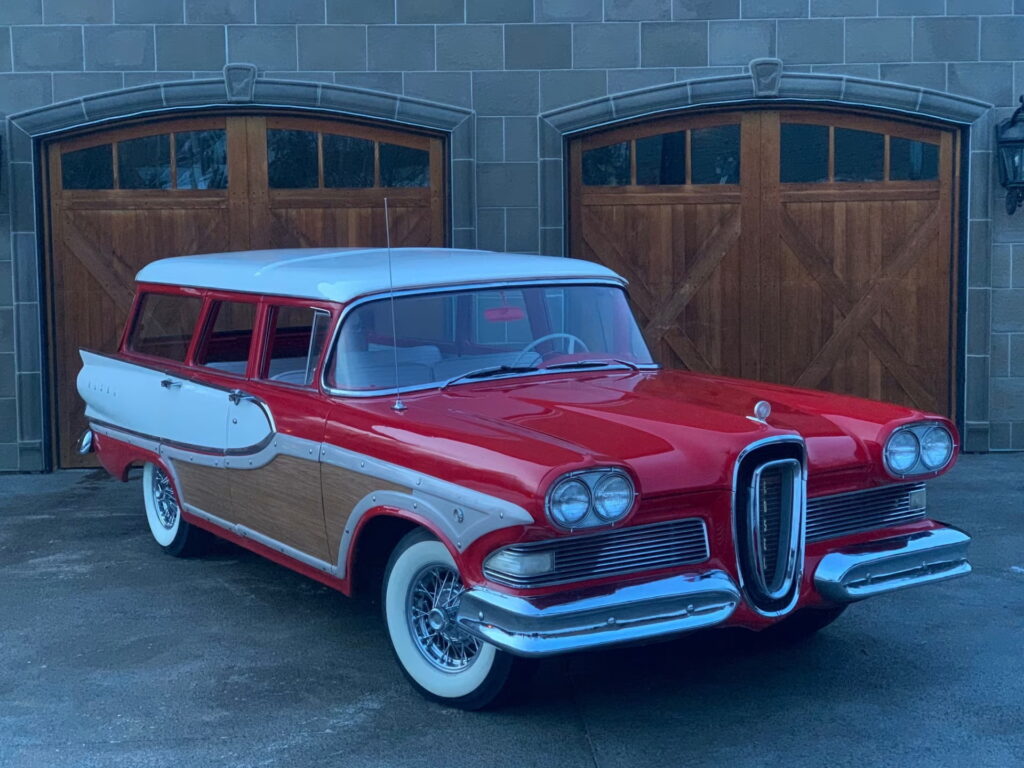
1958 Edsel Bermuda Station Wagon (Photo: Mecum)
History has been kinder to the Edsel than buyers were in 1958. Today, it is valued for its ambition as much as for its mistakes, proving that commercial failures can still leave a lasting mark on automotive history. The Cybertruck seems poised to follow the same path. It may be remembered as one of the industry’s biggest sales disappointments while simultaneously influencing the next generation of automotive engineering. These two things are not mutually exclusive. History shows they often go hand in hand.
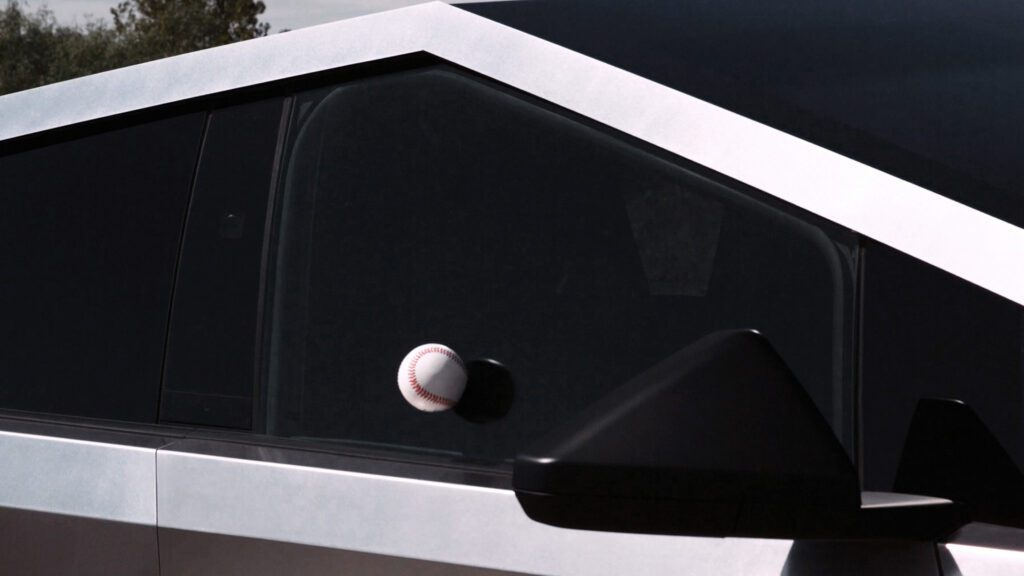
Comparing the Cybertruck to the Edsel reveals a deep pattern: the market is often not ready for radical changes, even if they are technically justified. The story of the Edsel reminds us that true innovations can be ahead of their time and perceived as flaws. The Cybertruck, with its futuristic design and advanced technology, risks repeating this fate. However, looking at the long-term perspective, the Cybertruck’s impact on the automotive industry may prove far greater than its current sales suggest. Its innovations, such as the 48-volt architecture and steer-by-wire, are already forcing other manufacturers to rethink their own approaches. Perhaps the Cybertruck’s real success will lie not in the number of units sold, but in how it changes the cars of the future.