 by
by Honda is developing a new platform that can adapt to different types of powertrains: for both electric cars and hybrids. Despite a recent change in course, the company still believes that electric cars will become more important after 2030. The new architecture will complement the hybrid platform introduced this month, reports Auto News.
Honda’s new strategy: flexibility instead of strict commitment to electric cars
Honda may have abandoned its initial North American electric vehicle strategy, but that doesn’t mean the company has stopped believing in their future. Instead, it is preparing a different development scenario that leaves more room for maneuver if plans do not go as intended.
After writing off $15.7 billion in electric vehicle investments due to the canceled 0 Series program in North America, the Japanese automaker is developing a next-generation electric vehicle platform. However, this time it will be capable of supporting both hybrid and fully electric powertrains, reports Automotive News.
Acura fully transitions to hybrids, while Honda retains affordable gasoline cars
This flexibility is a key feature and signals a serious shift in how Honda views the industry’s transition to electrification. Instead of relying on a single solution, Honda wants to have a choice. Following changes in market conditions, weakening political support from the U.S. government, and growing political uncertainty, the company now appears much more cautious about focusing exclusively on electric vehicles.
Electric cars are not losing relevance, but priorities are changing
This does not mean that Honda considers electric cars unpromising. Quite the opposite. Company President Toshihiro Mibe reportedly stated that Honda still expects an acceleration in electric vehicle adoption after 2030, even if demand for hybrids remains stronger than previously forecast for the rest of this decade.
The market could change depending on the Trump administration over the next two and a half years and the results of the November midterm elections. We are studying next-generation electric vehicle systems and concepts that will work regardless of how events unfold.
Why the 0 Series proved too inflexible
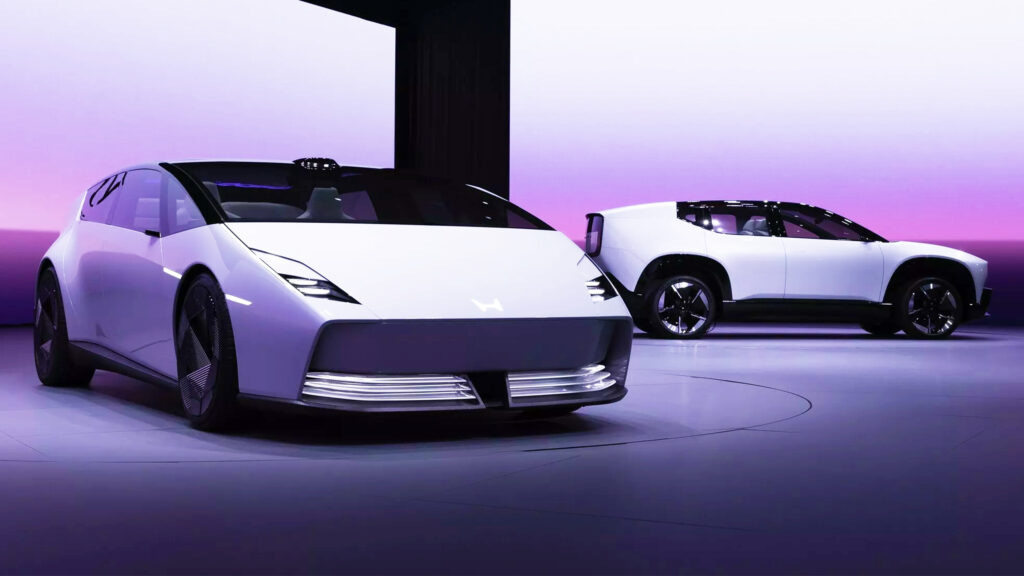
This philosophy explains why Honda’s future platform must support multiple powertrain types, not just fully electric ones, as would have been the case with the 0 Series sedan and SUV. The company likely believes that the balance between hybrids and electric vehicles could continue to shift depending on regulations, incentives, charging infrastructure, and trade policy. A flexible architecture will allow Honda to react much faster than manufacturers tied to expensive, exclusively electric platforms.
In the short term, Honda’s strategy is focused on hybrids rather than electric vehicles. The automaker recently announced plans to launch 15 hybrid models by 2029 on a platform different from the combined electric/hybrid platform introduced this week. Additionally, the company has charted somewhat different courses for Honda and Acura. The premium brand will promote hybrids among its customers, while Honda will offer gasoline and hybrid options to attract more budget-conscious buyers.
Honda is also reportedly waiting for the results of trade negotiations between the U.S., Canada, and Mexico before deciding whether to activate plans for an electric vehicle production hub in Canada, which it suspended in early May.
Honda’s cautious approach demonstrates that even major players are forced to adapt to an unstable political and economic situation. Abandoning billion-dollar investments and transitioning to a universal platform is not an admission of defeat for electric vehicles, but rather a pragmatic step to survive in times of uncertainty. The company is essentially betting that the future belongs not to a single type of technology, but to the ability to quickly switch between them depending on market signals. This could become a new trend in the automotive industry, where production flexibility is valued more than commitment to one, even very promising, technology.