 by
by Serious Intentions and Long-Term Prospects
Hyundai declares serious intentions to create a true pickup truck, but its market appearance should not be expected before 2028. This will not be just an update of the lifestyle-oriented Santa Cruz format. Instead, the company seems to aim to create something larger and more robust, directly targeting the Ford Ranger and Toyota Tacoma.
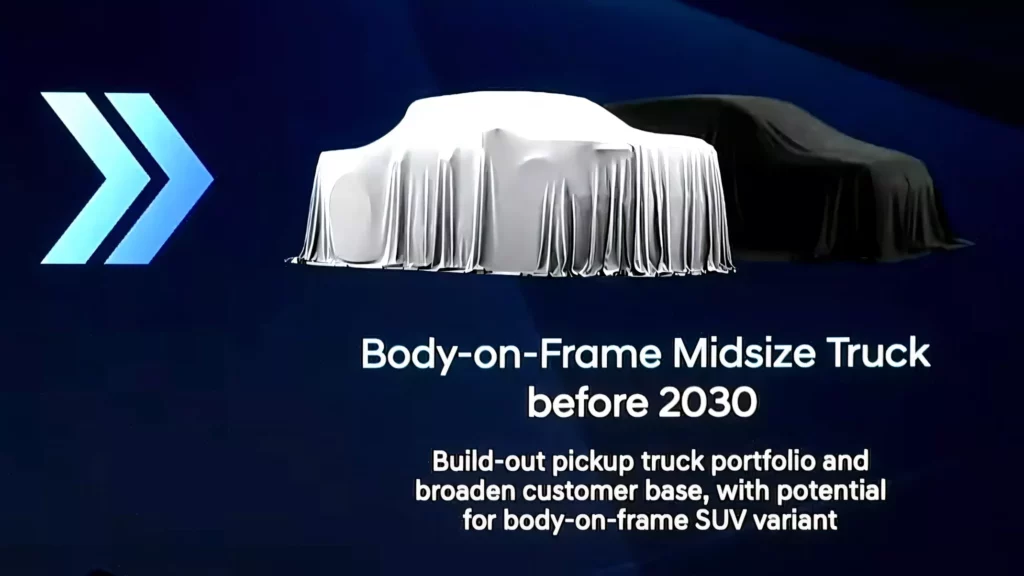
Hyundai boss says new midsize pickup will blow your mind.
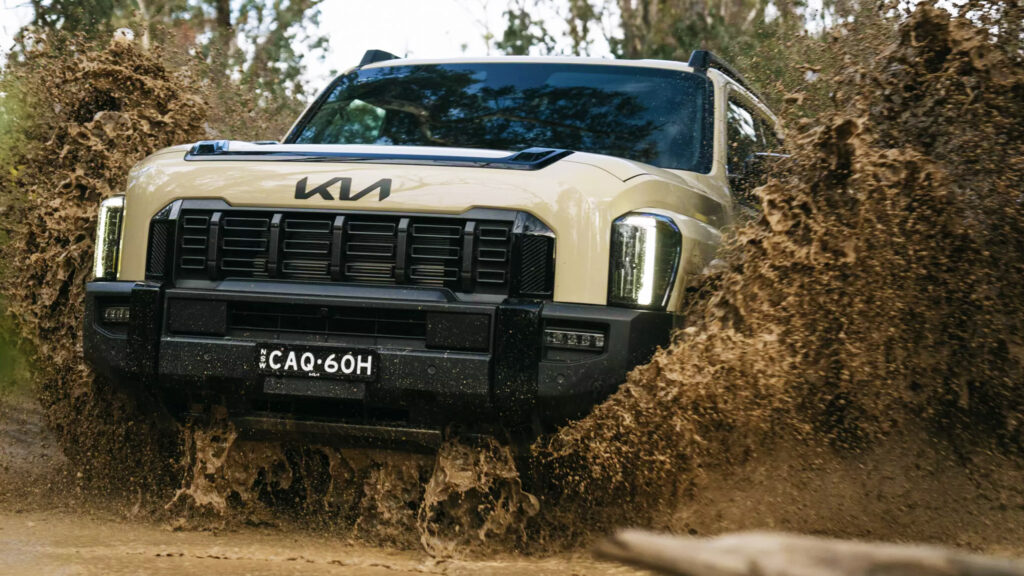
Last year, Hyundai CEO Jose Munoz confirmed that a midsize pickup would appear by 2030. It is expected to be a body-on-frame model, a sign of serious intentions in the pickup world. However, it should not be expected to be a rebadged Kia Tasman, despite the latter already being sold in markets like Australia, New Zealand, Africa, and the Middle East.
Joint Development and Launch Timeline
Recently, in an interview with local media, Hyundai Australia’s Chief Operating Officer Gavin Donaldson stated that the pickup’s development is being conducted jointly by Hyundai teams in the USA and Australia. He described the project as a “work in progress,” with its launch remaining “a few years away.”
US Production Plans
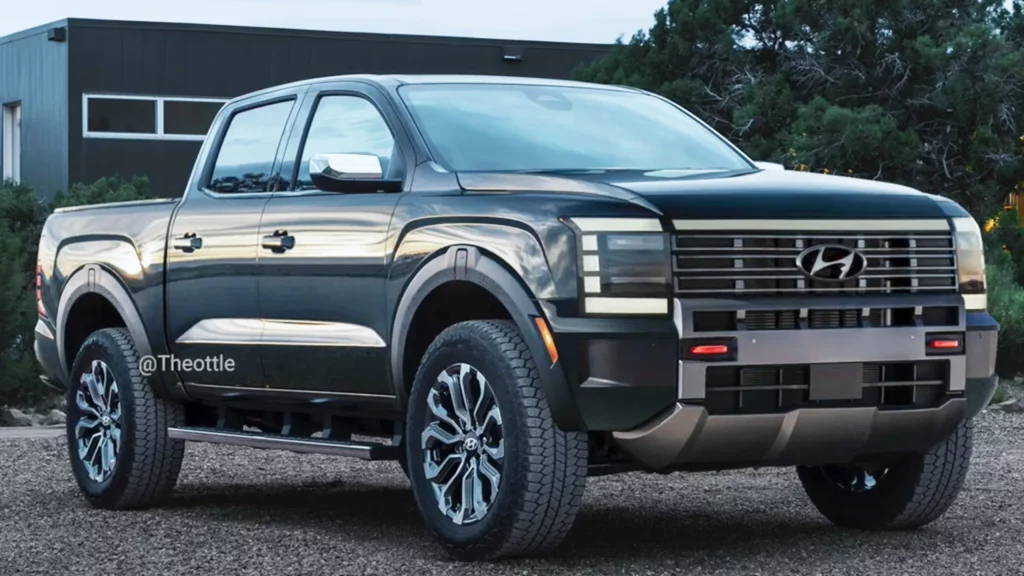
Donaldson suggested the pickup could be produced in the United States and exported to other markets. This would be a logical step. Production in the US would help Hyundai avoid not only the Trump administration tariffs but also the long-standing 25% tax on imported light trucks, the so-called “chicken tax,” which has shaped this segment for decades.
Of course, convincing people to buy a new Hyundai pickup will be a challenge in itself. As noted by S&P Global Mobility analyst Stephanie Brinley,
“Hyundai will have to earn trust in this space.”
“Pickup buyers tend to be more loyal and demanding that vehicles meet their specific needs,” Brinley added. “It will be a heavy lift, not only to convince buyers to consider Hyundai as a truck brand but also because overall pickup sales are not forecast for significant volume growth in the next few years.”
In short, this is not a segment that welcomes newcomers with open arms.
According to Auto News, the seven midsize pickups sold accounted for 639,251 deliveries in 2019. Last year, that number grew to 660,412. Toyota Tacoma alone held 39% of the segment in 2019 and increased its share to 42% last year, showing how firmly established the hierarchy is.
A Rugged SUV Too?
Hyundai Crater SUV Concept.
When Hyundai first announced a body-on-frame midsize pickup with an approximate timeline of “by 2030,” the company also hinted that an SUV on the same platform could follow.
It is reported that dealers in the US are insisting on a production version of the Crater concept presented at the end of last year. A rugged SUV based on the pickup could give Hyundai a worthy competitor to the Ford Bronco and Jeep Wrangler, while spreading development costs across two vehicles instead of one.
Expansion Within Hyundai Motor Group
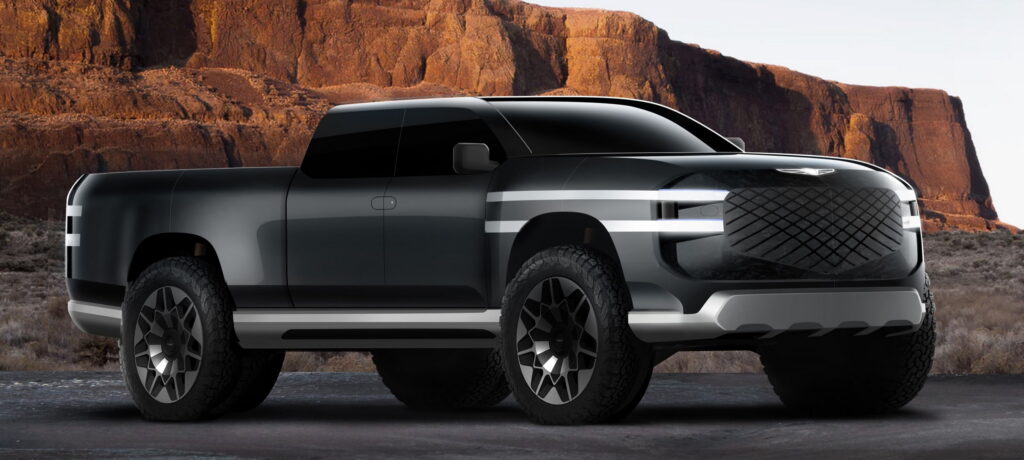
And this likely won’t be limited to Hyundai alone. Kia could introduce its own versions of both models, using the same base for different markets and price categories.
Meanwhile, Genesis has repeatedly hinted at a flagship SUV. The brand has already shown SUV concepts and even published pickup sketches, suggesting this truck architecture could eventually support everything from a hard-working workhorse to a premium, design-oriented SUV.
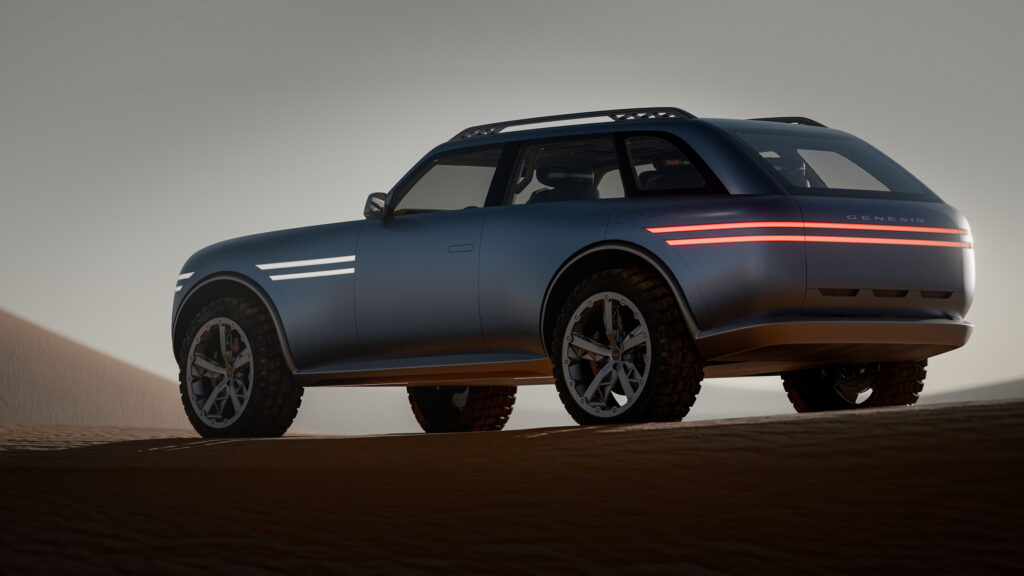
Entering the midsize pickup market is a strategic but risky move for Hyundai. Success will depend not only on the vehicle’s technical characteristics and quality but also on the brand’s ability to overcome the skepticism of a traditional audience and build a new reputation in an extremely conservative segment. Joint development with the Australian team and the potential for localizing production in the US indicate a deep understanding of market specifics. Furthermore, creating an entire family of vehicles on a single platform—from work pickups to luxury Genesis SUVs—could be the key to the project’s economic viability and its long-term competitiveness in an environment where overall pickup demand shows stability, not rapid growth.