 by
by Chinese vacuum cleaner manufacturer presents a rocket-powered electric car
Chinese consumer electronics brand Dreame, which recently entered the automotive industry, hasn’t yet delivered its first production car, but is already showcasing a concept with rocket engines. The presentation took place in Silicon Valley.
Rocket booster and futuristic technologies
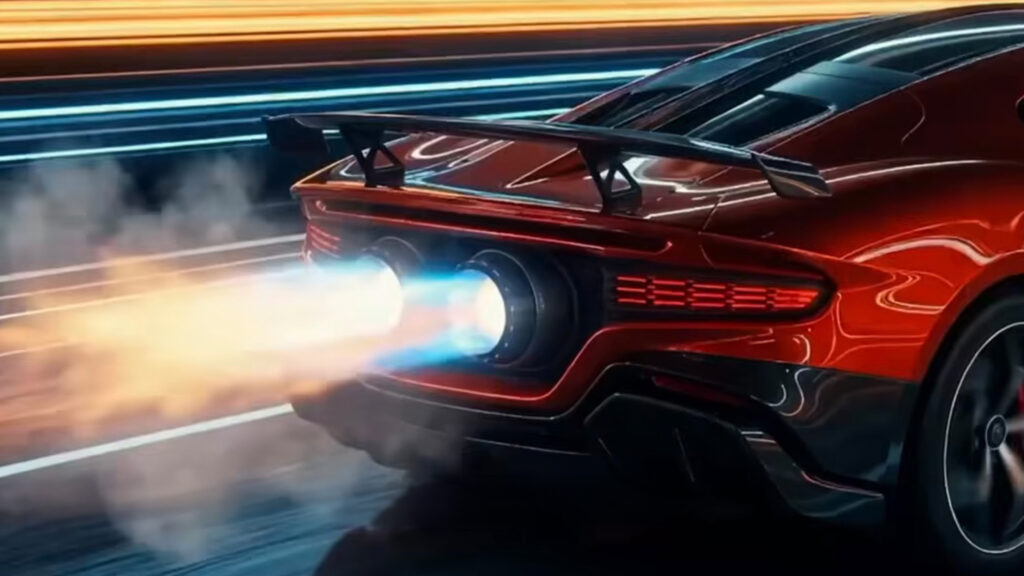
Dreame introduced the Nebula NEXT 01 JET Edition model during the DREAME NEXT event in San Francisco. Externally, it resembles the previously announced Nebula Next 01X electric car, which is planned for launch in 2027. However, the rear of the concept is radically different — it features two rocket boosters that provide 0-100 km/h acceleration in 0.9 seconds.
According to the company, this concept demonstrates the potential direction of Dreame’s automotive development in the future. It is the result of over a decade of work in autonomous systems, engines, artificial intelligence, and robotics.
Technical specifications and innovations
The main feature is a special dual-engine solid-fuel rocket system that aids acceleration. Dreame claims the system responds in 150 milliseconds and generates up to 100 kN of thrust. Additionally, the concept is equipped with other advanced technologies, including:
- A steer- and brake-by-wire control and braking system.
- Solid-state batteries with an energy density exceeding 450 Wh/kg, which the company says are almost ready for mass production.
For the advanced driver-assistance systems (ADAS), the company introduced the DHX1 lidar unit. According to Autohome, it can detect objects at distances of up to 600 meters and provides high detail, not just rough contours of obstacles. The plan is to implement extended L2+ autonomy and, in the future, L3.
Interior as a mobile hub
Inside, the car is intended to become a mobile smart home control center. The Dreame AI assistant can connect to robots, home appliances, and other devices, turning the car into a command center for gadgets. Interestingly, for a brand known for its vacuum cleaners and window-cleaning robots, the car lacks a self-cleaning function.
Dreame states that car production will begin in 2027, but don’t expect rockets to be part of the specifications for the first production models.
Additional context
Despite its futuristic design and impressive specifications, it is worth noting that the Nebula NEXT 01 JET Edition concept is more of a demonstration of Dreame’s technological ambitions than a real production plan. The company, which started as a manufacturer of home appliances, is trying to establish itself in the electric car market by leveraging its experience in robotics and artificial intelligence. The rocket booster, while seemingly a marketing gimmick, underscores the brand’s desire for innovation and attention. However, the reality of mass production will likely be much more mundane, focusing on efficiency, safety, and affordability rather than extreme acceleration figures.