 by
by Nissan Ariya Concept with Solar Panels
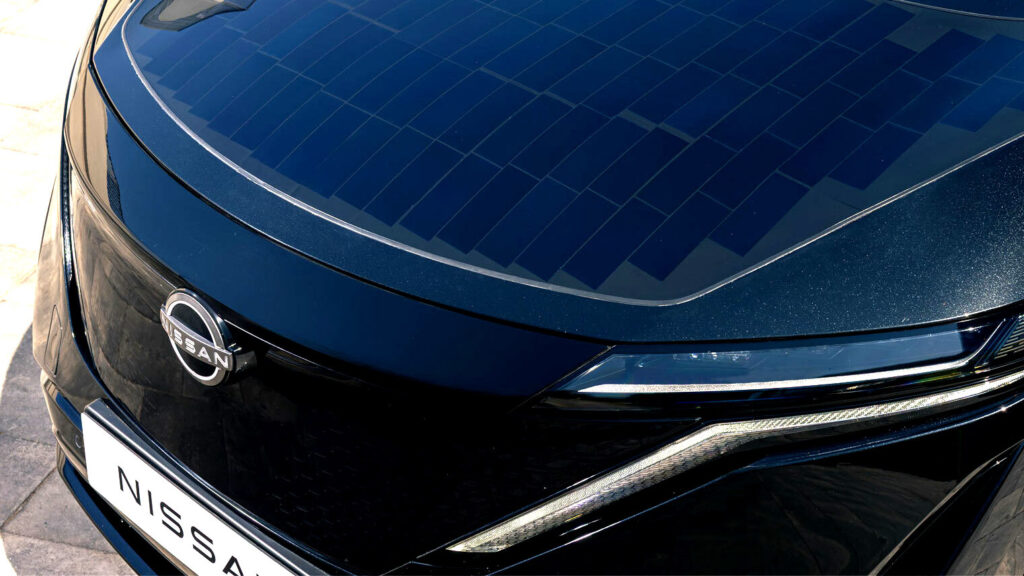
Nissan has introduced a concept version of the Ariya electric crossover, equipped with solar panels. This project, created in honor of Clean Energy Day, demonstrates the possibility of using solar energy to power an electric vehicle.
Technical Features and Benefits
Photovoltaic panels are placed on the car’s hood, roof, and tailgate, with a total area of about 40.9 square feet. They convert sunlight into direct current, which is then fed into the battery. According to the company, real-world tests have shown that on a sunny day, this system can provide up to 14.3 miles (23 km) of additional range.
This figure may seem small, however, considering that the average daily mileage of a driver in the US is less than 40 miles, such technology could significantly reduce the need for regular charging. Nissan notes that the frequency of recharges could be reduced by 35–65 percent.
Impact of Geographic Location
The efficiency of the solar panels significantly depends on the region. For example, the annual average daily range gain could be only 6.3 miles (10.2 km) in London, while in Dubai this figure reaches 13.2 miles (21.2 km). Even if the car is in a garage, two hours of driving on a sunny day can add up to 1.9 miles (3 km) of range.
Shunsuke Shigemoto, a Nissan representative, noted: “By exploring how vehicles can generate their own renewable energy, we are opening doors to new possibilities for customers – greater freedom, reduced charging dependency, and a cleaner future. This concept is not just a technical milestone; it is a vision of how Nissan intends to lead the next phase of electric mobility development.”
Technology Prospects
The concept was developed in collaboration with the company Lightyear. Similar solar panels could be particularly useful in regions with limited charging infrastructure, providing additional autonomy. Although the technology is not capable of completely replacing traditional charging, it is an important step towards increasing the energy independence of electric vehicles and reducing their environmental impact.
Integrating solar panels into the car’s design is part of a broader trend in the automotive industry aimed at finding alternative energy sources. For now, such solutions remain auxiliary, but their potential for further improvement and cost reduction could make them more common in future electric vehicle models, contributing to the development of sustainable transport.