 by
by Financial Resilience in a Challenging Year
For BMW, 2025 was a challenging year due to tariffs, currency fluctuations, and fierce competition. However, the figures in the group’s annual report indicate not only financial resilience but also that the BMW brand is gradually transforming into a powerful player in the sports car market.
From a financial perspective, the company showed decent results, considering the economic and political conditions. BMW’s revenue for 2025 amounted to over 133 billion euros (down from 142 billion in 2024), and net profit of 7.45 billion US dollars fell by only 3 percent. This stability is partly ensured by careful cost control.
BMW reports that it reduced costs by approximately 2.5 billion euros during the year, while continuing to invest in electric vehicles and future Neue Klasse models, including the electric 3-Series, whose premiere will take place on March 18.
The Rise of the M Brand
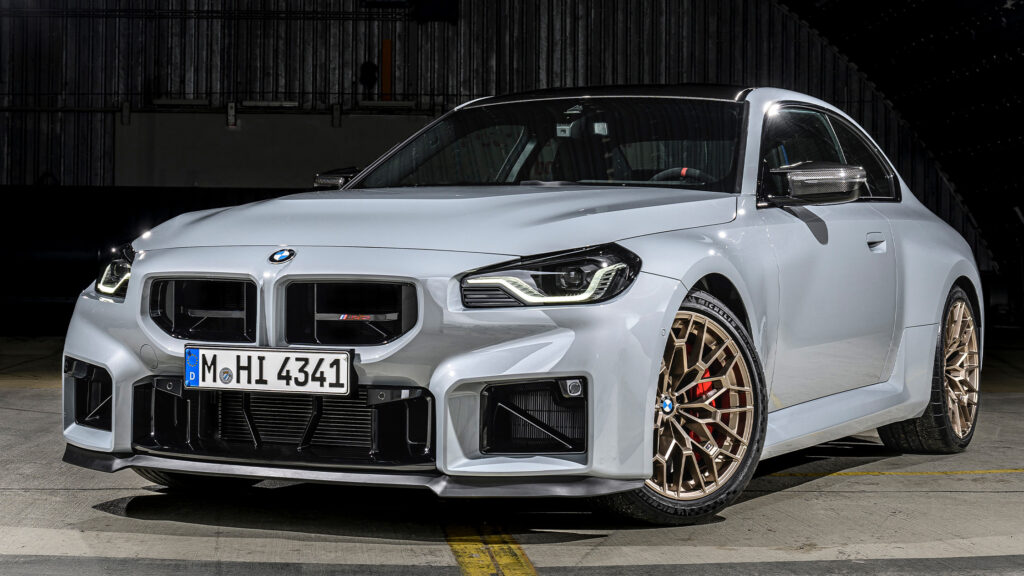
The report also highlighted the rapid growth of the BMW M brand. An incredible fact: every tenth BMW car sold last year was an M or M Performance model. This means that out of the 2.169 million cars the company delivered worldwide, over 213,000 belonged to the M sports division.
The M badge is no longer the privilege of a few wealthy enthusiasts thanks to the emergence of more affordable M Performance models like the M340i.
Success of the Mini Brand
Total BMW Group deliveries reached 2,463,681 cars in 2025, virtually unchanged from the previous year. Given that the global automotive industry struggled with tariffs and economic uncertainty for most of the year, BMW will likely consider this a victory. But the real surprise came from the smallest brand in the group.
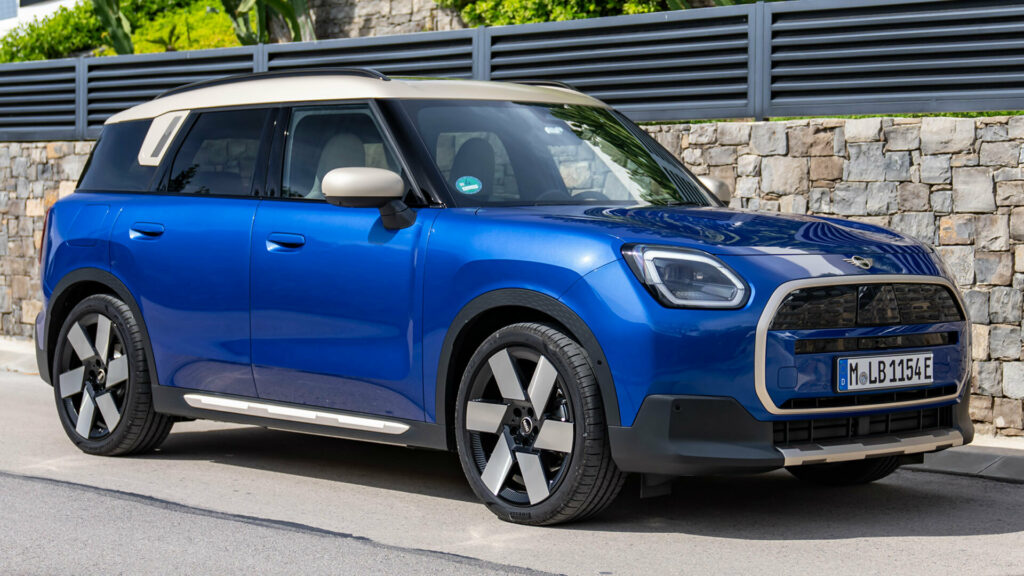
MINI had a great year. Deliveries grew by 17.7 percent to 288,278 cars, making it the only BMW Group brand to show growth compared to 2024. The Countryman turned out to be the star of the show, and new models like the Aceman and the latest electric MINI Cooper helped attract new buyers.
Growing Share of Electric Vehicles
Electric vehicles are also becoming a larger slice of the overall pie. BMW delivered 442,056 fully electric vehicles in 2025, which is 3.6 percent more than a year earlier. This means that approximately every sixth BMW Group car sold last year did not burn gasoline at all. If plug-in hybrids are included, the share of electric vehicles becomes even higher. BMW reports that roughly every fourth car it delivers globally now has some kind of charging port; in Europe, that figure is four out of ten.
Looking to the Future
Looking ahead to 2026, BMW forecasts that sales will remain roughly at the same level, as tariffs continue to pose challenges. But if current trends hold, one thing seems certain: expect to see many more BMWs with those three famous stripes, and many more Minis.
BMW Group Financial Results for 2025
Revenue: 133.4 billion euros (142.4 billion euros in 2024; change -6.3%)
Profit Before Tax (EBT): 10.2 billion euros (10.97 billion euros in 2024; change -6.7%)
Net Profit: 7.5 billion euros (7.7 billion euros in 2024; change -3.0%)
BMW Group Sales for 2025
BMW Group: 2,463,681 units (change +0.5%)
BMW Brand: 2,169,739 units (change -1.4%)
Of which BMW M: 213,449 units (change +3.3%)
Mini: 288,278 units (change +17.7%)
Rolls Royce: 5,664 units (change -0.8%)
Motorcycles: 202,563 units (change -3.7%)
These results clearly demonstrate a shift in emphasis in the group’s strategy. Despite a slight decline in overall sales of the core brand, its high-margin segments – M sports models and electric vehicles – show steady growth. The success of Mini indicates the effectiveness of the model range renewal and correct positioning in the compact car market. Maintaining a high level of profit under tariff pressure and investments in new technologies points to deep operational efficiency and adaptability. The group’s future seems to be built on three pillars: premium sports, successful small mobility, and electrification, allowing it to maintain competitive positions in a changing global landscape.