 by
by Changes in the Russian Auto Industry
The Russian automobile industry looks radically different four years after the start of the full-scale invasion of Ukraine. Following the rapid exit of Western automakers, Chinese brands just as swiftly occupied the vacated niches, significantly expanding their presence and market share. In parallel, some local brands are being revived, among which one of the most famous is Volga.
Historical Significance of the Brand
The Volga name gained popularity back in the 1950s as a series of executive cars produced and sold in Russia by the GAZ company. Production of these cars ceased in 2012. In its best years, Volga was not just a means of transport; it was the car used by high-ranking officials of the Soviet hierarchy, turning the brand into a true cultural phenomenon.
Revival Attempt Under Chinese Auspices
Now, after more than a decade-long hiatus, the Volga name is set to return. The brand, now owned by the Chinese company Changan, already presented three different models in May 2024: the K30, X5 Plus, and K40. This trio, which included two crossovers and a sedan, was based on existing Changan models. It was planned that they would be produced in China and then shipped to Russia for final assembly, with a market launch by the end of 2024.
New Attempt and First Hints
For unknown reasons, that launch never happened. However, the Chinese Volga now seems ready to try again. The company has launched a new Russian-language website and published several teasers showcasing the first model.
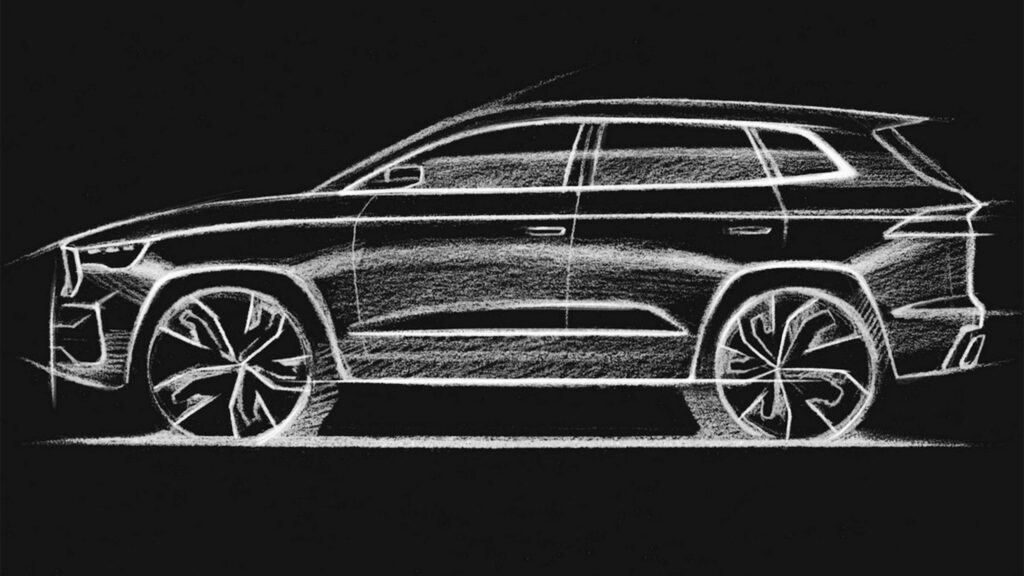
The car in the images resembles one of the crossovers shown in 2024, but with slight visual changes. A profile sketch hints at a classic SUV silhouette with a large grille, square wheel arches, and a rear end whose lights vaguely resemble those of an Audi Q8. Reportedly, this model will be accompanied by two others.
A separate interior teaser showcases a steering wheel with a flat rim, a digital instrument cluster, and a large central multimedia screen. Overall, the interior looks quite traditional, which in this context may be a conscious decision.
The return of such an iconic brand as Volga, under conditions of the complete isolation of the Russian auto industry from Western technology, is telling. This is not just nostalgia, but an attempt to fill a gap in the market that has emerged with cars that are technically entirely dependent on Chinese partners. The success of this project will depend not only on design or name, but on whether they can offer a reliable product that buyers will perceive as a worthy heir to the legendary name, despite completely different global and technological realities.