 by
by First Spy Photos of the Lexus TZ Electric SUV
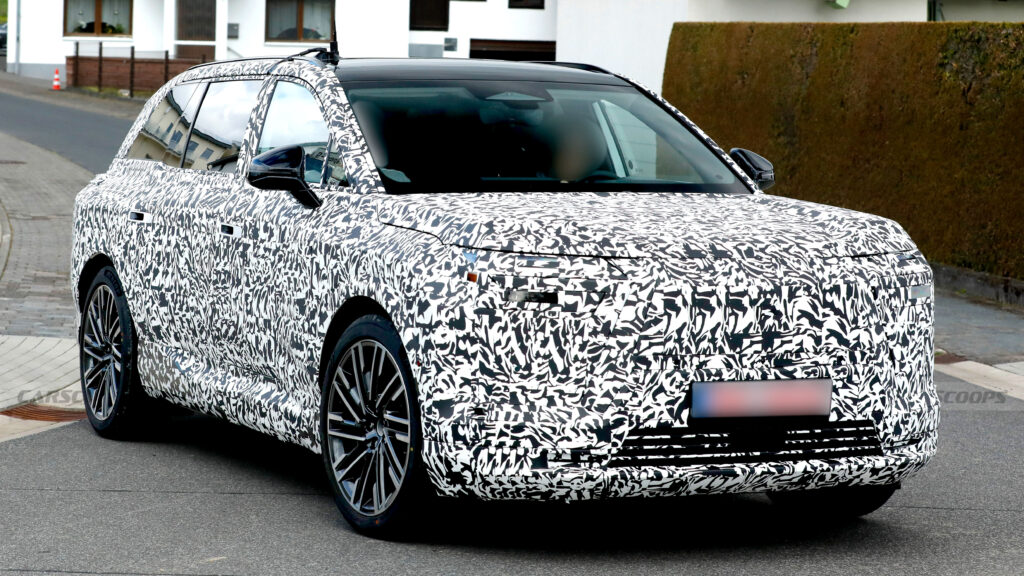
After prolonged rumors and speculation, the long-awaited three-row electric Lexus SUV has finally been caught on camera for the first time during road tests. Essentially, it is a more refined and expensive version of the new electric Toyota Highlander. The model, expected to have the number “9” in its name, is set to become the brand’s flagship and compete with models such as the Hyundai Ioniq 9, Kia EV9, and Volvo EX90.
Despite the heavy camouflage wrap, it is visible that the car retains the general shapes and proportions of the Highlander, but Lexus has made changes to the details. In particular, the front now features split headlights and a cleaner, less cluttered bumper design.
Comparing it to the Highlander, one can notice that the TZ’s wheel arches are slightly more squared-off, new wheels are fitted, and the door panels look different, although the door handles and side windows are similar.
Dimensions and Technical Features
The Lexus TZ (or TZ9) is expected to have dimensions virtually identical to the Highlander EV: a length of about 5.05 meters, a width of nearly 2 meters, a height of approximately 1.71 meters, and a wheelbase of over 3 meters. This will provide a spacious and comfortable three-row cabin configuration.
Regarding the powertrain, Lexus will most likely use Toyota’s technical base. The base version of the Highlander EV is equipped with a 77 kWh battery and a single electric motor producing 221 hp. The all-wheel-drive version gets a larger 95.8 kWh battery and two motors with a combined output of 338 hp, providing a range of up to 515 kilometers.
However, to compete with the Volvo EX90 or Hyundai Ioniq 9, which already offer batteries with capacities over 110 kWh, Lexus may introduce an even larger battery for its flagship to improve real-world range.
Interior and Future Production
There are no interior photos yet, but the door panels are visible in the shots. They differ from those of the Toyota and feature the characteristic Lexus button for electric door opening. This suggests that the interior will receive premium finishes and advanced technologies inherent to the brand.
The production question remains open. The model could be produced alongside the Highlander at Toyota’s plant in Kentucky, USA, or production could be established in Japan for global markets. The world premiere of the Lexus TZ electric SUV is expected at the end of this year or in early 2027.
The emergence of such a car is a logical step for Lexus in a world rapidly transitioning to electric power. The brand, known for its reliability and comfort, needs to fill the niche of large family electric SUVs to keep up with competitors. The model’s success will depend not only on technical specifications but also on how successfully it can convey in an electric version that unparalleled quality and sense of luxury for which Lexus is valued. Competition in this segment is becoming increasingly fierce, so the manufacturer will have to offer something truly special.