 by
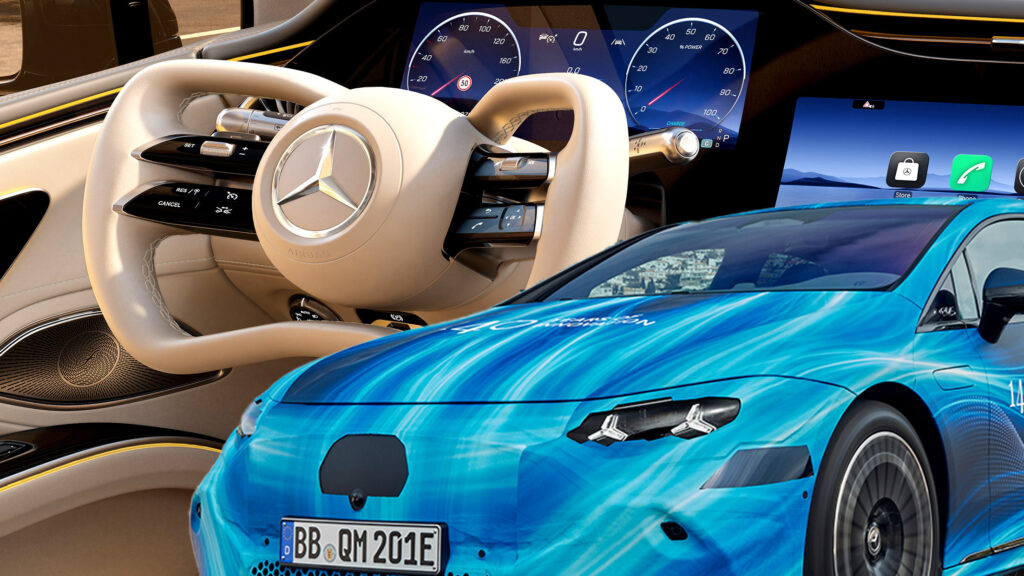
by The updated Mercedes EQS will receive steer-by-wire technology and a new, more compact yoke-style steering wheel.
Technological Innovations
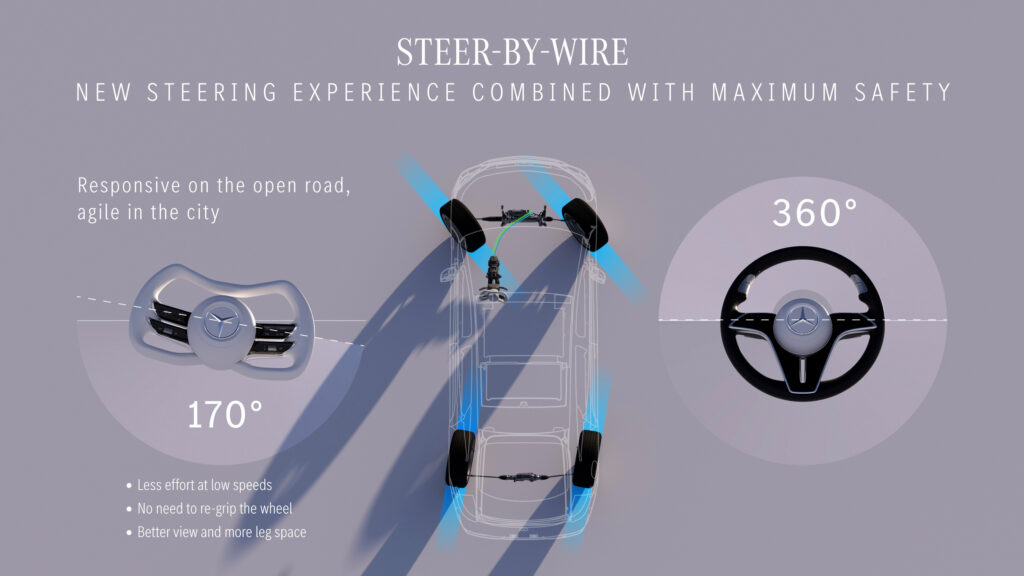
The Mercedes EQS model, which previously failed to gain widespread recognition among consumers, is preparing for its second update. The automaker has confirmed that the updated version of the electric sedan will receive a steer-by-wire system. This technology, which has already undergone over a million kilometers of testing, promises several advantages: reduced steering effort, elimination of road vibrations, and the ability to perform sharp maneuvers with small steering wheel movements. The system will be optional and will feature dual redundancy to guarantee safety.
New Yoke-Style Steering Wheel
Along with the steer-by-wire system, a new, more compact rectangular yoke-style steering wheel will appear. According to Mercedes representatives, this solution not only frees up space in the cabin and makes entry/exit easier but also improves the view of the digital instrument panel, as the rim no longer blocks part of the display. A unique airbag has also been developed for the new steering wheel.
Exterior and Interior Updates
Externally, the updated EQS will receive LED headlights with star-like elements, an updated radiator grille, and bumpers. Inside, despite the preservation of the overall design, changes in the multimedia system are expected: an updated interface with new graphics and layout. The system will likely run on the new Mercedes-Benz Operating System platform, which debuted on the CLA model.
Improvements in Technical Specifications
The most important changes may concern the technical components. The EQS is expected to transition to an 800-volt electrical architecture, significantly reducing charging time. The installation of a new battery with improved cell chemistry and more efficient in-house developed electric motors is also possible. These updates are intended to provide a noticeable increase in range, although even the current model demonstrates good performance — up to 628 kilometers on a single charge.
These changes, especially in the areas of steering and charging, demonstrate how Mercedes is trying to adapt its flagship electric vehicle to the rapidly growing market expectations. The success of these innovations could be decisive for the future fate of the model in the competitive segment of premium electric sedans, where technological excellence often weighs no less than design.