 by
by Unexpected Demand for the Expensive Mustang
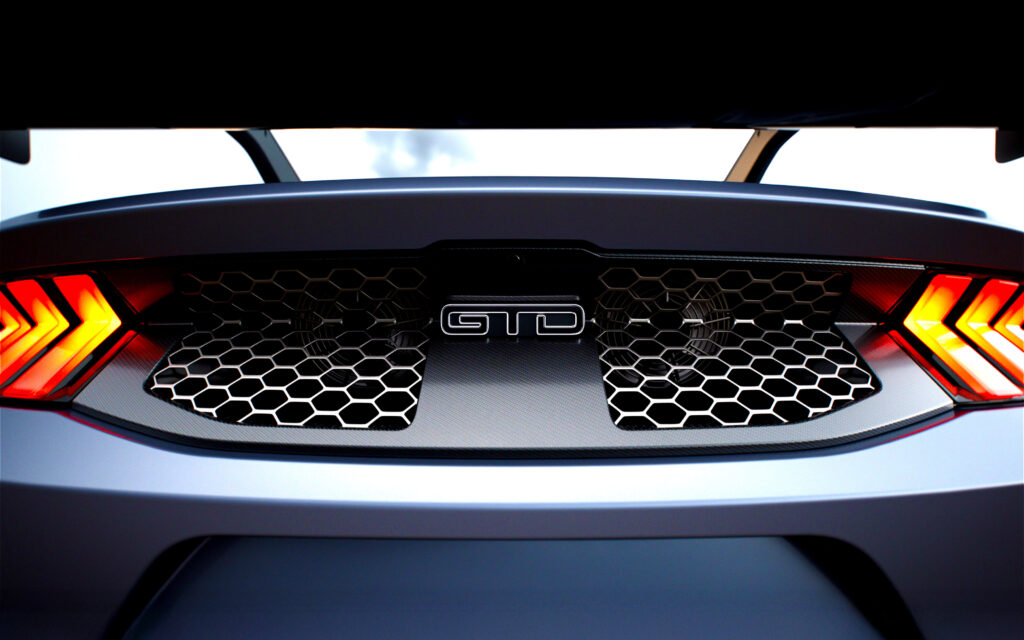
The car bearing the name of a muscle coupe often seen for rent, the Mustang GTD, elicited reactions from disbelief to excitement. When Ford announced that GTD prices would start at over $325,000 and could exceed $400,000 with additional options, many just scoffed. A logical question arose: why pay such an amount for a Mustang when, for the same money, one could buy, for example, a Porsche 911 GT3 RS or a Ferrari 296 GTB?
As it turned out, quite a few Americans were willing to part with large sums to get behind the wheel of this racing car from Ford. According to data published by Ford, 231 units of the Mustang GTD were delivered in the first 11 months of 2025.
Limited Volumes and Serious Interest
In the overall picture, this is a tiny number, especially compared to over 40,000 other Mustang versions sold this year. However, for such an expensive and uncompromising car, which also lacks the brand charm of traditional exotic marques, this is a solid result.
Interestingly, Ford does not limit Mustang GTD production to a specific number of cars and has committed to producing it at least for the 2025 and 2026 model years, and possibly longer. Before the model’s launch, the company reported over 7,500 expressions of interest in the GTD in the US alone. Clearly, enough people believe a Mustang can be worth as much as a supercar.
On the track, this car is undeniably impressive. Last year, one of the GTD models lapped the Nürburgring Nordschleife in 6:52.072, which is only 3 seconds slower than the GT3 RS’s time, but still very fast. The exotic “pony” is aided by a 5.2-liter supercharged V8 engine producing 815 horsepower and 900 Nm of torque.

Ford’s Overall Sales
Overall, Ford’s sales in the US for the first 11 months of 2025 reached 1,999,417 vehicles. Among them, models with internal combustion engines showed moderate growth of 5.2% compared to last year—from 1.69 million to 1.71 million units.
Electric vehicle sales, on the contrary, fell by 7.3%—from 172,919 to 160,273 units. Part of this decline was offset by a strong performance in the hybrid segment, which grew by 19.4%—from 172,919 to 206,497 units.
Several individual models contributed to Ford’s growth. The F-Series remained the backbone of the brand, with year-to-date sales of 749,471 units, which is 9.3% more than the same period last year. The Maverick also continued to exceed expectations, growing by 11.9% to 141,873 units, thanks to demand for compact and economical pickups.
Performance of Individual Models
The Bronco also showed a strong resurgence, growing by 36.2% to 132,216 units compared to 97,105 last year. The Explorer added a solid 11.5% year-on-year growth. In contrast, the compact Escape SUV, whose production has been discontinued, overall fell by 0.8%, with sales in November alone down nearly 32%.
The Mustang Mach-E electric car showed mixed signals. While full-year sales increased by 6.7%, November figures nearly halved—down 49.2% compared to the same month in 2024, undoubtedly linked to the discontinuation of the federal $7,500 electric vehicle tax credit.
John Halas contributed to this article.
Ford Sales Data (January-November 2025)
Model: Bronco Sport – November 2025: 9,212 – November 2024: 9,601 – Difference %: -4.1% – YTD 2025: 122,380 – YTD 2024: 113,340 – Difference %: 8.0%
Model: Escape – November 2025: 7,054 – November 2024: 10,344 – Difference %: -31.8% – YTD 2025: 132,471 – YTD 2024: 133,604 – Difference %: -0.8%
Model: Bronco – November 2025: 11,045 – November 2024: 10,320 – Difference %: 7.0% – YTD 2025: 132,216 – YTD 2024: 97,105 – Difference %: 36.2%
Model: Mustang Mach-E – November 2025: 3,014 – November 2024: 5,938 – Difference %: -49.2% – YTD 2025: 47,882 – YTD 2024: 44,877 – Difference %: 6.7%
Model: Explorer – November 2025: 20,226 – November 2024: 14,299 – Difference %: 41.5% – YTD 2025: 198,819 – YTD 2024: 178,243 – Difference %: 11.5%
Model: Expedition – November 2025: 5,337 – November 2024: 5,852 – Difference %: -8.8% – YTD 2025: 77,413 – YTD 2024: 69,243 – Difference %: 11.8%
Model: F-Series – November 2025: 60,961 – November 2024: 67,459 – Difference %: -9.6% – YTD 2025: 749,471 – YTD 2024: 685,777 – Difference %: 9.3%
Model: Ranger – November 2025: 6,845 – November 2024: 5,039 – Difference %: 35.8% – YTD 2025: 62,864 – YTD 2024: 40,949 – Difference %: 53.5%
Model: Maverick – November 2025: 9,883 – November 2024: 6,899 – Difference %: 43.3% – YTD 2025: 141,873 – YTD 2024: 126,760 – Difference %: 11.9%
Model: Transit – November 2025: 15,339 – November 2024: 13,080 – Difference %: 17.3% – YTD 2025: 147,045 – YTD 2024: 139,790 – Difference %: 5.2%
Model: Mustang – November 2025: 4,207 – November 2024: 2,355 – Difference %: 78.6% – YTD 2025: 40,870 – YTD 2024: 41,528 – Difference %: -1.6%
The success of the Mustang GTD, despite its extremely high price, indicates a shift in the perception of the Ford brand among a certain category of buyers. This suggests that with the right products that combine extreme performance with uniqueness, even mass-market manufacturers can compete in the high-budget, emotional purchase market. Simultaneously, the company’s overall sales picture demonstrates the strategic importance of a balanced portfolio, where traditional pickups like the F-Series remain the business foundation, and the latest hybrid models provide growth, offsetting temporary instability in the electric vehicle market.