 by
by Tesla Cybercab Prototype Spotted During Testing
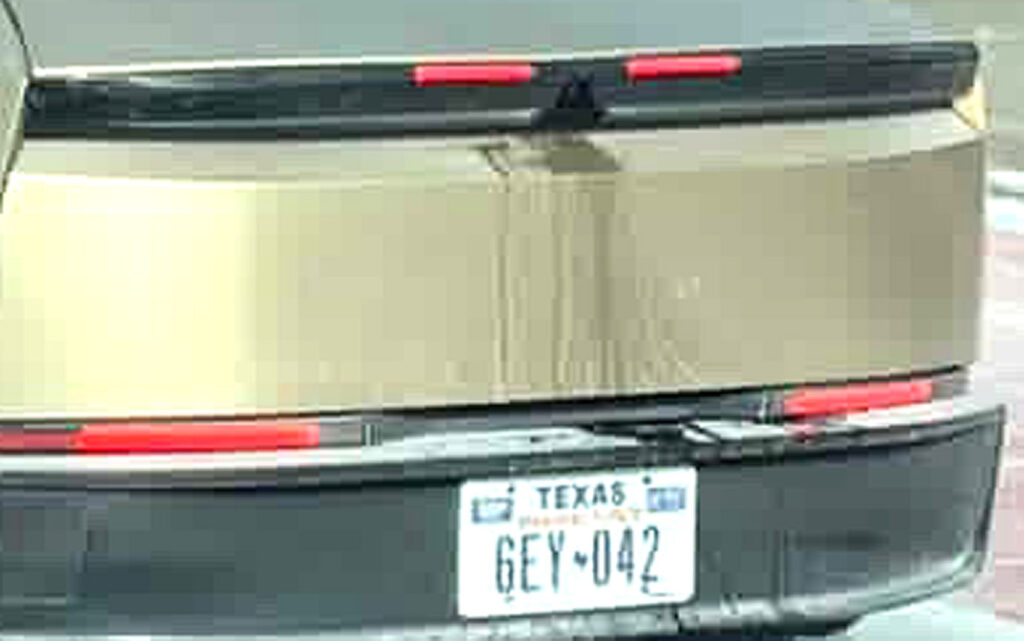
The future autonomous taxi vehicle from Tesla, named Cybercab, which the company considers one of the most important models after the Model Y, was captured on the roads of Chicago without any camouflage. This prototype already has a number of practical changes compared to the original concept, indicating progress in development.
Among the key features visible in the new images:
Important Detail: Rear Camera Washer
The biggest excitement among fans was caused not by the presence of mirrors, but by a simple yet ingenious detail—the rearview camera washer. The photographs show liquid dripping from the center of the rear bumper, precisely where the camera is located.
No current Tesla model has a washer for the rear camera, even though many other automakers consider it standard equipment. This is changing with the Cybercab, and there is a very specific reason for it.

Why This Is So Important for the Cybercab
The reason for the necessity of this washer lies in the very design of the car. If you look closely at the rear of the Cybercab, you can notice the absence of a conventional rear window. The production model will rely entirely on a digital image from the rear camera to see what is happening behind. This means the camera must under no circumstances be dirty or obstructed.
Thus, unlike more expensive Tesla models, where some features are sometimes omitted for the sake of economy or minimalist design, the Cybercab’s layout makes the presence of a washer mandatory, not optional.

The Control Question: Steering Wheel and Pedals
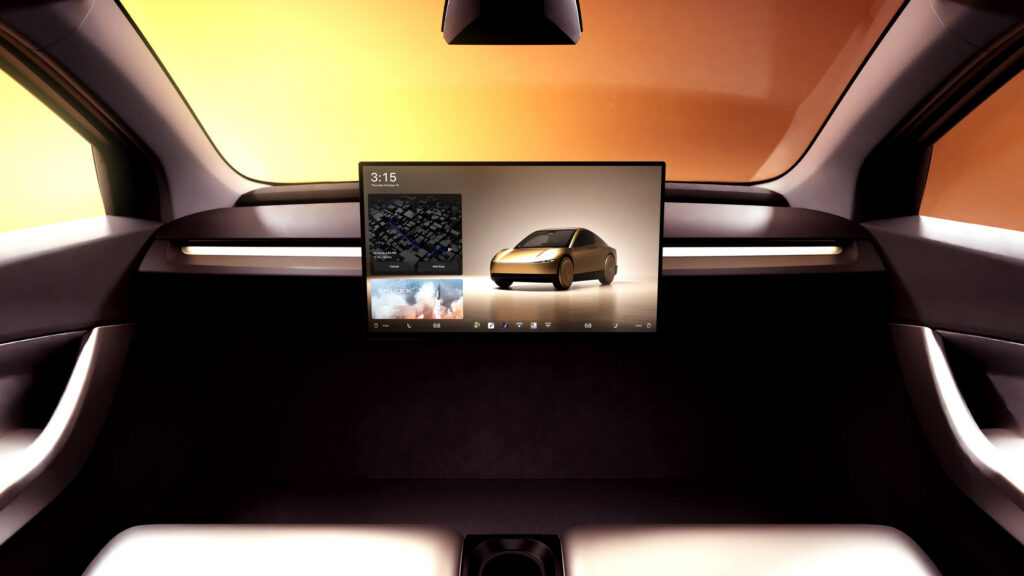
Although the interior of this particular prototype was not captured in the frame, it is almost certainly equipped with a steering wheel and pedals, like other recent Cybercab test samples.
Initially, Tesla boldly stated that the Cybercab would not require a steering wheel or pedals; however, it is becoming increasingly likely that the electric vehicle will be more traditional than originally planned.
At the end of last year, Tesla’s Chairman of the Board, Robyn Denholm, noted that “if we have to have a steering wheel, it can have one, just like pedals.” Since Tesla’s autonomous driving system is still far from Level 4 or 5 autonomy, the electric vehicle needs traditional controls for sales in significant volumes.
The Cybercab is expected to become Tesla’s most affordable model, and the addition of a camera washer here most likely indicates the future spread of this feature to other company models. Component unification is one way to keep production costs under control.
The appearance of prototypes with such practical refinements as mirrors and washers demonstrates the transition from a bold concept to a car adapted to real-world operating conditions. This indicates that the company is considering not only technological ambitions but also regulatory requirements and the everyday needs of drivers, even when it comes to autonomous transport. Implementing such seemingly minor details as a camera washer could prove key to the user experience and safety, especially when the car relies solely on electronic “eyes.”