 by
by Revival of a Soviet Brand: Volga Returns with New Models
The legendary Russian automobile name Volga, once produced by the GAZ plant and a symbol of the Soviet era, is making a new attempt to return to the market. These cars, often used by civil servants and as taxis, were once a ubiquitous sight. However, the modern revival has a significant feature: the brand’s new models are not in-house developments.
Second Attempt and New Market Opportunities
After an unsuccessful attempt to launch production in 2024 based on Changan platforms, the Volga company is taking a new step. The current situation, where Western automakers have left the Russian market, may open an opportunity for Volga to take a more prominent position. The brand is introducing two new cars: the K50 SUV and the C50 sedan.
Volga K50 SUV: Almost a Copy of Geely
The first novelty is the K50 SUV, announced back in February. This model is based on the Chinese Geely Monjaro, and the similarity is not just technical. The exterior of the K50 is practically identical to the original: the same front end, chrome elements, headlights. The only visible change is a slightly modified radiator grille with the Volga logo.
Interior images have not yet been released, but according to Russian media, the car received a 2.0-liter turbocharged gasoline engine with 238 hp, an eight-speed automatic transmission, and all-wheel drive.
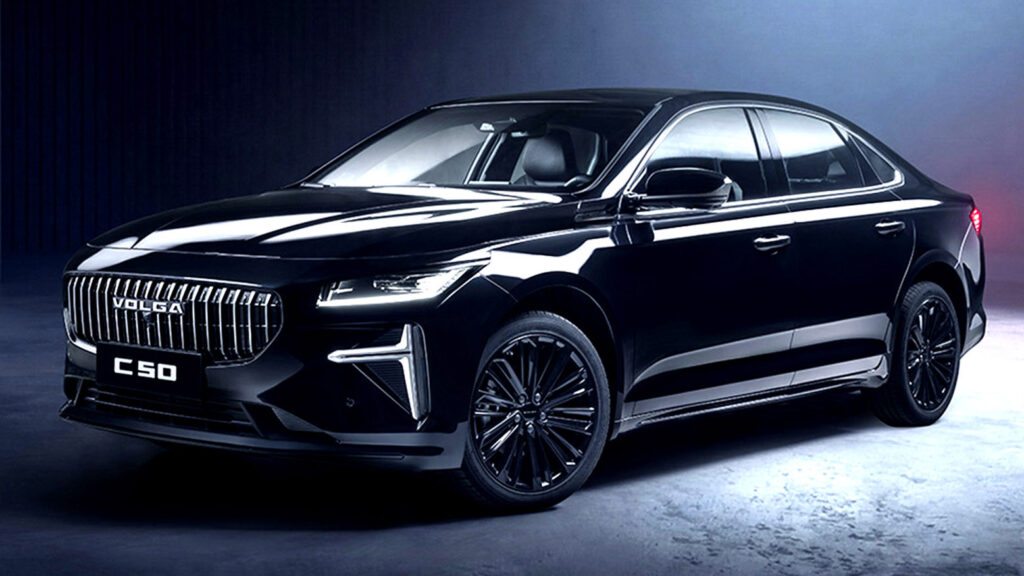
Volga C50 Sedan: A Rebadged Geely Preface
The second model is the traditional C50 sedan, built on the Geely Preface. As with the K50, changes are minimal: a new radiator grille and emblem. The rest of the exterior remained virtually untouched. The Preface’s design is quite restrained, reminiscent in some features of the Volkswagen Passat, and from other angles, the American Honda Accord.
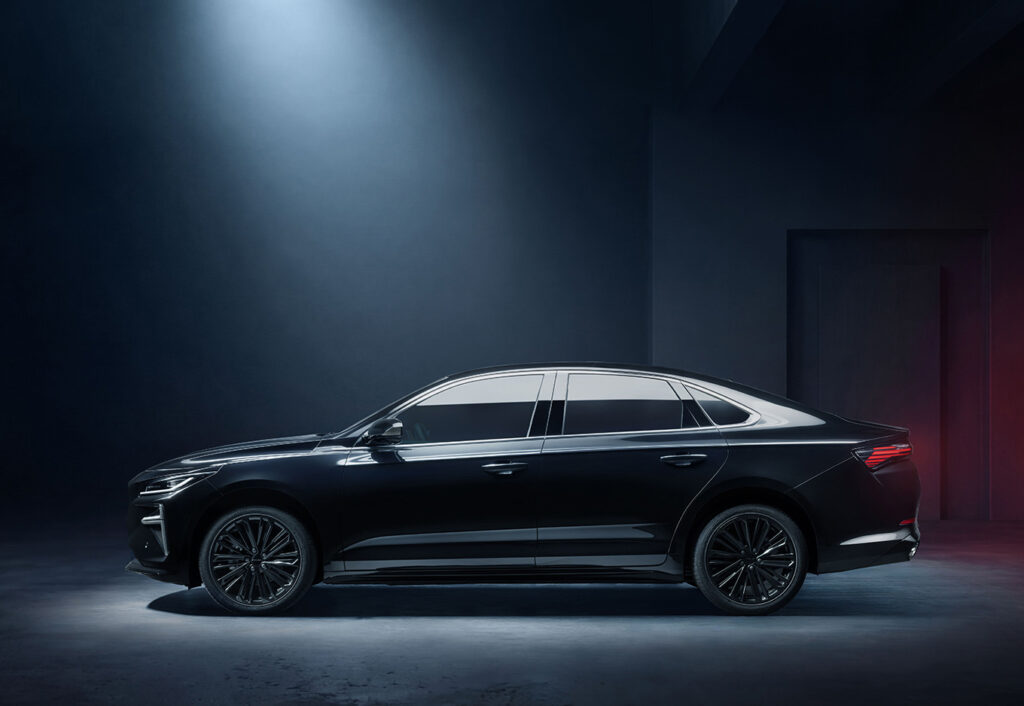
The C50’s interior is also completely borrowed from the Geely Preface. The four-spoke steering wheel, digital instrument panel, and large portrait-style multimedia system display have been retained. The sedan is offered with a 2.0-liter turbocharged engine in two versions: 150 and 200 horsepower, paired with a seven-speed dual-clutch robotic transmission.
Production and Prospects
Production of both Volga models is planned to be established at the former Volkswagen Group plant in Nizhny Novgorod, where Škoda and VW cars were previously assembled for the Russian market. Prices for the new products have not yet been announced.
The return of a historical brand under modern conditions demonstrates a paradigm shift in the Russian auto industry. Instead of in-house developments, the localization of ready-made Chinese models comes to the fore, allowing for a quick filling of market niches left after the departure of international companies. The success of this strategy will depend on the brand’s perception by buyers, who may see these cars not as a true Volga, but merely as rebadged Chinese products. The fate of the plant in Nizhny Novgorod, which once symbolized the presence of European business, is now linked to Asian technology and a Soviet name, creating a peculiar symbiosis of global automotive trends.