 by
by Updated BMW 7-Series Debuts Next Month
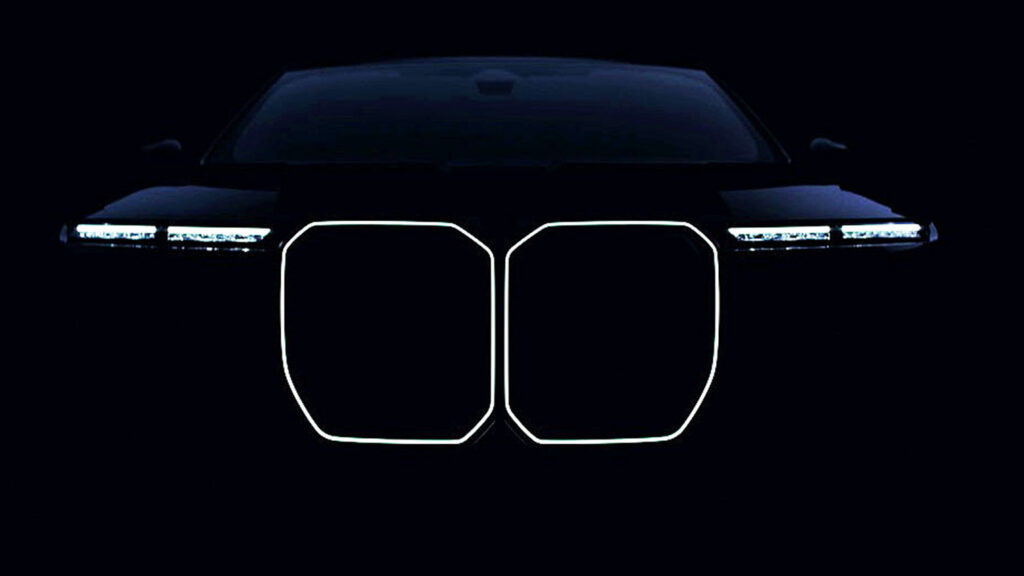
BMW is preparing to present the updated version of its flagship sedan. After months of sightings of camouflaged prototypes on the roads, the company has finally released the first official teaser of the facelifted 7 Series, confirming that the luxury sedan’s premiere will take place at the Auto China show in Beijing next month.
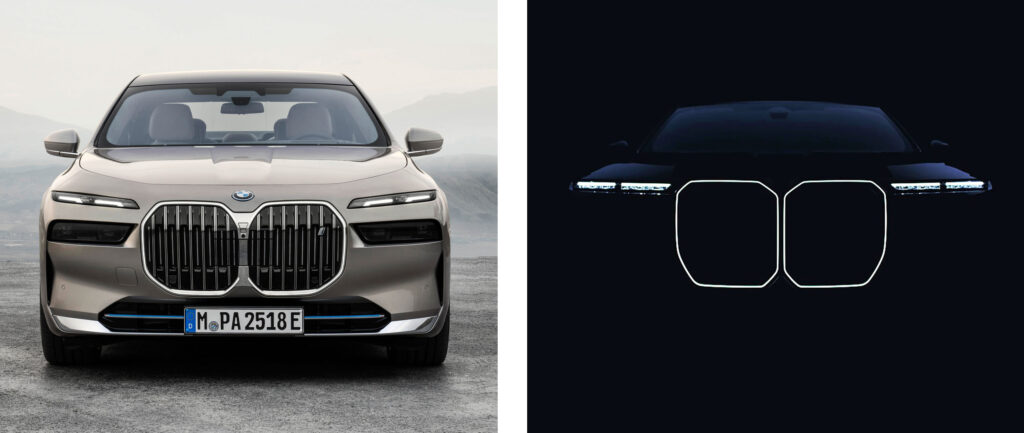
The current generation of the 7 Series debuted in 2022, which means the car is right on time for its planned mid-life cycle update (LCI). The shadowy teaser focuses on the front end, revealing a new light signature with thinner and more horizontal daytime running lights. They are positioned on either side of a larger, more square, and illuminated kidney grille.
Design and Technology Changes
Judging by previous spy photos, the grille appears to be changing from vertical slats to a horizontal arrangement. The split headlight layout remains, although the lower units housing the main beams look slightly smaller than before.
The side profile does not seem to undergo significant changes. The familiar long-wheelbase silhouette is expected to carry over to the new model virtually unchanged, while the rear will receive the usual facelift updates: updated LED taillights and minor changes to the bumper.
At the annual BMW conference in 2026, Chairman of the Board Oliver Zipse confirmed that the updated 7 Series will be the first current model to inherit the so-called “technology clusters” from the future Neue Klasse lineup. The next-generation X5 is expected to follow soon, with its own premiere scheduled for later this summer.
For the flagship sedan, this means several of the brand’s next-generation digital systems will make their way into the cabin. Among them is BMW Panoramic Vision, a wide display panel stretching from pillar to pillar along the base of the windshield, along with the company’s new iDrive X operating system.
Behind the scenes, BMW also plans to integrate four central computing units, internally named “Super Brains,” which are responsible for the car’s core functions and software processes.
Platform and Competition
Despite such updates, the large sedan will not switch to the Neue Klasse platform. Instead, the facelift will retain the current CLAR architecture. As with the previous model, it will remain available with gasoline, hybrid, and fully electric (i7) powertrains, possibly with minor refinements. It is also safe to assume that the 7 Series will receive a new variant from the BMW Alpina sub-brand.
The teaser for the BMW 7-Series mid-life cycle update appears just weeks after Mercedes presented a heavily updated version of its long-time rival, the S-Class. The luxury sedan also faces growing competition in China from new players such as the Huawei-backed Maextro S800.
The flagship sedan’s update comes at a time when the luxury segment is becoming increasingly technology-saturated, and competition for customers is intensifying not only from traditional rivals but also from new companies, especially in the key Chinese market. The introduction of Neue Klasse technologies into the existing model lineup demonstrates BMW’s strategy of gradually raising the technical level of all its cars without waiting for a full generational renewal. This allows the brand to respond more quickly to market demands, particularly in the areas of digital interior and driver interaction, which is becoming critically important in the battle for the premium customer.