 by
by A Late Hybrid Response
The Rogue remains Nissan’s most popular car in the United States, with sales exceeding 217,000 units last year. This is a respectable figure, but the crossover lacked one key feature long offered by main competitors: a hybrid powertrain.
For example, the Toyota RAV4 has switched exclusively to hybrids, and the Honda CR-V, Hyundai Tucson, and Kia Sportage all have hybrid versions. While the company is preparing to launch the Rogue Plug-In Hybrid, it is essentially a rebadged Mitsubishi Outlander.
Review: The New Nissan Qashqai e-Power Drives Like an EV but Doesn’t Need Charging
However, more substantial changes are on the horizon with a fully updated Rogue. The new model will debut at the end of this year and will become the first Nissan car in the US to receive the proprietary e-Power system.
What is e-Power?
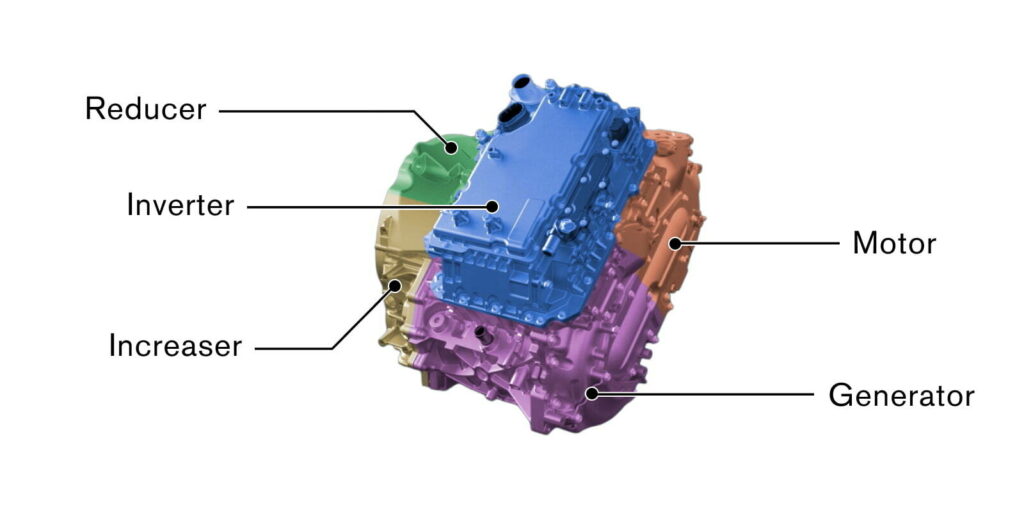
Hybrids have existed for decades, but Nissan’s e-Power system is unique in that it essentially operates as an electric car with an onboard generator. However, it does not have a charging port or a large battery. This lowers the price, improves fuel efficiency, and provides an EV-like driving experience without its inconveniences.
In this powertrain, the engine serves exclusively as a generator. It works in tandem with an e-Power module that combines an electric motor, inverter, electric generator, reduction gear, and power booster.
The vehicle moves primarily on battery power at low and medium speeds. When the battery charge is low or power demand increases, the engine turns on to recharge it.
It’s important to note that the system is a series hybrid, as the wheels are driven solely by the electric motor. This distinguishes it from traditional parallel hybrids, which can be powered by either the engine or the motor.
The entire process happens seamlessly, and a special graphic on the instrument panel shows exactly what’s happening: when the engine is charging the battery, when the battery is powering the electric motor, and when regenerative braking is activated.
EV-Like Driving Experience
Since this is a preview of the powertrain on a European model, it’s not worth delving too deeply into numbers, as the 2027 Rogue Hybrid e-Power will not be completely identical to the Qashqai. But overall, this technology is good news for consumers.
Since the crossover operates like an EV with a generator, the Qashqai is very quiet when running on battery power at low speeds. The similarity isn’t limited to quietness: drivers will feel the responsive electric motor and regenerative brakes, which can feel a bit sharp.
When the engine turns on, it does so remarkably smoothly. Something akin to a start-stop system was expected, but the sensations were more refined. At high speeds with the radio on, you might not even notice the engine working.
Although a slight noise is sometimes audible, the powertrain generally remains unobtrusive. It’s also worth noting that the system lacks a traditional transmission and intelligently regulates power flow. The latter happens freely, as there is no set speed for the engine to turn on.
Overall, the e-Power system provides a range of EV benefits without their drawbacks. This should make the setup attractive to consumers who want increased efficiency and the familiar convenience of refueling with gasoline.
What Are the Benefits?
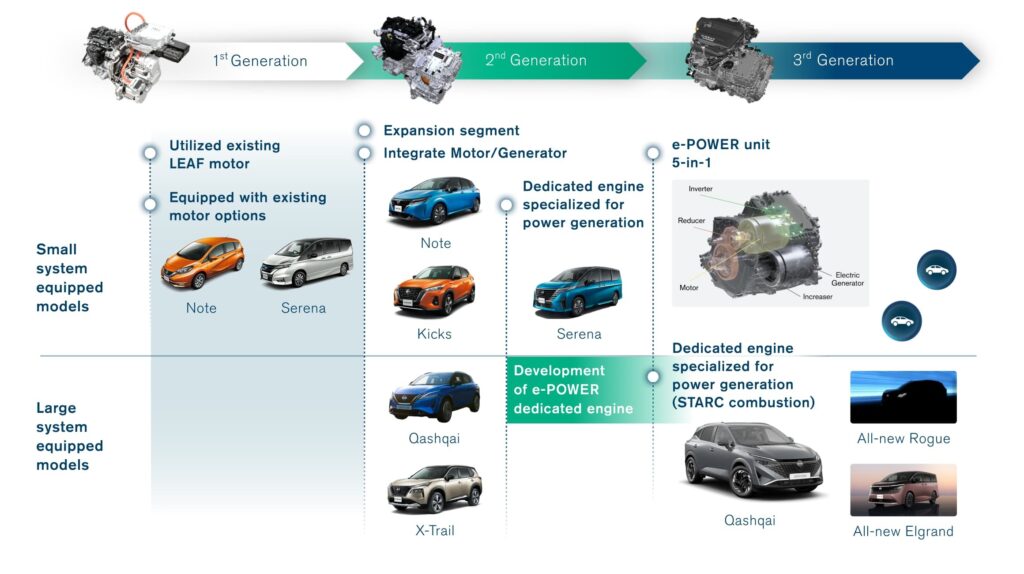
The third-generation e-Power system was developed with US needs in mind: engineers optimized it for longer trips and higher speeds.
The UK-spec test Qashqai e-Power had a 1.5-liter three-cylinder engine, a 2.1 kWh battery, and a front electric motor producing up to 202 hp and 243 lb-ft of torque. This allows the model to accelerate from 0 to 100 km/h in 7.6 seconds.
More importantly, it consumes up to 64.2 miles per imperial gallon in the combined cycle, which is roughly equivalent to 53.4 miles per US gallon. For comparison, a regular Qashqai with a 1.3-liter four-cylinder engine consumes 45.6 miles per imperial gallon, or 38 miles per US gallon.
While not a perfect comparison, we see an increase in fuel efficiency of approximately 40%. Nissan representatives also noted that the powertrain provides lower emissions and a higher level of comfort.
The increase in efficiency is not accompanied by a large price increase: the Qashqai e-Power costs only £1,925 ($2,560) more than the regular automatic version in Acenta Premium trim. It’s also worth noting that the small battery limits the increase in weight and price, making the crossover generally more pleasant.
Details about the 2027 Rogue will become known in the coming months, but Nissan has announced that the e-Power system will be offered with all-wheel drive. This is important, as in Europe it is only available for front-wheel-drive models.
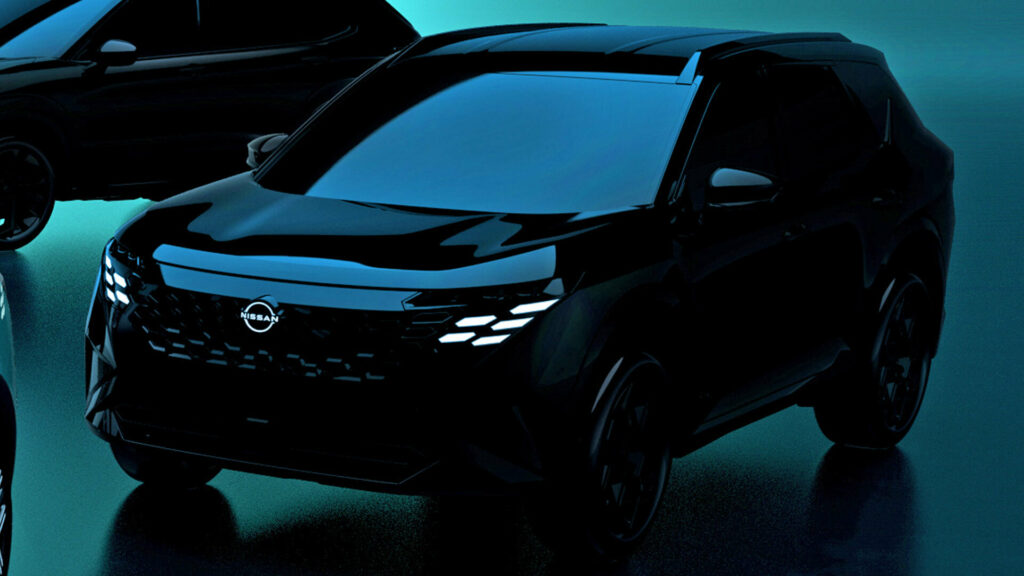
The introduction of e-Power for a key model in the world’s largest market is a strategically important step for Nissan. This is not just a belated response to competitors, but an attempt to offer technology that can be perceived as an intermediate link between traditional hybrids and full-fledged electric vehicles. The success of this system in the US could significantly influence the brand’s future model lineup and its approach to electrification as a whole, especially against the backdrop of a general slowdown in demand for fully electric cars. For Rogue buyers, this means, first and foremost, a long-awaited choice that combines efficiency with a familiar way of operation.