 by
by The Evolution of Door Handles
Spend just five minutes near a modern car, especially an electric one, and you’ll notice something interesting. Door handles have transformed into design statements, technology demonstrations, and sometimes awkward puzzles that can become a problem. Some extend theatrically, others sit flush until summoned, some try to combine both approaches, and an increasing number rely entirely on electronic latches that only function with power. The new Toyota Highlander seems ready to offer something new with a hidden feature that few will notice at first.
China officially bans pop-out door handles, and the world may follow.
The Hidden Mechanical Backup
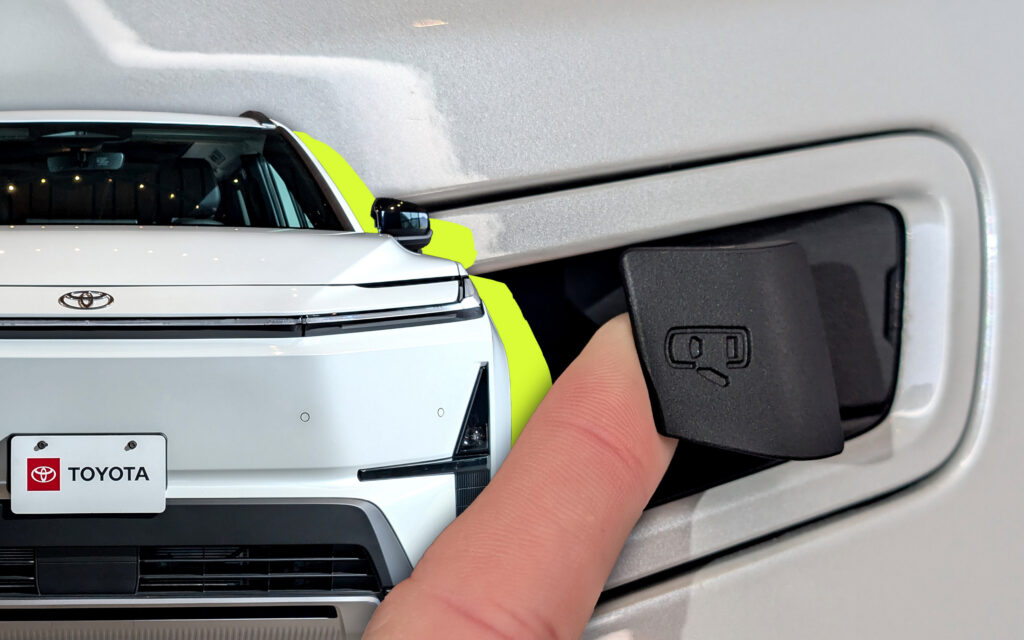
Upon close inspection of the SUV, one small detail caught attention. The main exterior handle uses a small touchpad to activate the electric door lock. This isn’t revolutionary, but what’s next to it might be.
Inside the stationary recessed door handle is a tiny tab. Roughly the size of a postage stamp, it’s designed to be pulled independently from the outside, including, importantly, by rescuers. Unlike the main handle, this small part has a clear pictogram indicating it’s for manual opening.
The new 2027 Toyota Highlander ditches gasoline and becomes fully electric.
Nearby is a removable section for a keyhole. Gaining entry to this electric SUV in case of power loss is as simple as inserting a key, activating the manual lever, and pulling it. It’s worth noting that during prototype testing, this tab did nothing.
Photo by Stephen Rivers/Carscoops
Toyota representatives explained that the prototypes did not have functional versions of this handle. In the production vehicle, it will work via a two-step process. Pull once – the tab will unlock the door. Pull twice – it will manually open the door. This is clever, and it’s worth noting that similar features are not only on the exterior handles.
Built-in Redundancy
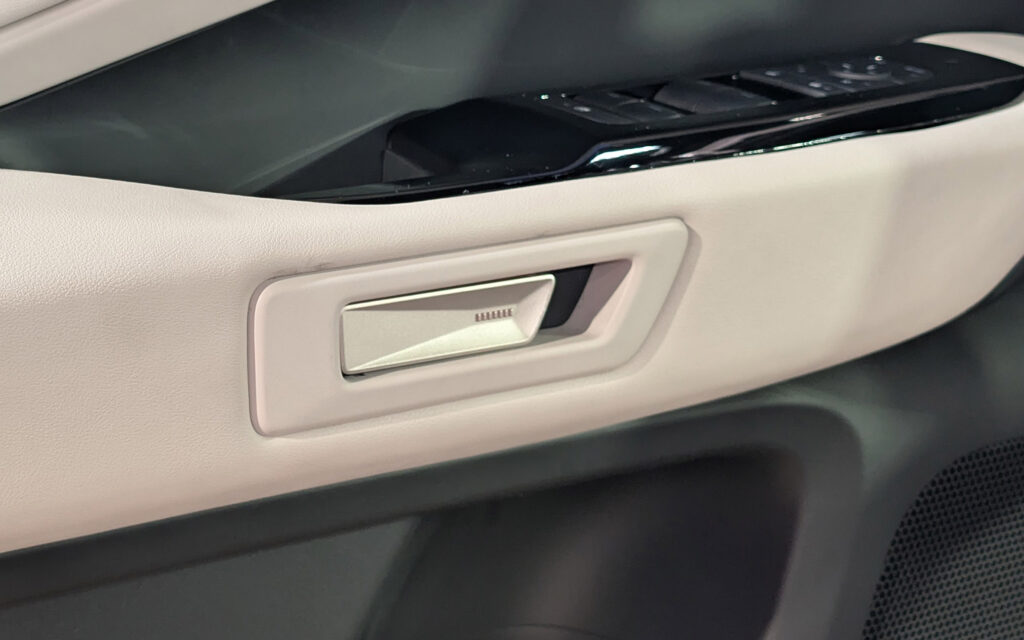
The interior handles are similar to those used on Lexus vehicles for some time. Users can press a button on the door for the electric lock to open, or pull it to manually release the latch. This is another safety element built into the all-new Highlander.
A trapped Tesla owner couldn’t find the manual door release, and federal agencies are now demanding answers.
In a world where even door handles have gone digital, a simple mechanical backup feels not like nostalgia, but like common sense. Toyota’s solution isn’t flashy, and it shouldn’t be. As cars pile on electronics even for the simplest tasks, a simple physical solution might turn out to be the smartest feature of all.
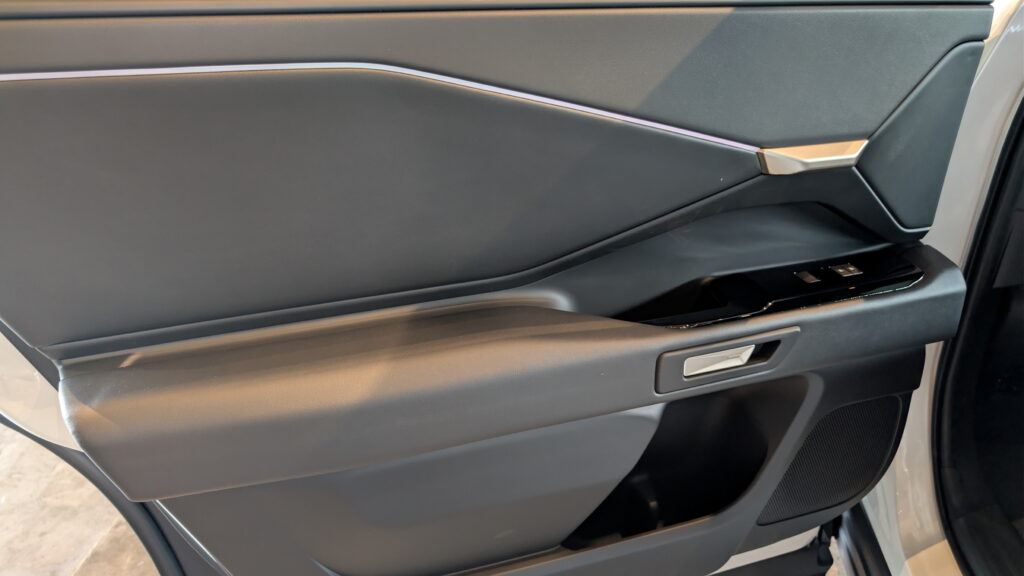
This door handle design approach could become a new industry standard, especially against the backdrop of growing regulatory requirements and consumer concerns about reliance on electronics. Other manufacturers are likely to watch the market’s reaction to this solution, as it successfully balances the minimalist aesthetics characteristic of modern EVs with the fundamental need to guarantee access to the vehicle under any circumstances. Similar initiatives could also influence future safety tests and emergency evacuation protocols, forcing a review of procedures for rescue services.