 by
by Appearances Can Be Deceptive
In modern automobile manufacturing, even seemingly minor damages can lead to extensive and expensive repairs. A prime example is the story of the Rivian R1T electric pickup, where a plate-sized dent on the rear quarter panel resulted in a repair bill of approximately $14,000.
What Led to Such Costs?
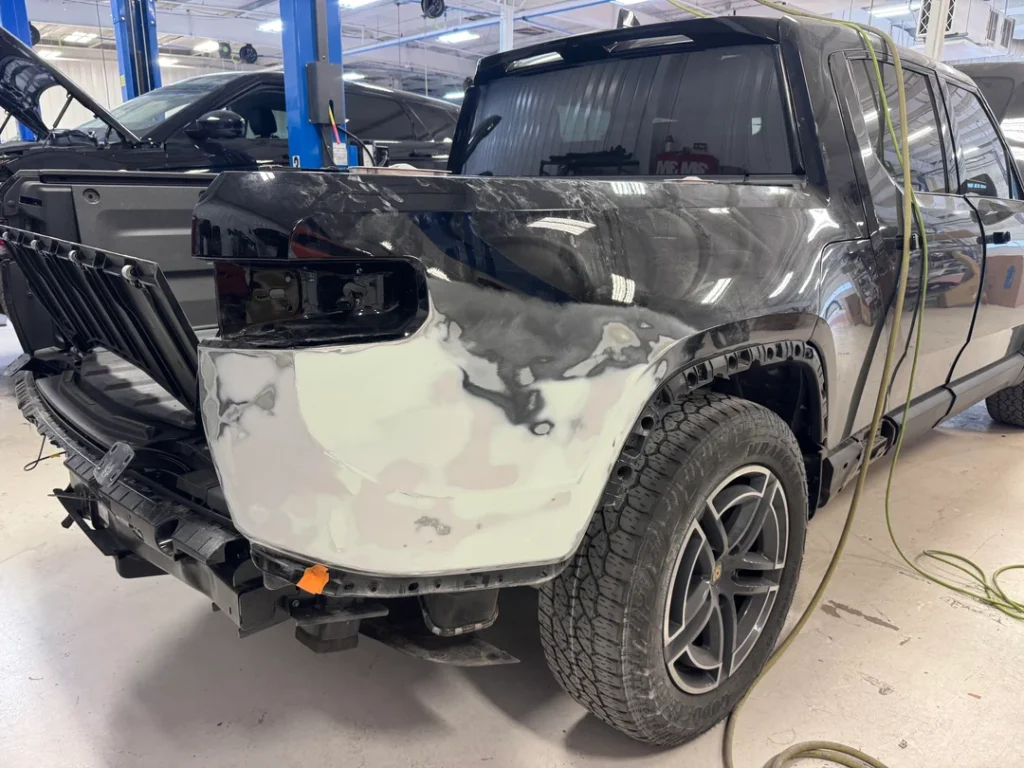
The damage sustained in a parking lot incident appeared localized: a dent behind the taillight, scratches on the bumper, and a deformed wheel arch. Typically, such issues are resolved through bodywork, painting, and replacement of some components. However, the construction of the Rivian R1T proved to be much more complex. The key problem was the one-piece side panel, which is integrated with the vehicle’s roof. This part is not a separate component that can simply be unbolted and replaced.
The Scale of the Work
Repairing it required practically disassembling half of the pickup. Photos from the repair shop show the vehicle with the rear bumper, taillights removed, and the side partially taken apart. Body shop technicians attempted to restore the original panel rather than replace it entirely, which added complexity. Furthermore, to achieve a high-quality paint blend, they had to paint almost the entire side of the vehicle, not just the damaged area. This is a colossal amount of work for what seemed like a small dent.
2025 Rivian R1T guess how much the repair cost $$$$$$ by u/JonjakobJinkleHymer in Justrolledintotheshop
Financial Aspect and Insurance
The owner reported a final sum of $14,000, which, by the way, is significantly less than some initial estimates of $30,000. However, it is not specified what portion of these costs was covered by the insurance company. This case serves as a reminder of the importance of considering not only the purchase price of an electric vehicle but also its maintenance and repair costs. Insurance for such vehicles is often significantly more expensive due to costly sensors, cameras, complex electronics, and, as it turns out, specific body construction features.
The Rivian R1T incident demonstrates how innovative design solutions aimed at strength and aesthetics can have a downside in practical operation. For potential buyers of premium electric vehicles, this serves as a signal to more thoroughly study not only the technical specifications but also the potential cost of restoration after even minor accidents. Manufacturers, perhaps, should reconsider some design decisions to make repairs more affordable without losing the benefits of modern technology.