
 by
by Electric Cars in the US Have Lost Momentum for the First Time in a Decade
After a decade of rapid growth, America’s electric car boom has fizzled out. In 2025, electric vehicle registrations fell by 0.4%, reaching 1.3 million units. This is the first annual decline in at least the last 10 years. While not a catastrophe, it is the first crack in what once seemed like an unstoppable ascent.
The real drama unfolded in December. After Congress repealed the $7,500 federal tax credit for EVs, registrations fell by 48% compared to the previous year, to just 75,427 vehicles. The share of electric vehicles in the total market fell from 9.9% in December 2024 to 5.3% in December 2025.
For the year, electric vehicles accounted for 7.8% of passenger car registrations, slightly less than the 8% in 2024. The total number of vehicle registrations increased by 2.2%, to 16.25 million units. In other words, Americans continued to buy cars, but increasingly chose models with conventional internal combustion engines.
Warning Signs Were Noticeable

The slowdown did not happen suddenly. Growth rates had already cooled from triple-digit figures at the beginning of the decade to 11% in 2024. In the first half of 2025, electric vehicle registrations were still growing by 4.6%, but then in July, the cancellation of the tax credit from the end of September was announced. Buyers rushed to meet the deadline in the third quarter, after which the market quieted down in the fourth.
Price remains the main issue. Even with incentives, electric car prices remain higher than what the average buyer is comfortable with. Early adopters have already made their choice, and the next wave of customers is concerned about charging availability and “range anxiety.” Hybrids have quietly become a safe middle ground.
Tesla’s Problems

Tesla, while remaining the leader in electric car sales, recorded a 6.8% drop in registrations for the year, to 570,418 vehicles. Its market share decreased by 3.1%, to 44.9%. December was painful but not catastrophic, with a 35% decline.
The Model Y retained its crown, but the Cybertruck and Model 3 took serious hits. Given that the Model S and Model X are to be discontinued this year, and there is no talk of the smaller model once rumored, this year will also be difficult.
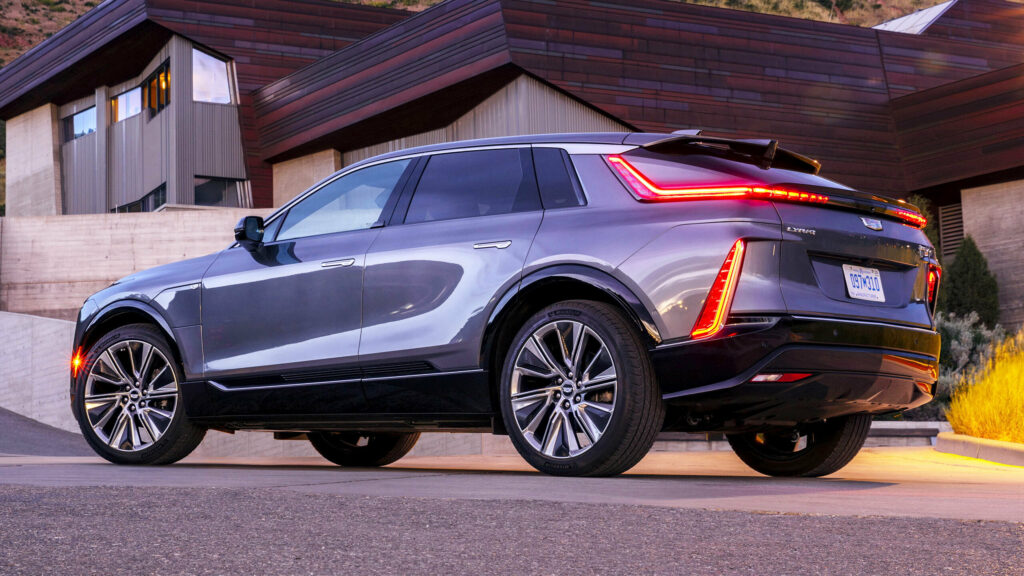
Ford experienced an even steeper decline in December – by 61%. Cadillac, however, became a rare bright spot thanks to genuinely new models, something Tesla desperately needs. Rivian and Hyundai also recorded declines, highlighting that this is not a single-brand problem. However, Rivian has a plan in the form of the smaller R2 SUV, sales of which will begin this year.
What’s Next for Electric Cars?
Does this mean the end for electric cars? Was it just a short-lived fad, like fidget spinners? No. Analysts expect a slow but steady recovery as automakers lower prices and expand incentive programs. Charging networks are improving, and some electric cars are approaching price parity with comparable gasoline models. The boom may be over, but the electric story is far from finished.
The transition to electric vehicles has always been viewed as a marathon, not a sprint. The current decline may be a natural correction after a period of artificial stimulation, as the market determines true demand. The success of models like the Cadillac Lyriq shows that when a product meets expectations for quality, design, and practicality, buyers are there. The future likely belongs not only to pure electrification, but to diversity: electric vehicles, hybrids, and plug-in hybrids will find their audience until infrastructure and technology fully mature.