 by
by Automakers continue to actively develop semi-autonomous technologies, promising the ability to drive a car hands-free on various roads. However, the number of questions is growing against the backdrop of federal regulators’ investigations into fatal accidents that may be linked to the use of such systems.
Regulatory Attention on Ford BlueCruise
When it comes to controversial hands-free driving technologies, Tesla’s dubiously named “Full Self Driving” system or Waymo’s fleet of driverless taxis often come to mind. However, the National Highway Traffic Safety Administration is also turning its attention to Ford’s BlueCruise system.
The Difference Between Autonomous Driving and Driver Assistance
Since Ford introduced the BlueCruise system in its vehicles, several accidents have occurred that are believed to have arisen from user confusion regarding driver assistance functions. One such incident happened on I-75 near Toledo, Ohio, when a Ford engineer crashed his new F-150 pickup.
According to The Wall Street Journal, the driver, Sitaram Palepu, stated in a court document that he pressed the brakes to slow down when exiting onto an off-ramp. The car, allegedly with BlueCruise activated, accelerated, hit a barrier, rolled over, and landed roof-down. Emergency services had to cut the driver and his wife out of the cab.
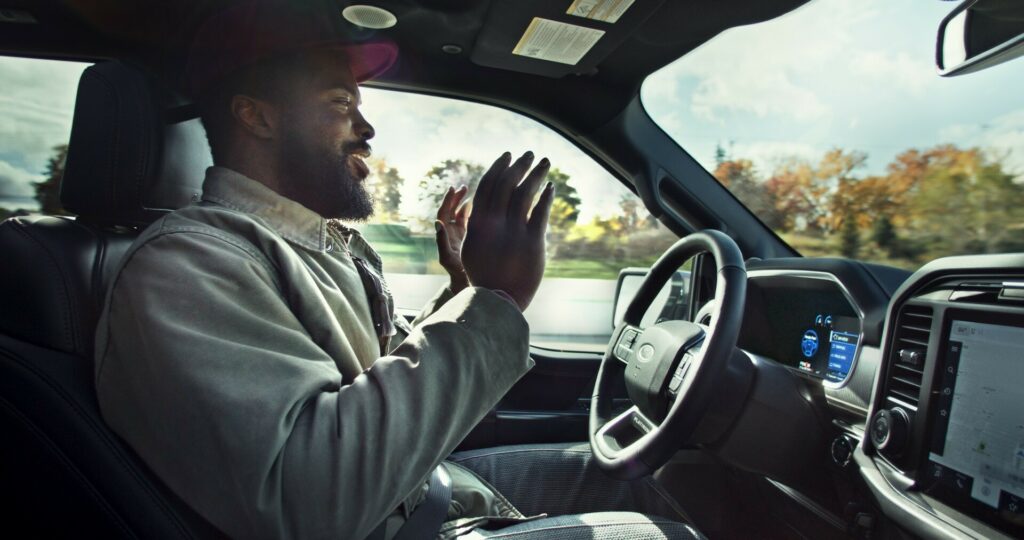
Ford informed NHTSA that Sitaram deactivated the driver assistance system and pressed the accelerator pedal. And this is not the only case where Ford has denied BlueCruise’s involvement. In September 2021, Barry Wooten died in a collision in Forsyth, Georgia, and his family filed a lawsuit against Ford, claiming the F-150 lost control while in “self-driving mode.”
According to court documents, the family claimed the F-150 plotted a course to exit the road when Wooten tried to use an off-ramp. Although Ford declined to comment on the pending case, the company’s response to an NHTSA report stated that this particular F-150 was not equipped with the necessary hardware for BlueCruise to function, meaning it could not have true hands-free control.
Confusion Among Drivers
Tesla launched its Autopilot system back in 2015, but Ford initially held back from a hasty dive into these technologies, arguing that drivers could become overconfident, even when the system requires them to remain attentive. In 2018, Ford decided to conduct a comparative analysis of General Motors’ Super Cruise system and recruited over 40 people to test the CT6 on tracks. Ford’s own trials began in 2019.
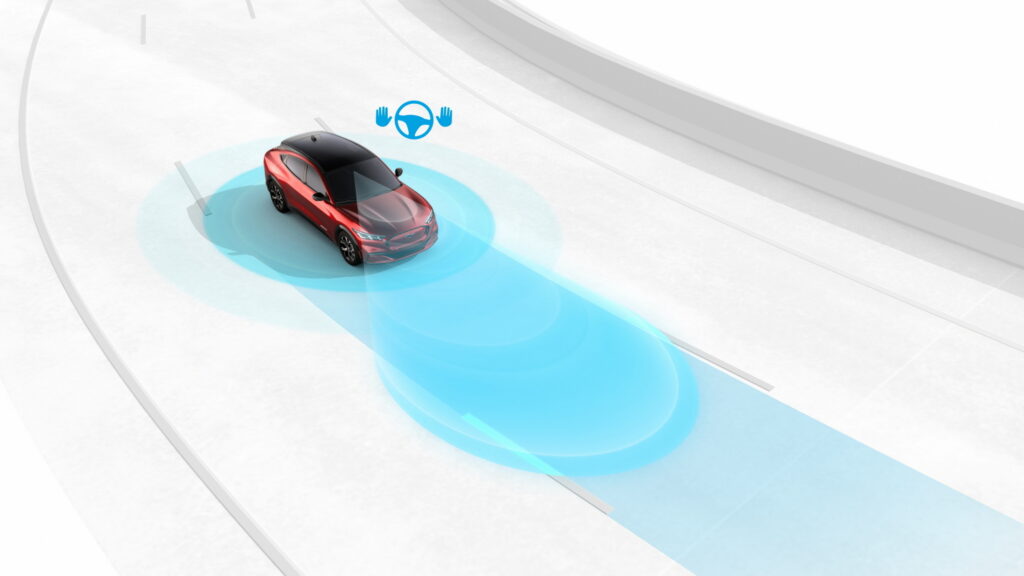
However, real-world use revealed a recurring problem that affects almost every manufacturer in this field, namely drivers’ understanding of the system’s capabilities. Accident reports, user feedback, and Ford’s own research show that some drivers misunderstand system limitations, miss warning signals, or overestimate what the technology can safely handle. Early studies found that a significant portion of drivers were either psychologically distracted while the system was active or did not respond promptly when asked to retake control.
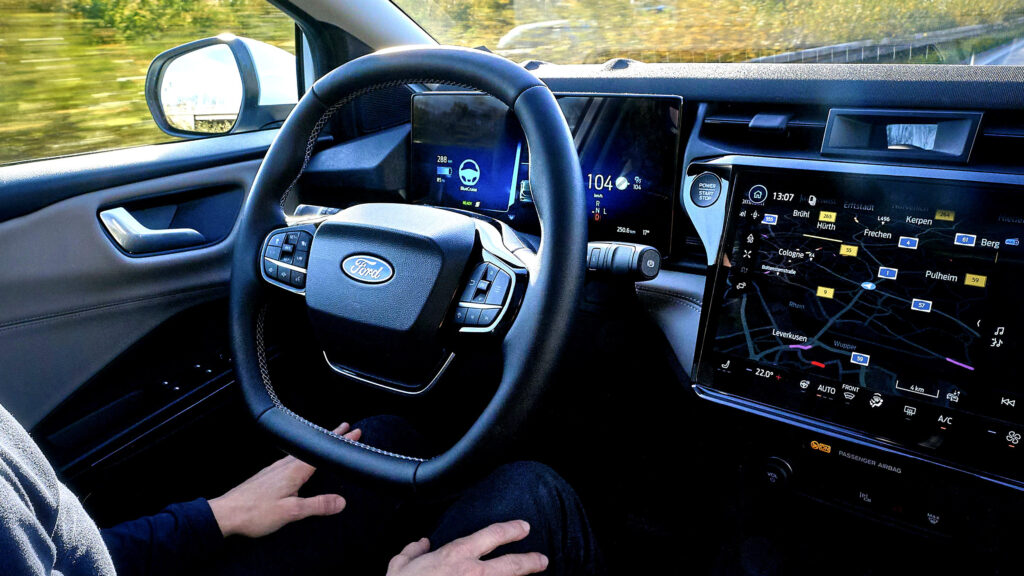
Ford states that it addressed many of these issues before launch, improving graphics on the instrument panel, warnings, and driver monitoring systems, including eye-tracking cameras designed to ensure driver attentiveness. The company insists that when used correctly, BlueCruise enhances safety and driver engagement, and reports hundreds of millions of miles traveled under supervision with the system active.
Fatal Accidents Under Scrutiny
Following several fatal accidents in 2024 involving Ford vehicles in which driver assistance features were reportedly active, U.S. safety authorities launched an official investigation. Federal data shows dozens of reported accidents since 2021 in which Ford’s automated or semi-automated systems may have been involved, including several fatalities. Investigators point to system limitations in detecting stationary vehicles at high speeds, especially at night, as a recurring issue.
Ford denies this, stating that its system’s design intentionally avoids hard braking for stationary objects above certain speeds to reduce the number of false emergency stops, sometimes called “phantom braking.” The company also claims that other safety layers, such as automatic emergency braking, remain active. In several investigated accidents, data from the vehicles showed that drivers did not brake or perform evasive maneuvers despite repeated warnings.
Despite concerns, driver assistance systems continue to be used by many automakers. However, regulators emphasize that, regardless of what the marketing name might imply, these assistive technologies are by no means a replacement for an alert and attentive driver.
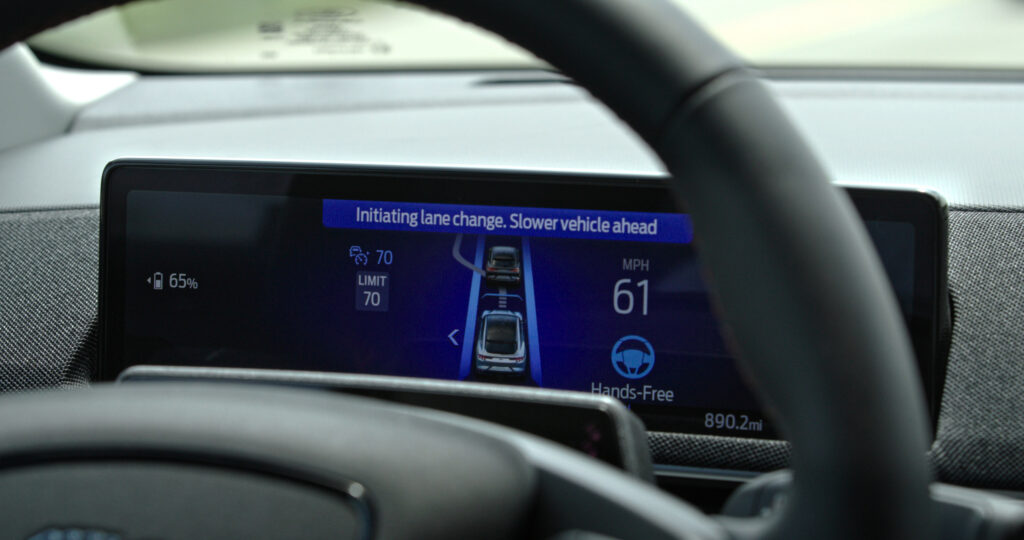
The development of semi-autonomous systems like BlueCruise reflects a complex balance between innovation and safety. While statistics may show millions of miles traveled safely, every technology-related incident is carefully analyzed, leading to continuous refinements of software and user communication. The future of such systems will likely depend not only on technical improvement but also on a clear delineation of responsibility between the driver and the car, as well as effective user education. The public discourse around these technologies continues to shift from the question of “can this work” to “how to ensure it works safely in real, unpredictable conditions.”