 by
by Enthusiasts’ Dreams and Cold Realities
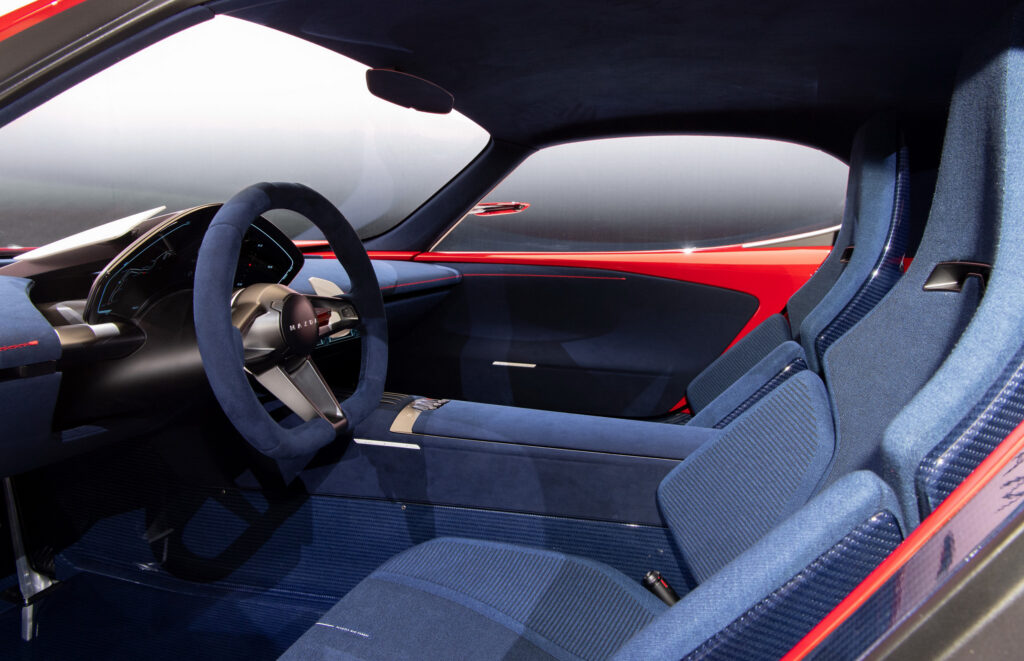
When Mazda unveiled the stunning Iconic SP concept in 2023, the automotive community immediately began talking about a “new generation RX-7!”. A new interview with the company’s executives rekindles these hopes but simultaneously reminds us of strict financial constraints.
Mazda representatives made it clear that the idea of a sports car with a rotary engine is not forgotten, and many company employees would gladly take on the creation of a new flagship akin to the RX-7.
“The number of car enthusiasts in this company is simply insane. Everyone loves cars, so, of course, there is a strong desire to continue producing emotional products,” noted Moritz Oswald, Mazda Europe’s Planning Manager.
Profit Above All
The problem is that enthusiasm rarely brings profit. No one doubts that Mazda is capable of creating an excellent $100,000 sports car, but guaranteeing that it will sell in volumes sufficient to generate significant revenue is an entirely different matter.
“Yes, we are studying [the possibility of the Iconic SP]. Of course. But we are also a company that must generate income,” added Oswald, emphasizing that the MX-5 “still remains our main headline act.”
Christian Schulze from Mazda Europe’s R&D department also tempered hopes for an RX-7 revival, stating that “Mazda stands for cars for ordinary people,” not for wealthy Porsche owners.
A True Rotary Sports Car
However, Schulze hinted that if Mazda were to build something like the Iconic SP, the powertrain could be much better than in the concept. In it, the rotary engine was used only as a generator to power the 365 hp electric motors that drove the wheels.
“If you want a more sporty car, then perhaps it’s worth considering a rotary engine combined with a more sporty hybrid system, a parallel one, not a series one. Because people who appreciate the engine want to feel its power directly, not just listen to it,” said Schulze.
What Happened to the ‘Soon’ Promise?
This pragmatic information from Mazda Europe paints a very different picture of the SP’s future than the one presented by Masashi Nakayama, Mazda’s Design Director, in November 2024.
“This concept is not just one of those empty show models. It was developed with a real intention to turn it into a production model in the not-too-distant future,” Nakayama stated at the time.
A more realistic scenario seems to be where the Iconic SP acts as a design precursor for the next generation MX-5. This may not be the full-fledged rotary dream, but it is still a rather attractive compromise. Furthermore, the 503 hp four-door coupe concept Vision X presented last year makes it clear that we may still see a high-performance rotary powertrain in the near future, though likely not in a two-seat sports car.
The situation with Mazda well illustrates the challenges faced by automakers trying to preserve their legendary heritage in the modern world. On one hand, there is a strong corporate culture filled with passion for driving and engineering achievements, such as the unique rotary engine. On the other hand, there are harsh market laws, environmental requirements, and the need to invest in mass-market, not niche, products. Balancing between these poles determines whether we will ever see a new true RX-7, or if its spirit will live on only in individual elements of more affordable models. In any case, it is this struggle between dream and calculation that makes Mazda so interesting to observe.