 by
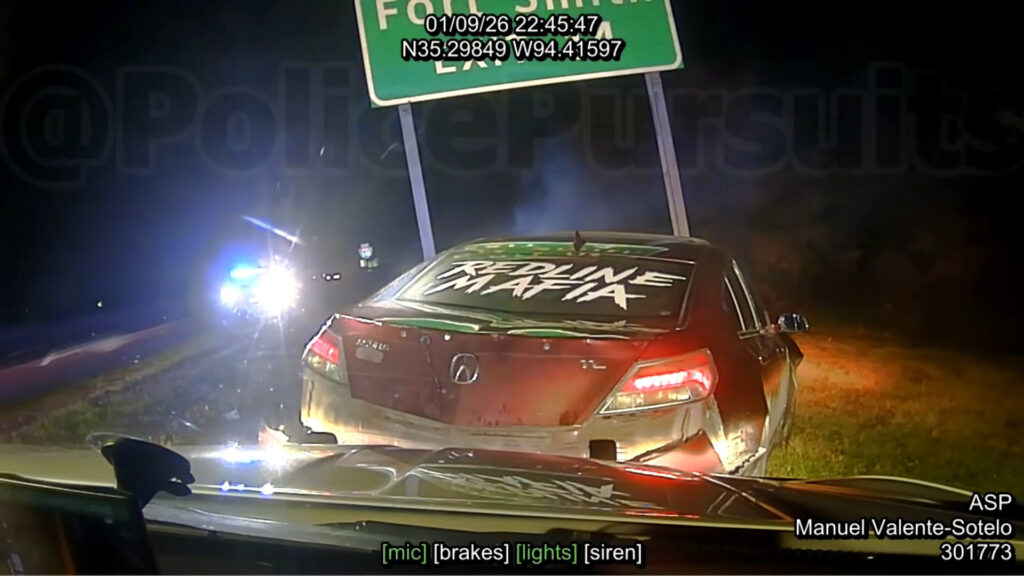
by According to Arkansas State Police data, the number of pursuits in 2025 dropped to its lowest level in six years. However, the same year saw the highest number of fatal incidents in a decade. Nearly half of those killed during pursuits in 2025 were vehicle passengers, not drivers.
Controversial Pursuit Statistics
Police pursuits in Arkansas have long drawn attention for their tactics, which some critics call overly aggressive. Whether perceived as bold or reckless, the law enforcement approach continues to spark public debate.
New statistics show that while the number of chases in the state is decreasing, the death toll has reached a new peak. However, this figure is likely lower than one might assume, and data from the last decade paints a more complex and uncomfortable picture.
Fewer Chases, But More Tragedies
In 2025, Arkansas State Police troopers were involved in 432 pursuits. This is the lowest number since 2019 and a sharp decline from 553 incidents the previous year. However, fewer chases did not mean fewer consequences. Seven people died, making 2025 the deadliest year for police pursuits in at least the last ten years. The contrast between these figures is striking, although the full picture is more complex than the raw numbers might suggest.
Numbers and Real Consequences
Data obtained from sources shows that from 2016 through the end of 2025, police documented 4,710 pursuits. In all these incidents, 27 people were killed, 774 were injured, including 91 law enforcement officers. Breaking down these numbers, it turns out that 0.6% of chases ended in death. Approximately 16% resulted in injuries, and police are injured on average nearly twice for every 100 pursuits.
These numbers may surprise those who believe police chases usually end in death. Statistically, this is not the case. Most pursuits end without fatalities, and many without serious injuries at all. However, statistics do not erase the consequences, especially when innocent people or even those fully complying with the law are affected.
Collateral Victims and the PIT Maneuver
Nearly half of last year’s fatalities, three out of seven, were passengers, not the drivers who chose to flee. In several cases, these passengers were ejected from vehicles during crashes following PIT maneuvers – a tactic Arkansas police used in more than half of all pursuits. This highlights that the consequences of high-speed chases are felt not only by those who decide to flee.
State police leadership asserts that the PIT maneuver is the fastest and safest way to terminate dangerous pursuits. Colonel Mike Hagar consistently places responsibility for fatal outcomes on fleeing drivers, arguing that police are obligated to stop suspects as quickly as possible after a flight begins.
Necessary Risk or Outdated Habit?
As previously highlighted, officers’ view of pursuits often is that they are a necessary evil. One noted that early in his career he enjoyed such chases, but later began to fear them, as they are simultaneously the most thrilling and the most dangerous part of the job. Another officer recounted a pursuit that ended with life-altering injuries for an innocent woman and her children, as well as the death of the fleeing person, with the chase initiated over a traffic violation.
The 2025 statistics raise complex questions. If the number of chases is decreasing, but the number of fatalities is sharply increasing, and passengers (and sometimes bystanders) suffer disproportionately, it is logical to ask whether the tactics, criteria for initiating a pursuit, and risk assessment require additional review.
The numbers do not tell a simple story. But they remind us of two truths that can coexist. Most pursuits do not end in tragedy, but every loss of life, especially unintended, demands reflection, not just justification.
The obtained data points to a deeper systemic problem that goes beyond simple statistical reports. The decrease in the number of pursuits may indicate more effective preventive work or a change in protocols; however, the sharp jump in deaths, especially among passengers, calls into question the effectiveness of current methods for terminating pursuits. Society and law enforcement should jointly seek a balance between the need for immediate response to crimes and ensuring the safety of all road users. The experience of officers, which changed throughout their careers, shows that even among professionals there is an understanding of the risks and consequences, which could become the basis for further procedural improvements.