 by
by Car sales in the U.S. continue to fall, and April 2026 was another month that showed negative dynamics for several major manufacturers. The decline compared to last year is explained by a high base effect, when consumers actively bought cars ahead of the introduction of new trade tariffs.
Overall Sales Picture
According to reports, combined sales of four major automakers in the U.S. fell by 3.8 percent last month. Specifically, Hyundai, Kia, Honda, and Toyota reported a decline in annual sales volumes in April. This came after a surge in sales observed in the same period last year, before the announcement of the controversial “reciprocal” tariffs by the Trump administration.
Hyundai and Kia: Mixed Dynamics
At Hyundai, sales fell by 2 percent — from 81,503 vehicles in April 2025 to 80,157 in April 2026. However, year-to-date, the company’s figures remain slightly positive: 285,545 compared to 285,057. Sales of new Kia models fell by 3 percent — from 74,805 to 72,703. Despite this, over the first four months of the year, sales rose by 2 percent to 279,718 units, setting a new record for the brand for this period.
Leader and Laggard Models
Among Hyundai models that showed growth, the Elantra is worth noting — sales increased by 13 percent to 14,778 units. The Palisade (+8%), Sonata (+18%), and Venue (+6%) also demonstrated positive dynamics. At the same time, the Ioniq 6 (minus 82%), Kona (minus 15%), as well as the Santa Cruz and Santa Fe, whose sales fell by 24% and 27% respectively, experienced significant declines.
For Kia, the EV9 electric vehicle was a real breakthrough: its sales skyrocketed from a modest 232 units in April last year to 1,349 this year. Sales of the K5 (to 6,537 units), Seltos (from 4,051 to 5,335), and Telluride (from 10,860 to 12,577) also increased.
Other Manufacturers: Significant Losses
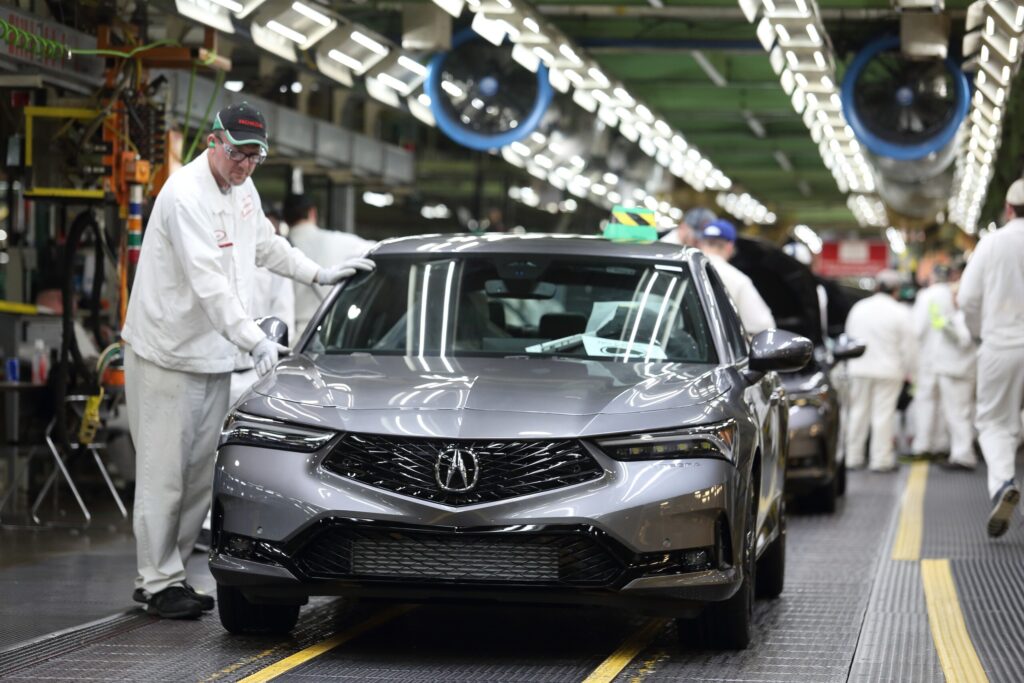
The American division of Honda, which includes the Acura and Honda brands, recorded a sales decline of 0.2 percent to 137,405 units. The main factor was a 15.6% drop in Acura vehicle sales — from 14,019 to 11,834.
The worst situation was at Mazda: its April sales fell by 17.3% — from 37,660 to 31,128 units. Subaru sales decreased by 5.9% (to 52,733), Lexus lost 19.9% (to 28,187), and Toyota — 1.8% (to 194,191). Overall, combined sales of American Honda, Hyundai-Kia, Mazda, Subaru, and Toyota contracted by 3.8% to 602,860 vehicles.
Impact on the Industry
The market situation remains tense. The sales decline in April is a direct consequence of last year’s frenzy, when buyers rushed to purchase vehicles before the imposition of new tariffs. Now the market is going through a period of correction, and even strong players like Toyota and Hyundai are feeling the pressure. The situation at Mazda and Lexus, which lost nearly a fifth of their April sales, is particularly alarming.
At the same time, despite the overall decline, some models are showing impressive growth, indicating a shift in consumer preferences. Electric vehicles, like the Kia EV9, are gradually gaining market share, while traditional bestsellers such as the Hyundai Elantra and Kia Telluride continue to hold their ground. This suggests that the market is not just falling, but transforming, and manufacturers will have to adapt to new realities where trade policy and changing demand play a key role. The further dynamics of sales will depend on how quickly companies can offer customers attractive conditions and new models in an environment of economic uncertainty.