 by
by Overall Sales Decline
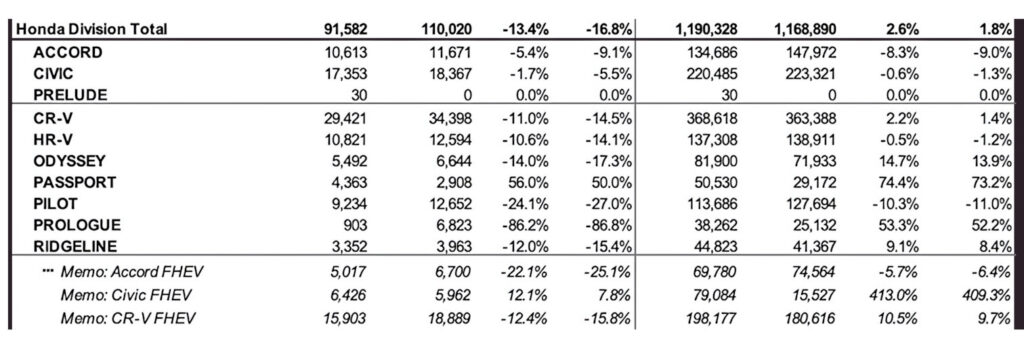
Honda released its November sales figures, and the picture was disappointing. The company recorded U.S. sales of 91,582 vehicles, a noticeable drop of 16.8 percent compared to the same month last year when 110,020 vehicles were delivered. Despite the monthly slowdown, the company’s total year-to-date sales of 1,190,328 vehicles still reflect a slight increase of 1.8 percent compared to the same period in 2024.
Among Honda’s key models, most experienced a sales drop in November. 10,613 Accords were sold, 9.1 percent less than a year ago, while the Civic moved 17,353 units, representing a 5.5 percent decline. The Odyssey minivan had an even tougher month, losing 17.3 percent with a result of 5,492 units.
The Situation with Crossovers and the Electric Vehicle
SUVs and crossovers continued to provide the bulk of the brand’s sales. The leader remained the CR-V with 29,421 units sold, followed by the HR-V with 10,821. Both showed noticeable declines of 14.5 and 14.1 percent, respectively. Pilot sales fell 27 percent to 9,234 units, and the Ridgeline pickup lost 15.4 percent, reaching 3,352 units.
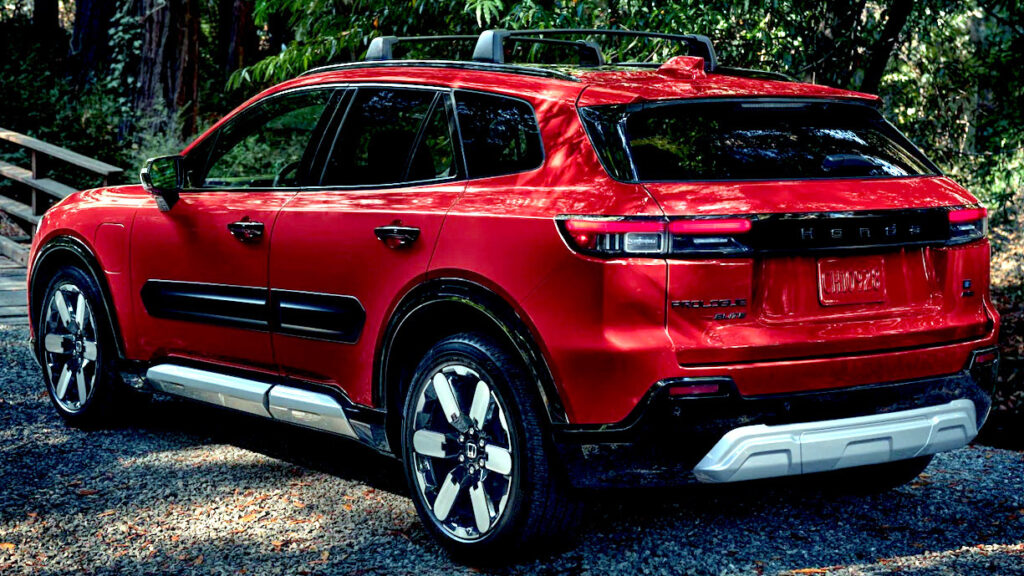
The sharpest decline, unsurprisingly, was experienced by Honda’s electric Prologue, which found itself at the epicenter of the consequences of the cancellation of federal EV tax incentives. Its sales collapsed by 86.8 percent, dropping from 6,823 units in November last year to just 903 this time.
A ray of good news was the rapid sales growth of the Passport, which jumped again by 50 percent to 4,363 units, becoming the only bright spot in an otherwise gloomy report.
The Arrival of a New Model
A Quiet Start for the Returning Coupe

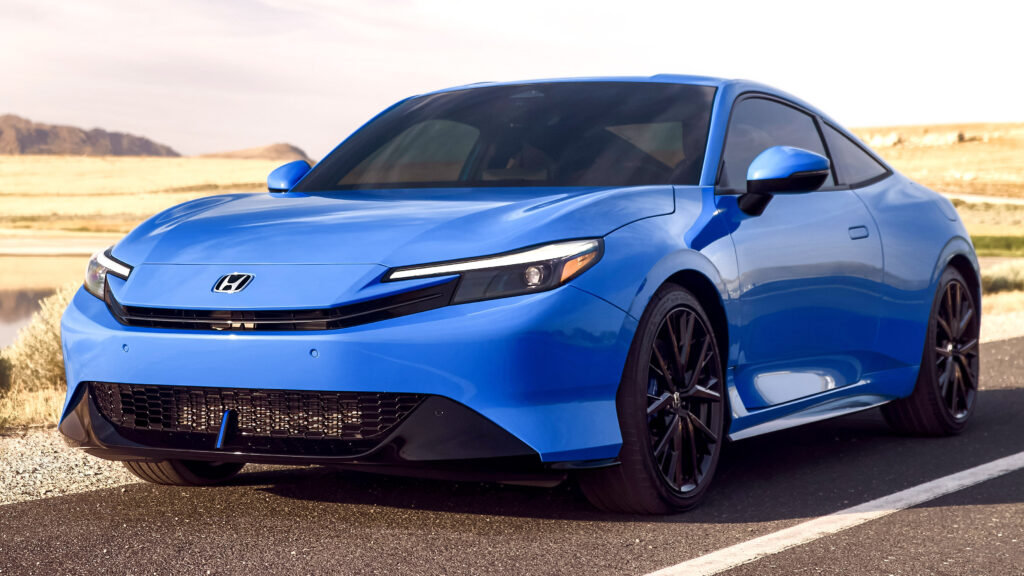
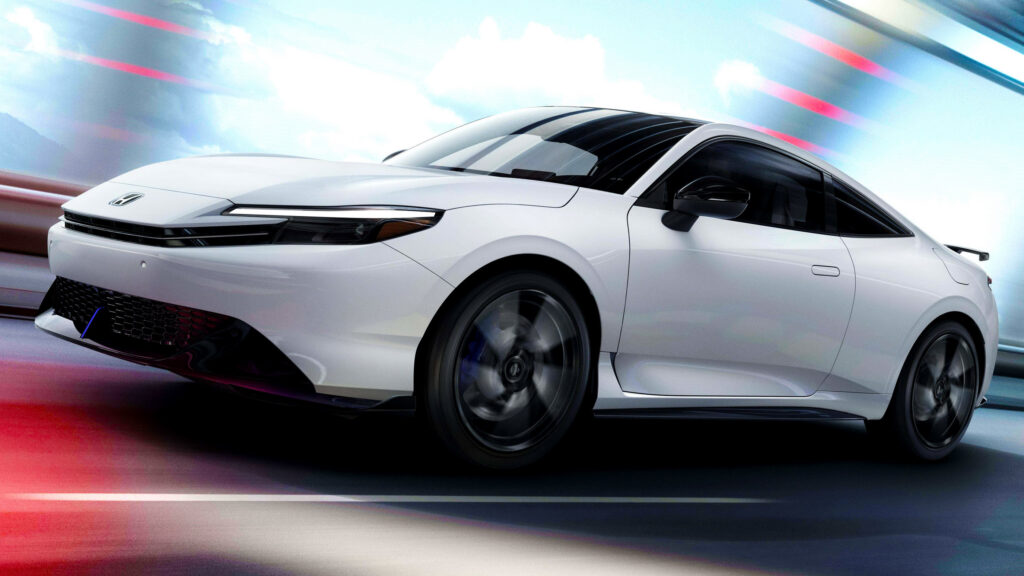
This brings us to Honda’s new arrival—the Prelude coupe, which officially entered the U.S. market last month. According to manufacturer data, 30 buyers received their cars in November.
Undoubtedly, this number will grow as production ramps up and imported cars begin to arrive, so there is no basis for any conclusions yet. Nevertheless, a model with such heritage typically sells out quickly when inventory appears, and Honda’s pricing may be part of the early interest.
The Prelude has generated significant buzz since Honda acknowledged its return. For the most part, this press has been positive. In Japan, it was so popular among people aged 50-60 that dealers were forced to suspend taking orders for it.
Of course, not all coverage of this car is so optimistic. The starting MSRP of $43,195 (including destination) placed it less than $1,000 away from the Nissan Z, which has the same number of seats but double the power.
Notably, Honda offers the Prelude in only one trim level, where almost all desired options are already included. Future buyers can add additional accessories, special wheels, and more for about $10,000. However, the Prelude’s main advantage, besides its name and design, is fuel efficiency. It can achieve up to 46 miles per gallon in the city, 41 on the highway, and 44 combined.
The Problem with Dealer Markups
$43,195 already seems like a significant amount for such a niche car, but here’s what’s worse: dealer markups only exacerbate the situation. At the end of last month, we reported that some dealers are asking $60,000 or more for this car. One justified it with an additional “Protection Package and Market Adjustment” markup of $14,995. Such pricing will almost certainly continue to slow initial sales.
Of course, not every dealer will sell the car at such a price. Many will sell it at or near the MSRP. The real question is whether U.S. buyers will be willing to purchase it and join the first 30 owners.
John Galas contributed to this article.
This data clearly shows how external factors, such as changes in government incentive policies, can instantly impact the market share of even major players. The Prologue’s sales drop is a vivid example of this. At the same time, the Prelude situation demonstrates the classic dilemma of launching an emotional, niche product: the combination of limited initial supply, a high starting price, and dealer markups can create a significant barrier to mass adoption, even if prior interest exists. The success of the Passport against the backdrop of an overall decline is also interesting, indicating that even in difficult times, individual models can find their audience thanks to correct positioning or offering.