 by
by A Rare French Legend
When you think of rare French sports cars, your mind usually turns to Bugatti. This is logical, as only 450 Veyrons and about 600 Chirons were produced, and they have already become modern legends. However, few know that Renault’s Alpine division once created something even rarer.
This sports car was the rear-engined Alpine GTA Turbo—a kind of French interpretation of the classic Porsche 911 formula, produced in a limited series from 1984 to 1991. For the US market, Renault went to great lengths and manufactured only twelve of these 2+2 coupes, each with a high price due to the cost of bringing the car into compliance with federal regulations.
Multi-Million Dollar Costs for Legalization
As reported by Hemmings, Automobile Magazine wrote in 1987 that bringing the Alpine GTA Turbo up to American standards cost Renault the equivalent of $30 million. This amounted to approximately $2.5 million per car.
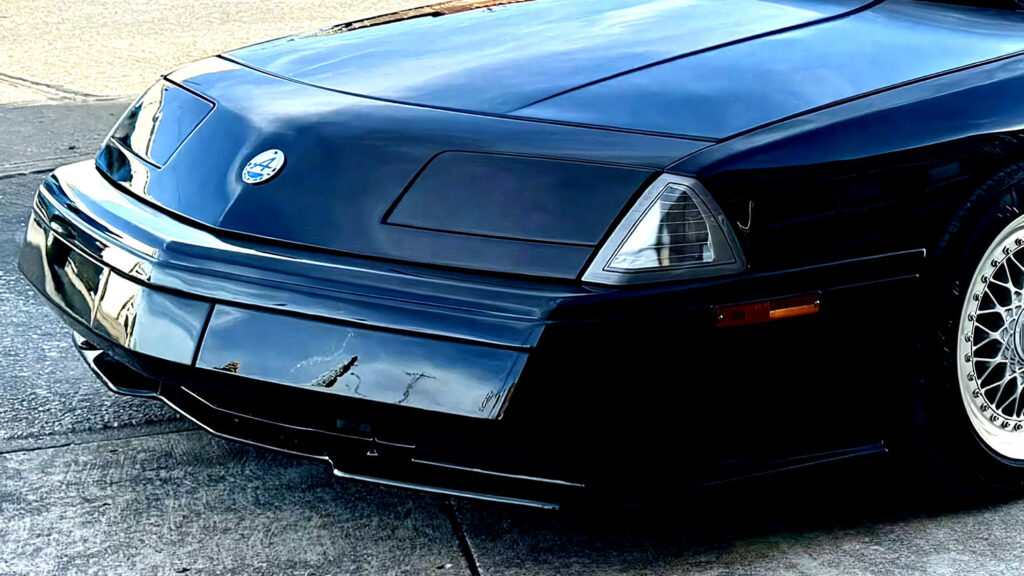
To meet American safety and emissions standards, each car received a series of mandatory updates which, although necessary, slightly reduced performance. The emissions control equipment alone deprived the engine of 20 horsepower and 10 pound-feet of torque. Crash safety standards forced the installation of 5 mph bumpers and headlight units with pop-up headlights. Among other updates were ABS, an improved cooling system, and air conditioning.

All this added extra weight, which might seem like a drawback. But in the case of the Alpine, it actually improved the weight distribution from 36/64 to 38/62. As Automobile Magazine concluded at the time: “The Alpine is easier to drive and inspires more confidence than any 911.”
In the same year that the American Alpines were ready, Chrysler acquired Renault’s American partner. With that, any commercial sense of selling a rare and expensive French sports car disappeared, especially since Chrysler already had its own luxury import project—the TC by Maserati.
A Surviving Example
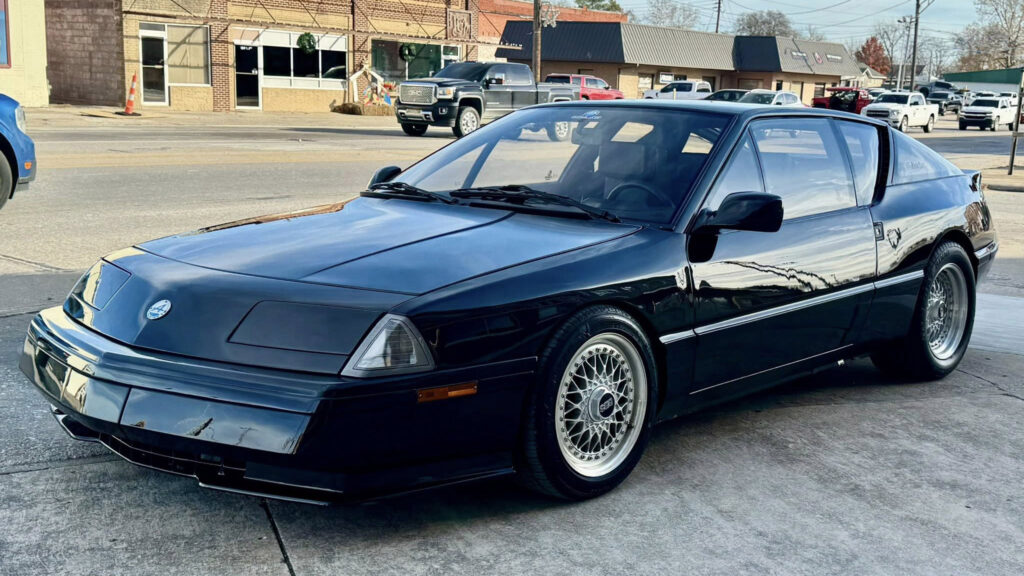
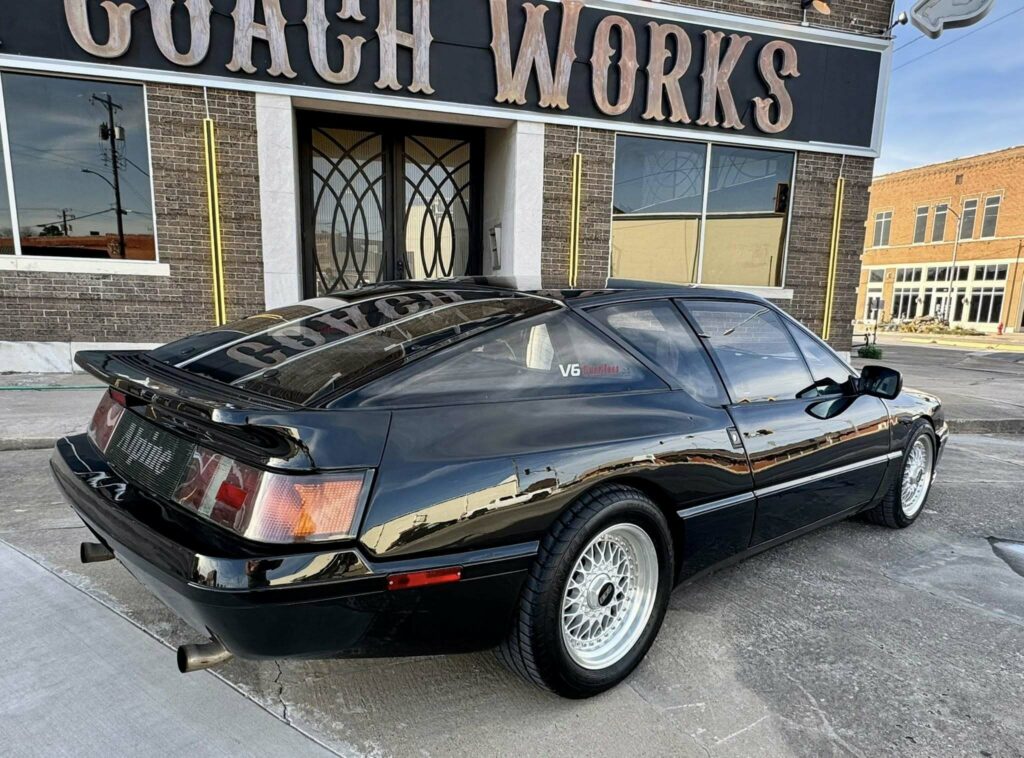
All the funds Renault invested in legalizing the GTA Turbo for American roads were wasted. Only 12 cars were built, and we are looking at one of them. The new owner, Robert Jackson, recently shared the story of acquiring this true automotive unicorn on Facebook.
This 1988 car has only 24,000 miles on the odometer. According to Jackson, the car’s condition is exactly what you would expect from a preserved low-mileage example, especially one so obscure.
Under the rear lid is a V6 engine shared with the DeLorean DMC-12, although this version has the necessary components for turbocharging. Power is sent to the rear wheels via a five-speed manual transmission.
In this configuration, the turbocharged V6 produced 200 horsepower and 210 pound-feet of torque, allowing acceleration from 0 to 60 mph in about 6.5 seconds and a top speed of over 150 mph. These figures still look respectable today, placing the car in the same performance range as a modern Toyota GR86.
R.Jackson/Facebook
Surprisingly, Jackson says the car “reminds him of a very refined version of an old Dodge Daytona, but with rear-wheel drive and more power.” The shape is indeed similar. Having experience driving such a car, I can say they are unexpectedly lively, but not particularly fast or sharp. The chassis is not designed for sharp turns, and the powertrain is better suited for high-speed cruising than for drag racing from a traffic light.
Nevertheless, it’s nice to see that one of the American-spec cars, known for its pop-up headlights, is finally getting proper attention on American soil. Perhaps Alpine will be able to make a much more successful entry into the US market in the near future.
Photos by R.Jackson/Facebook & D&B Custom Detailing
The story of these twelve Alpine GTA Turbos is a vivid example of how global business decisions and company mergers can cancel out million-dollar investments and engineering efforts. These cars have become not just rare collectibles, but tangible evidence of a specific moment in automotive history when a European manufacturer seriously attempted to enter the challenging American market. Their fate also makes one wonder what the further relationship between Renault and Chrysler could have been if this project had succeeded. Today, as Alpine has been revived as an electric vehicle brand, this story is a reminder of the long and not always easy path of the French marque.